Verified against 15 CFR Part 960 (eCFR) and NOAA CRSRA guidance as of 2026-11-16.
ORBITAL SUSTAINABILITY · DISPOSAL REGIME · FEDERAL REGULATION (15 CFR PART 960)
NOAA Part 960 & FCC Debris Handoff
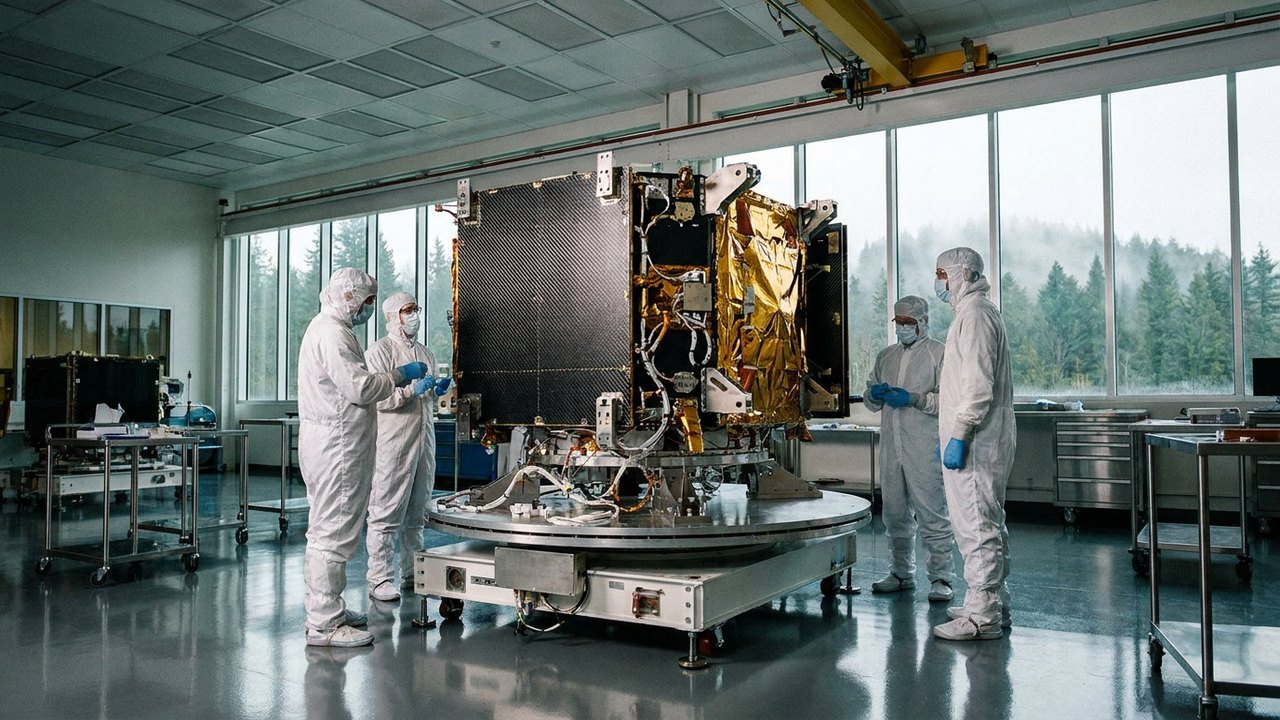
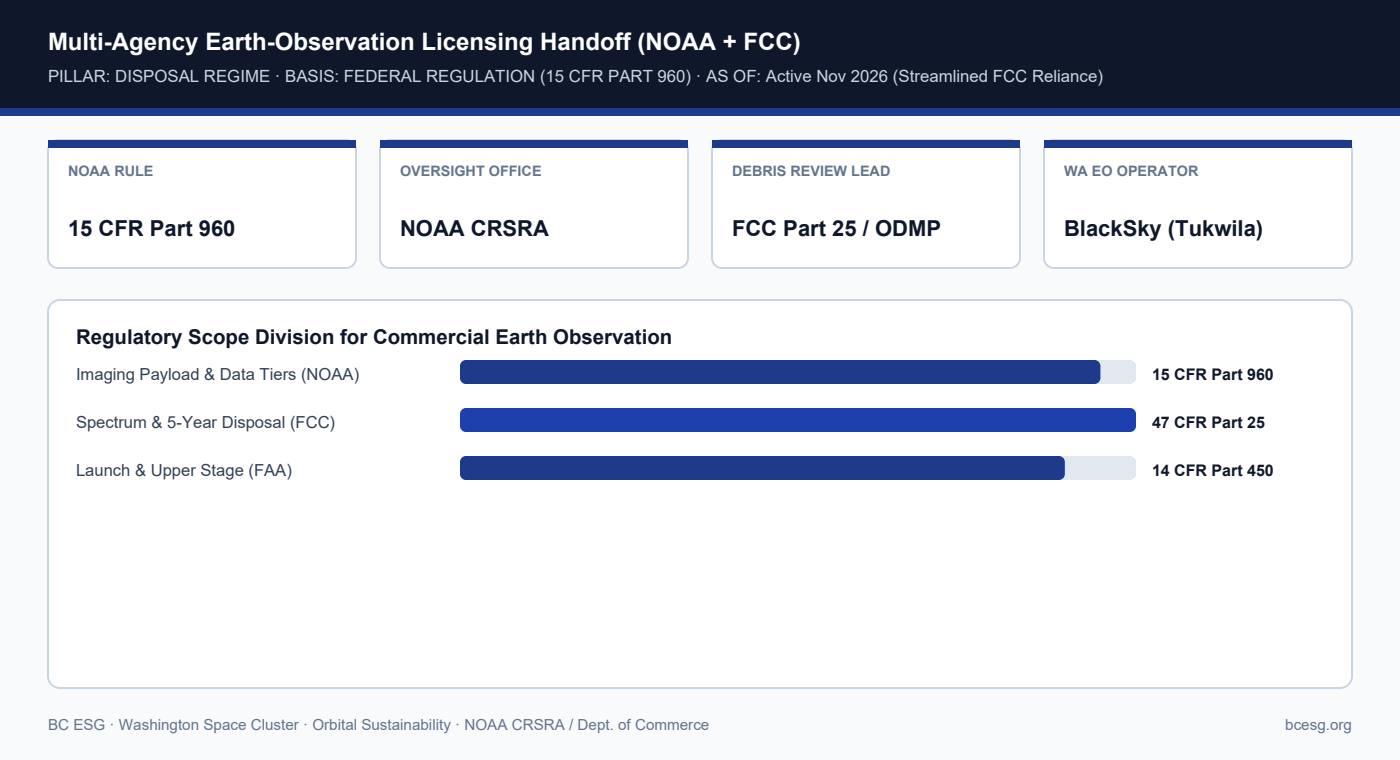
NOAA's 15 CFR Part 960 governs private Earth-observation satellites like Tukwila-based BlackSky; to avoid duplicate technical reviews, NOAA relies on FCC (or other authorized agency) orbital debris oversight while retaining general license conditions.
Primary Authority / Source: NOAA CRSRA / Dept. of Commerce | As-Of / Horizon: Active Nov 2026 (Streamlined FCC Reliance)
Documented Instrument & Engineering Record
- What NOAA licenses: 15 CFR Part 960 regulates private space-based remote-sensing systems—focusing on imaging capabilities, shutter control, and national-security data tiers.
- Eliminating duplicate debris reviews: Because commercial remote-sensing satellites also require FCC spectrum licenses, NOAA streamlined Part 960 to rely on FCC (or equivalent U.S. agency) orbital debris plan reviews rather than running a parallel technical ODMP assessment.
- Retained statutory backstop: NOAA still includes standard post-mission disposal compliance conditions in Part 960 licenses, so an FCC violation or unapproved orbit change can trigger multi-agency scrutiny.
- WA applicability: Directly governs BlackSky's Tukwila-operated optical imaging constellation and any WA Earth-observation payloads.
15 CFR Part 960 vs. 47 CFR Part 25 Compliance Mapping
| Compliance Area | NOAA Part 960 Role | FCC Part 25 Role |
|---|---|---|
| 5-Year LEO Deorbit | Defers technical review to FCC | Primary technical & enforcement lead |
| Imaging / Shutter Control | Primary regulator (Tier 1–3) | Not regulated |
| RF Downlink Spectrum | Not regulated | Primary regulator |
| License Condition Link | Requires lawful disposal compliance | Enforces ODMP & § 25.283(e) |
Mission Designer, Compliance Lead & Founder Takeaways
- EO startups cannot skip FCC orbital debris disclosures by citing a NOAA remote-sensing license—NOAA expects the FCC ODMP to carry the technical proof.
- Changes to operational altitude or constellation replenishment schedules require coordinated updates across both FCC and NOAA filings.
- Compliance leads should maintain one unified configuration-controlled Orbital Debris & End-of-Mission dossier for both agencies.