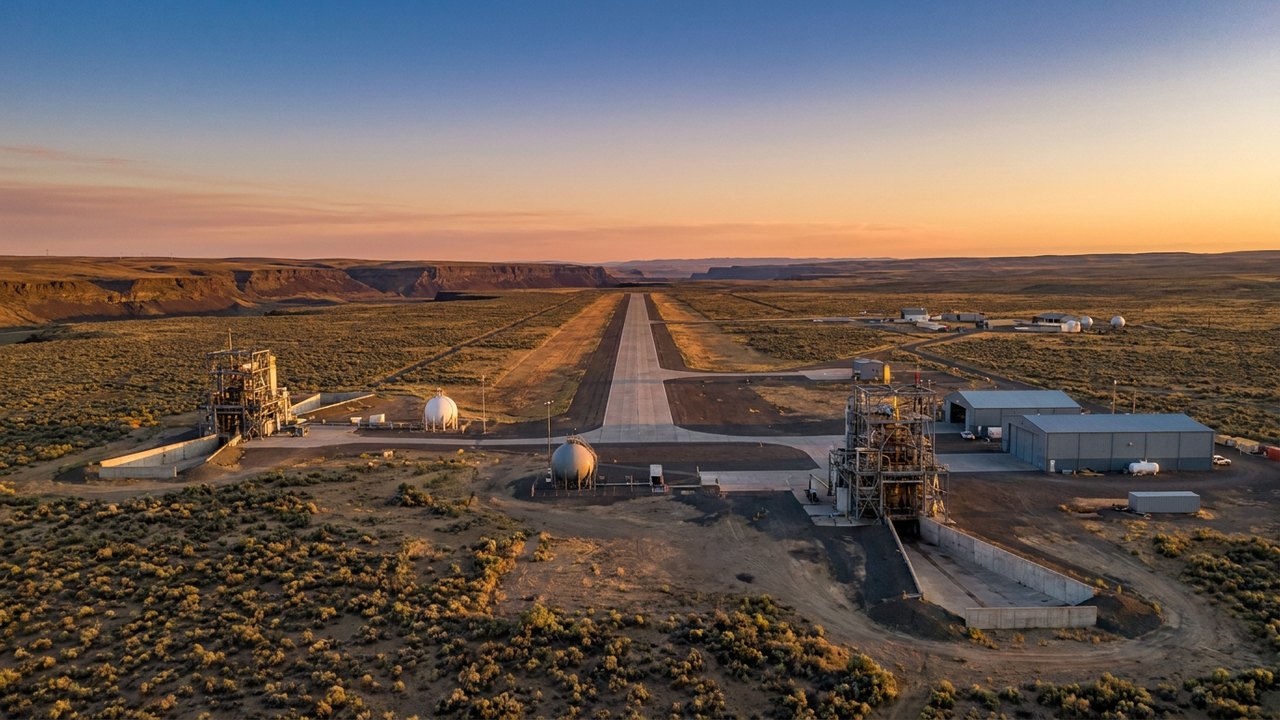
Contract figures ($125M Axiom, $1.7M SpaceWERX) and Marysville facility (42,000 sq ft) verified as of 2026-11-16; distinguishes ground production from orbital deployment.
ORBITAL SUSTAINABILITY · WA SERVICING & HABITATS · OPERATOR RELEASES & CONTRACT RECORDS
Gravitics StarMax & Station EOL
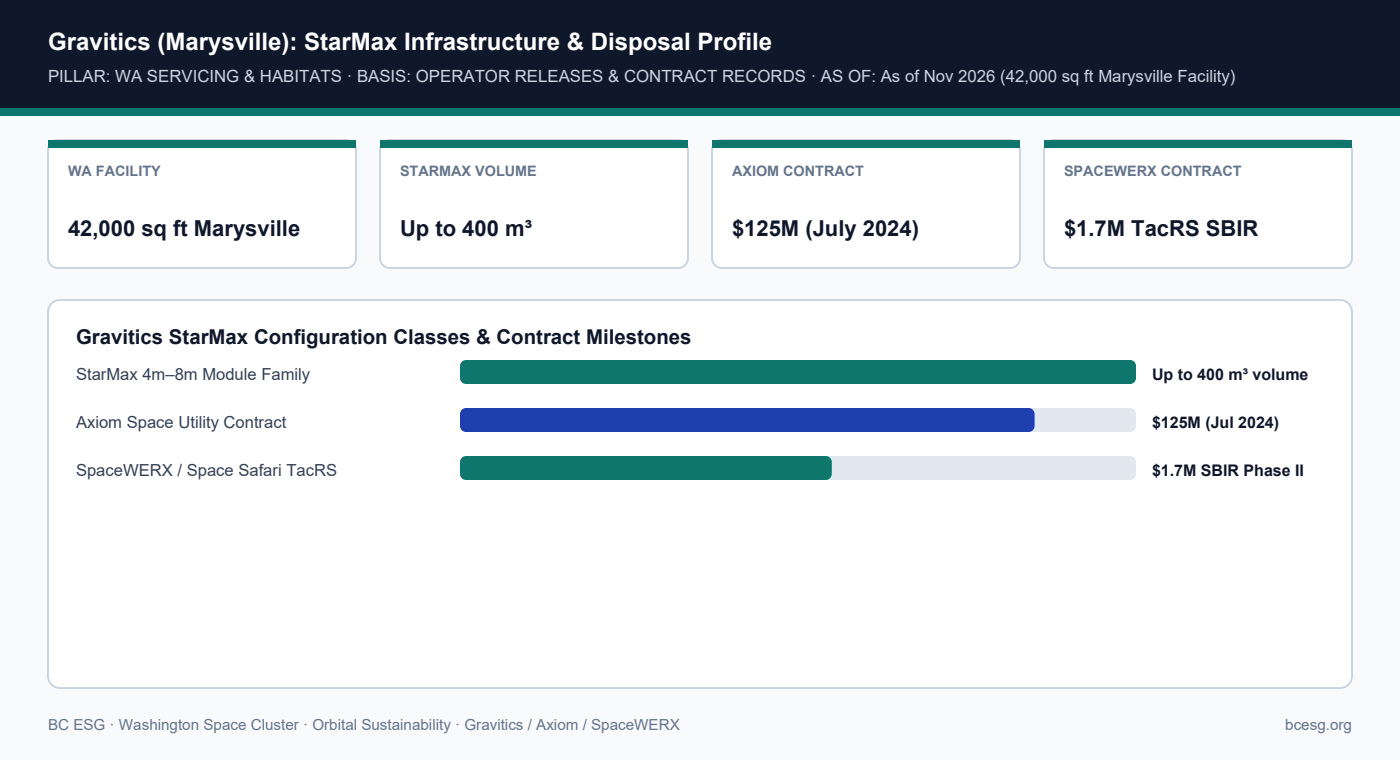
Marysville-based Gravitics manufactures large-diameter StarMax pressurized space-station modules under a $125M Axiom Space contract and a $1.7M SpaceWERX TacRS contract; commercial orbital habitats carry heavy controlled-reentry obligations at end of life.
Primary Authority / Source: Gravitics / Axiom / SpaceWERX | As-Of / Horizon: As of Nov 2026 (42,000 sq ft Marysville Facility)
Documented Instrument & Engineering Record
- Manufacturing footprint: Gravitics operates a 42,000 sq ft development and production facility at Cascade Industrial Center in Marysville, WA (4150 152nd St NE).
- Contracted programs (roadmap hardware, not yet in orbit): Gravitics holds a $125M contract with Axiom Space (July 2024) for commercial station module utility infrastructure and a $1.7M SpaceWERX SBIR Phase II contract for Tactically Responsive Space (TacRS) orbital platforms.
- Orbital sustainability implication: Large pressurized modules (4m, 6m, and 8m class, up to 400 m³) far exceed the 1:10,000 uncontrolled reentry casualty threshold due to dense structural rings, hatches, and pressure vessels.
- Controlled deorbit requirement: Any commercial station or heavy orbital platform using StarMax-class structures must plan controlled propulsive reentry (such as an attached deorbit tug) into SPOUA.
Gravitics Programs & Orbital End-of-Life Implications
| Program / Asset | Status (Nov 2026) | Orbital Disposal Requirement |
|---|---|---|
| Marysville Cascade Facility | Operational (42,000 sq ft) | Ground structural & integration prototyping |
| Axiom Space Module Contract | Contracted ($125M, roadmap) | Requires controlled station deorbit vehicle at EOL |
| SpaceWERX TacRS Platform | Contracted ($1.7M, roadmap) | DoD/NASA ODAR & controlled/demisable disposal |
Mission Designer, Compliance Lead & Founder Takeaways
- Commercial space stations replacing the ISS inherit the same controlled-reentry engineering burden as legacy station programs.
- Pressurized module designers must plan docking/berthing interfaces not only for visiting crew/cargo vehicles but also for end-of-life deorbit tugs.
- Gravitics' Marysville hardware remains in ground development/production rather than on-orbit operation as of November 2026.
Connected Census Profiles, Segments & Rules
- Gravitics (Marysville) Census Profile
- In-Space Servicing RPO & Habitats
- Reentry Casualty Risk & Demisability