Tag: Property Owner

  • LL84 Benchmarking as the LL97 Prerequisite

    LL84 Benchmarking as the LL97 Prerequisite

    Last verified: August 22, 2026. By Will Tygart.

    LL97 emissions compliance is only as good as the energy data system underneath it. LL84-style benchmarking via ENERGY STAR Portfolio Manager is not a side quest. It is the data spine for intensity, property type, and year-over-year truth. The filing walkthrough is already here: DOB NOW, ESPM, and BEAM.

    Operator checklist

    • Every covered BIN has a maintained ESPM property
    • Property type matches reality (mixed-use rules understood)
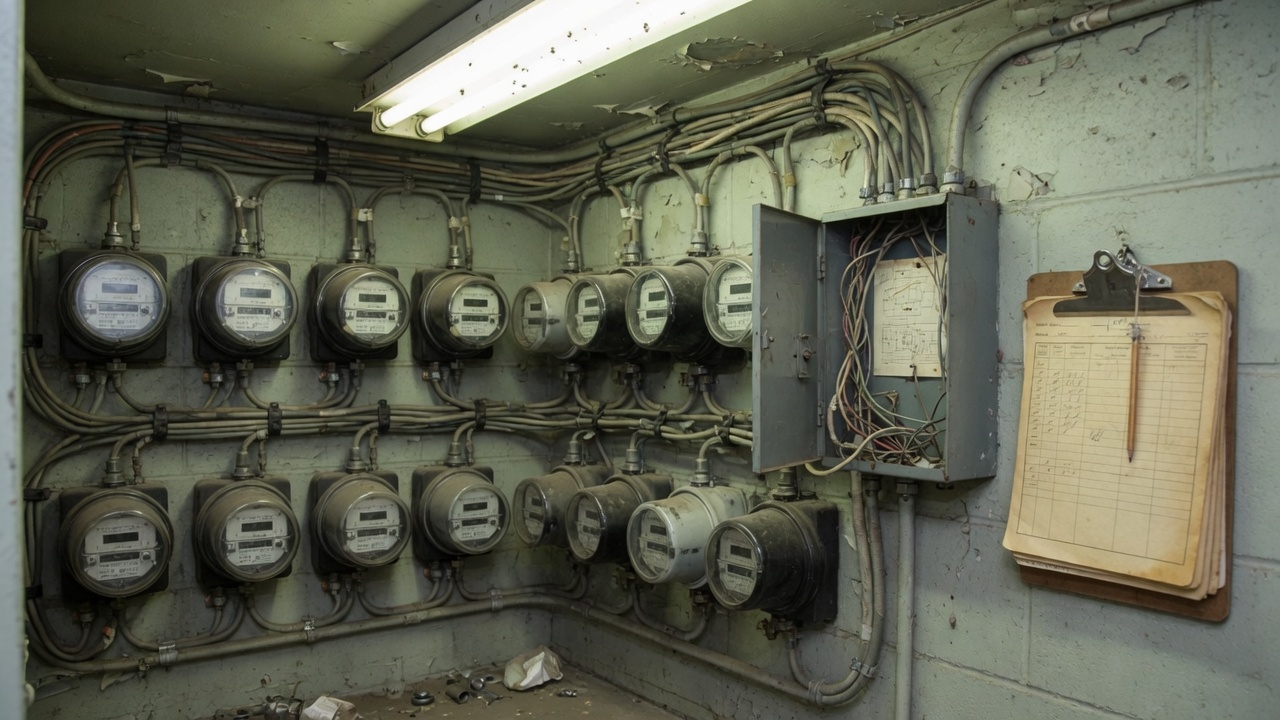
    • Utility meters mapped; gaps documented
    • Annual benchmarking deadlines on the stack calendar and the live LL84 / LL88 / LL97 / LL33 page
    • Same data owner named for LL84 and LL97 seasons
    • Exports archived with filing workpapers

    Failure modes

    • Changing property type to “game” factors without basis
    • Tenant meters invisible to the landlord
    • Different consultants using different ESPM copies
    • Benchmarking marked “done” while LL97 data is still wrong

    If the meters are a mess, do not debate 2030 electrification first. File with honest data, then fix coverage. The non-filing estimator is what you owe while you argue about the plant.

    Related reading: Local Law 97 Article 320 vs 321, retrofit priority stack for existing buildings, and SEC climate rescission vs LL97. Sister hubs: Restoration Intel, Healthcare Facility Hub, Continuity Hub, Risk Coverage Hub, and Tygart Media.

  • Tenant Communication Playbook: Emissions Programs and Resilience Events

    Tenant Communication Playbook: Emissions Programs and Resilience Events

    Last verified: August 22, 2026. By Will Tygart.

    You cannot decarbonize or recover a multi-tenant asset with landlord-only emails. Data access, retrofit disruption, and emergency instructions all require a communication system.

    Message types

    1. Data-sharing request — meters, after-hours use, submeter access
    2. Retrofit notice — timeline, noise, access, benefits
    3. Emergency / continuity — where to go, who decides re-entry (PM continuity playbook)
    4. ESG program update — honest, non-greenwash progress
    5. Lease cycle — green-lease clauses in plain language

    Cadence

    CadenceContent
    AnnualProgram goals, results, next works
    Project-based30 / 14 / 7 / 1-day retrofit notices
    IncidentImmediate + all-clear
    Quarterly (investor / GRESB season)Engagement log for GRESB levers

    Template — data request (short)

    Subject: Building energy data partnership — [Building]

    Body: purpose · what data · how used · privacy · deadline · PM contact · optional incentive

    Related BC ESG Guides
    For deeper compliance criteria and reporting guidance, see Commercial Real Estate ESG Programs & Benchmarks.

    Template — incident

    What happened · safety status · what tenants should do · what not to do · next update time · hotline

    NYC buildings: keep filing-season noise out of incident messages. LL97 belongs in the annual / quarterly packet, not the all-clear.

    Related: vendor ESG checklist · DR framework.

    Related reading: disaster recovery for CRE portfolios, LL97 data to continuity and insurance, and lender and investor evidence pack. Sister hubs: Restoration Intel, Healthcare Facility Hub, Continuity Hub, Risk Coverage Hub, and Tygart Media.

  • Lender and Investor Evidence Pack: Climate plus Continuity

    Lender and Investor Evidence Pack: Climate plus Continuity

    Last verified: August 22, 2026. By Will Tygart. Use for renewal meetings, credit packages, and equity DD — one index, many artifacts.

    Lenders do not want your 80-page sustainability report. They want coverage quality, material risks, what you funded, and what you need from them.

    Pack structure (folders)

    1. Entity overview — ownership, GFA, geographies, hold period
    2. Climate metrics — energy/GHG methods, 3-year trend if available
    3. Physical risk — screening summary by asset
    4. Transition / regulatory — LL97 status plus 2030 scenarios for NYC assets
    5. Continuity — BCP summary, last test date, vendor list (PM playbook)
    6. Insurance — schedules, claims-history summary; deeper carrier framing at riskcoveragehub.com
    7. CapEx — approved + planned resilience / decarbonization projects
    8. Governance — who owns ESG / continuity KPIs
    9. Disclosure excerpts — using the templates

    Minimum viable pack (two weeks)

    • Asset register + energy data coverage %
    • Top 10 assets by value with climate / LL97 flags
    • Incident log, last 24 months
    • Named RACI
    • One-page board snapshot
    Related BC ESG Guides
    For deeper compliance criteria and reporting guidance, see How Do Lenders Finance Homes That Aren’t Financeable Yet?.

    Meeting script (10 minutes)

    1. Coverage quality
    2. Material risks
    3. What we funded
    4. What we need from the capital partner

    NYC assets: drop in the LL97 ↔ continuity ↔ insurance packet so the renewal file and the DOB file stop living on different drives.

    Related reading: tenant communication playbook, GRESB scoring levers, and IFRS S1/S2 disclosure checklist. Sister hubs: Restoration Intel, Healthcare Facility Hub, Continuity Hub, Risk Coverage Hub, and Tygart Media.

  • Mid-Market ESG Disclosure Templates (GRI / ISSB-Aligned)

    Mid-Market ESG Disclosure Templates (GRI / ISSB-Aligned)

    Last verified: August 22, 2026. By Will Tygart. A copy-ready skeleton for CRE operators — not a 200-page enterprise report.

    Copy each section into the board or investor pack. Replace the brackets. Link evidence in an appendix (use the lender evidence pack as the index).

    Template A — one-page board ESG snapshot

    1. Scope: entities, geographies, % GFA covered
    2. Material topics (max 6): e.g. energy/GHG, physical climate, safety, tenants, vendors, governance
    3. KPIs this period: EUI, emissions (method noted), incidents, filing status (LL97 if NYC)
    4. Top 3 risks / opportunities
    5. Decisions needed from the board
    6. Next-quarter milestones

    Template B — climate section (ISSB S2-style headings)

    • Governance of climate risks
    • Strategy: physical + transition impacts on the portfolio
    • Risk-management process
    • Metrics and targets (intensity, absolute if available, 2030 pathway)
    • CapEx alignment note

    The longer ISSB implementation walkthrough already lives at ISSB IFRS S1 and S2: implementation guide. This page is the operator skeleton, not a second pillar.

    Template C — controls and data

    MetricDefinitionSource systemOwnerAssurance
    Energyintensity / totalESPM / utilitynone / limited
    GHGmethod + factors
    Water
    Safety
    NYC LL97 (if applicable)filed / grace / extension / over capBEAM / ESPMRDP-certified file
    Related BC ESG Guides
    For deeper compliance criteria and reporting guidance, see Pozzotive Is Selling the Attribute, Not the Material.

    Template D — what we are not claiming

    Write the non-claims in the same pack. No net-zero sentence without a pathway. No “GRESB leader” language without the score and year. This is how you reduce greenwash risk without a law firm rewriting the PDF.

    Related: GRESB scoring levers · ratings compared.

    Related reading: IFRS S1 and S2 disclosure checklist, lender and investor evidence pack, and GRESB scoring levers. Sister hubs: Restoration Intel, Healthcare Facility Hub, Continuity Hub, Risk Coverage Hub, and Tygart Media.

  • GRESB for Property Managers: Scoring Levers That Actually Move

    GRESB for Property Managers: Scoring Levers That Actually Move

    Last verified: August 22, 2026. By Will Tygart. GRESB indicators evolve yearly. Re-check current GRESB Guides before final scoring claims.

    This is for mid-market owners and PM firms under investor pressure to “do GRESB” without a 20-person ESG department. GRESB is an investor-driven benchmark. It rewards structured data, coverage, performance, and management practices — not slogans.

    Levers that actually move

    1. Data coverage and quality (usually the highest ROI)

    • Increase the share of the portfolio with actual energy / water / waste data
    • Fix ESPM / meter mapping before writing narrative
    • Document estimation methods when actuals are impossible

    2. Performance trends (not one heroic year)

    Show multi-year intensity direction. Tie CapEx to measurable outcomes. NYC assets should run 2030 LL97 scenarios so the story is not only last year’s file.

    3. Tenant engagement

    Data-sharing clauses and an outreach cadence. Green-lease elements that are enforceable, not decorative. See the tenant communication playbook.

    4. Management and governance evidence

    Named accountability. Policies that match practice. Board packets using the mid-market disclosure templates.

    5. Risk processes

    Physical climate-risk screening documented at portfolio level — not a paragraph in the sustainability PDF.

    What not to waste months on

    • Perfect website copy before data coverage
    • Chasing every indicator equally
    • Outsourcing a score without internal data owners

    90-day readiness sprint

    DaysFocus
    1–30Asset list, data gaps, ownership RACI
    31–60Close the top gap quartile; tenant outreach wave
    61–90Evidence binder + disclosure templates

    Related on this site: ESG ratings compared · CRE ESG programs · vendor ESG checklist.

    Related reading: mid-market ESG disclosure templates, vendor ESG checklist, and tenant communication playbook. Sister hubs: Restoration Intel, Healthcare Facility Hub, Continuity Hub, Risk Coverage Hub, and Tygart Media.
  • Local Law 97: Article 320 vs 321 Decision Tree

    Local Law 97: Article 320 vs 321 Decision Tree

    Last verified: August 22, 2026. By Will Tygart. For co-op and condo boards and managing agents. Counsel and a Registered Design Professional (RDP) finalize. Not legal advice.

    Boards hear “pathway” folklore in hallways. Article 320 and Article 321 are not vibes. They are different legal tracks with different evidence, different reports, and different failure modes. This tree forces questions before anyone votes.

    Most market-rate co-ops and condos over the size threshold are Article 320 buildings. Article 321 is the lighter, more prescriptive track for certain affordable housing, buildings with more than 35% rent-regulated units, and houses of worship. Confirm which track you are on against DOB’s Covered Building List — do not take it from a group-chat rumor.

    Coverage first (if you are not covered, stop)

    NYC Accelerator’s working test: buildings over 25,000 gross square feet; two or more buildings on the same tax lot that together exceed 50,000; or two or more condo buildings governed by the same board of managers that together exceed 50,000. Square footage comes from Department of Finance records (BBL / BIN). Penalties apply at the BIN.

    What the two articles actually are

    Article 320 Article 321
    Who it usually covers Most private / market-rate covered buildings Certain affordable housing, buildings with more than 35% rent-regulated units, houses of worship
    The obligation Annual carbon cap on building emissions from energy use Either complete a one-time list of 13 prescriptive energy conservation measures, or meet the building’s 2030 carbon limit
    Over-cap math $268 per metric ton of CO2e over the limit for that year Different (prescriptive / alternate) reporting and enforcement — do not import 320 penalty folklore
    Official DOB guides Article 320 information guide (market-rate) Article 321 filing guide (affordable housing and houses of worship)

    HDFC co-ops are commonly treated as Article 321. Ordinary market-rate co-ops and condos are commonly Article 320. Mixed buildings need a rent-roll analysis, not a slogan.

    Step 0 — facts packet before the vote

    • Covered building? GFA / aggregate rules checked against the Covered Building List
    • Rent-regulated share estimate with a source (rent roll, not memory)
    • Dual-period calculator output if you are on (or might be on) 320
    • Filing status this cycle — May 1 / June 30 / $60 extension to August 29, 2026
    • Capital reserve capacity

    Step 1 — are you choosing a special compliance pathway?

    If no: you are in Article 320-style emissions-limit planning. Fund intensity work. File on time.

    If yes: continue with counsel on Article 321 / alternate-pathway eligibility. Do not skip the annual file while you “study the pathway.”

    Step 2 — eligibility screen (yes/no with evidence)

    Question Evidence
    Does rent-regulated share meet pathway thresholds? Rent-roll analysis
    Can we implement required measures on the timeline? Engineering memo
    Do we understand reporting differences? RDP memo plus the matching DOB guide
    Can we afford non-compliance if the pathway fails? Reserve study

    Step 3 — decision outcomes

    • A. Stay on the emissions-limit path — retrofit, use allowed offsets / credits as written, file on time
    • B. Pursue the alternate pathway — minute the rationale, budget the measures, assign owners
    • C. Hybrid time plan — near-term filing discipline plus a medium-term pathway study. Do not miss filing while studying.

    Step 4 — board resolution

    Use the board resolution checklist. Pathway choice must be an exhibit, not a vibe. The live co-op and condo playbook is still the longer 2026 operating guide.

    Related on BCESG

    Primary sources this pass: NYC Accelerator LL97 (Article 320 vs 321, 13 ECMs, 2026 extension), NYC DOB LL97 page and Article 320 / 321 filing guides.

    Related reading: LL84 as the LL97 prerequisite, board resolution checklist, and SEC climate rescission vs LL97. Sister hubs: Restoration Intel, Healthcare Facility Hub, Continuity Hub, Risk Coverage Hub, and Tygart Media.
  • Disaster Recovery for Commercial Real Estate Portfolios

    Disaster Recovery for Commercial Real Estate Portfolios

    Last verified: August 22, 2026. By Will Tygart. Built-environment disaster recovery — not a generic IT encyclopedia.

    “Disaster recovery planning” is one of the most competitive information spaces on the web. BCESG’s job is not to out-general Wikipedia. This page is for portfolio operators: multi-BIN realities, tenants, life safety, vendors, insurance, and — in NYC — the link to performance-law evidence files.

    If you need the broader program-standards walkthrough, start with our existing complete DR framework. If you need ISO-centric BIA tooling, use continuityhub.org and come back here for CRE packaging.

    Why specialize for commercial real estate

    A server-room runbook does not restore a 400,000-square-foot mixed-use asset. CRE recovery has to keep people alive, keep the building legal to occupy, keep tenants informed, and keep claims and compliance files intact. In New York, that last bucket includes ENERGY STAR Portfolio Manager access and Local Law 97 artifacts — credentials that often live in one person’s laptop.

    CRE DR stack (six layers)

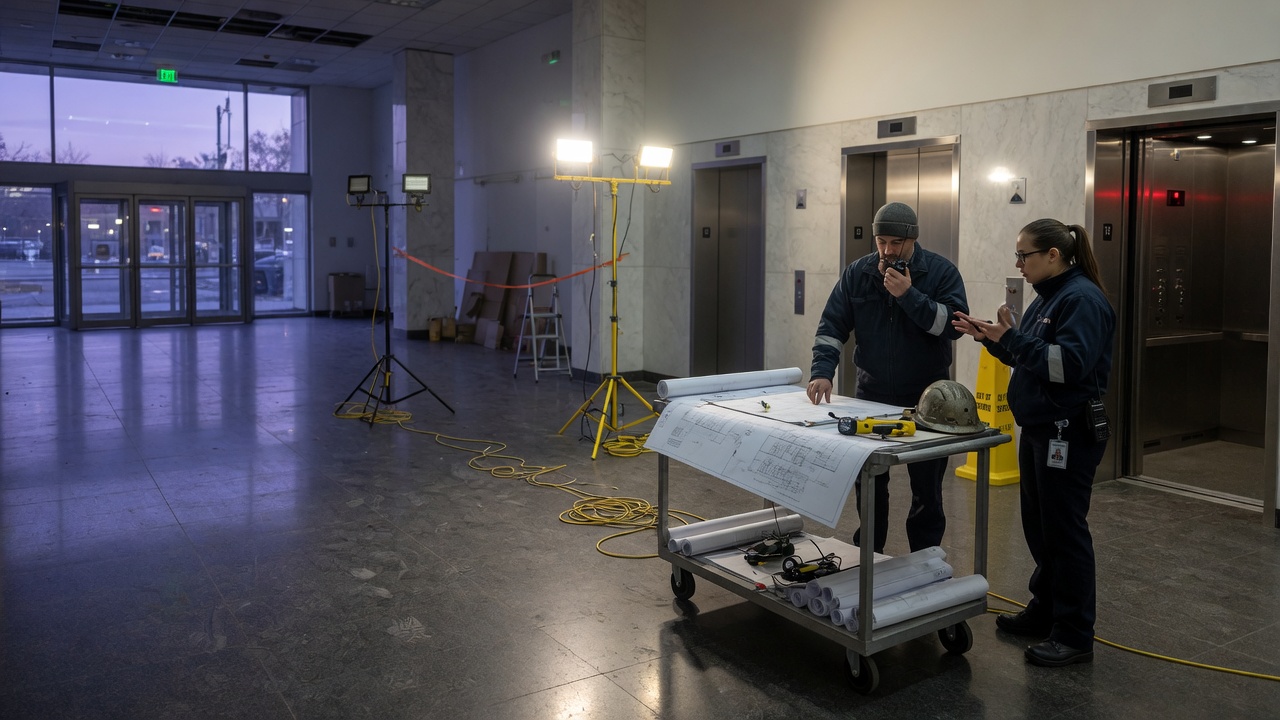
    1. Life safety and emergency action — evacuate, account, coordinate with responders
    2. Building systems recovery — power, water, HVAC, elevators, fire/life safety, BMS
    3. Tenant operations — communications, access, partial occupancy strategies
    4. Vendor network — pre-positioned restoration, shoring, board-up, temporary power
    5. Data and documents — drawings, insurance policies, LL97 / ESPM access, contracts
    6. Capital and claims — documentation that survives adjusters and boards

    RTO thinking for buildings

    FunctionQuestion to answer before the event
    Fire / life safetyWhat must be restored before any re-entry?
    Vertical transportationWhich banks first for partial operations?
    Heat / cool in extreme weatherWhat is the tenant risk window?
    Broadband / access controlHybrid work makes this a CRE issue, not an IT footnote
    ESPM / compliance portalsWho has credentials if the PM lead is offline?

    Playbook you can steal

    Before

    • Vendor MSA and after-hours numbers tested quarterly
    • Credential vault for utilities plus DOB / ESPM / BEAM
    • Photo baseline of critical equipment
    • Insurance schedule mapped to BINs

    During

    • Single incident commander per asset
    • Timestamped log (who decided what)
    • Tenant message templates
    • Separation of life-safety tasks from property-conservation tasks

    After

    • Claims package with photos, logs, and invoices
    • Lessons learned into CapEx
    • Emissions / energy impact notes for compliance files
    • Update the property-management BC playbook with what actually broke

    Relationship to the older “complete DR framework” article

    The existing site guide remains useful as a broad framework. This page is the CRE portfolio specialization and should be the start-here URL if you operate buildings. Do not treat the two as competing pillars — they stack.

    Related on BCESG

    Positioning note: generic “disaster recovery planning” queries are a classic-search sink. This page stays in the built-environment operator lane on purpose.

    Related reading: LL97 data to continuity and insurance, tenant communication playbook, and lender evidence pack. Sister hubs: Restoration Intel, Healthcare Facility Hub, Continuity Hub, Risk Coverage Hub, and Tygart Media.

  • Board Resolution Checklist: Local Law 97 for Co-ops and Condos

    Board Resolution Checklist: Local Law 97 for Co-ops and Condos

    Last verified: August 22, 2026. By Will Tygart. Written for co-op and condo boards and the managing agents who serve them. Not legal advice — counsel and a Registered Design Professional (RDP) finalize language and pathway calls.

    Co-op and condo Local Law 97 work usually dies in governance before it dies in engineering: unclear authority, unfunded mandates, a late RDP, and a pathway decision nobody minuted. This checklist is the meeting-ready spine. Pair it with the live co-op and condo LL97 playbook and the $268-per-ton calculator.

    2026 filing clock (do not skip this)

    NYC Accelerator and DOB still run the same three-step file: pay the fee in DOB NOW, share energy data in ENERGY STAR Portfolio Manager, then submit in BEAM with an RDP. The annual report is due May 1, with a 60-day grace period through June 30. For 2026, buildings that need more time may apply in BEAM by June 30 for a $60 extension that runs through August 29, 2026. Missing the file is a different (and often worse) problem than being over cap.

    Confirm your building is on DOB’s Covered Building List before you argue pathway folklore in the hallway.

    Pre-meeting packet (managing agent / president)

    • Latest ENERGY STAR Portfolio Manager property type(s) and gross floor area assumptions
    • Dual-period calculator printout (current period vs 2030)
    • Filing status: submitted / in grace / extension / not started
    • RDP engagement letter status and fee range
    • Reserve study excerpt (energy / capital)
    • Pathway status if anyone is talking Article 320 vs 321 — with evidence, not rumor
    • Vendor list: energy, facade, HVAC, filing consultant

    Resolution themes to draft (counsel finalizes language)

    1. Authority and roles

    • Designate a board officer and a managing-agent owner for LL97
    • Authorize spend up to a named dollar amount for RDP / filing without reopening the full board on every invoice (with reporting)
    • Require monthly compliance status in the board package through filing season

    2. Filing-season actions

    • Authorize timely filing or the extension application under current DOB rules
    • Authorize portal fees and access (BBL/BIN; credentials held by the agent with board visibility)
    • Require confirmation that submission artifacts are stored in board records

    3. Data quality

    • Direct the agent to reconcile utility data and Portfolio Manager anomalies before sign-off
    • Require a written explanation of any mixed-use factor weighting

    4. Capital and 2030

    • Commission or update an energy master plan aimed at 2030 limits
    • Tie major HVAC / envelope projects to intensity outcomes
    • Schedule owner communications on future assessments if CapEx is material

    5. Pathway and special situations

    • Document pathway analysis (rent-regulated share, Article 320 vs 321) with counsel and the RDP
    • Minute the decision and the evidence relied on

    6. Vendors and continuity

    • Require vendors to provide documentation suitable for good-faith / audit files
    • Align the emergency vendor list with who shows up if systems fail mid-retrofit

    Sample 30-minute agenda block

    1. Status (5) — filing clock
    2. Numbers (10) — calculator plus 2030 gap
    3. Decisions (10) — spend authority, RDP, extension yes/no
    4. Owner message (5) — what shareholders hear this month

    Red flags

    • No RDP on the calendar inside filing season
    • “We’ll use last year’s PDF” without a data refresh
    • Capital talk with no intensity target
    • Pathway folklore without written analysis

    After the vote

    • Store the resolution and exhibits in the board portal
    • Confirm the June 30 / extension owners on the calendar
    • Schedule a post-filing retrospective: what broke in data or vendors

    Related on BCESG

    Primary sources checked this pass: NYC Accelerator LL97 page (coverage, Article 320 vs 321, 2026 extension), NYC DOB LL97 greenhouse gas reductions page, and the live BCESG co-op playbook.

    Related reading: Article 320 vs 321, LL84 as the LL97 prerequisite, and LL97 fines calculator. Sister hubs: Restoration Intel, Healthcare Facility Hub, Continuity Hub, Risk Coverage Hub, and Tygart Media.

  • IFRS S1 and S2 Disclosure Checklist

    IFRS S1 and S2 Disclosure Checklist

    Last verified: August 22, 2026. By Will Tygart. Walk the board pack once. Answer Yes / Partial / No / N/A. Attach evidence in the same folder as energy and LL97 files. This is a working questionnaire for built-environment organizations, not the official ISSB text. Confirm numbering against IFRS Foundation materials.

    People are asking Copilot for a list they can fill in. The ISSB implementation guide is the parent. This page is the child checklist.

    S1 — General sustainability-related financial disclosures

    #QuestionY / P / N / NAEvidence pointer
    S1-1Has the board (or delegated committee) stated how it oversees sustainability-related risks and opportunities?
    S1-2Is management’s role in assessing and managing those risks documented, including which roles and how often they report?
    S1-3Have we described the sustainability-related risks and opportunities that could reasonably affect cash flow, access to finance, or cost of capital over short, medium, and long term?
    S1-4Have we described the current and anticipated effects on business model and value chain (including tenants, vendors, and locations)?
    S1-5Have we described the effects on strategy and decision-making, including transition plans if we have one?
    S1-6Have we described the effects on financial position, performance, and cash flows for the reporting period, and the anticipated effects?
    S1-7Have we described the resilience of our strategy to those risks, including the inputs used?
    S1-8Have we described the processes to identify, assess, prioritize, and monitor sustainability-related risks and how they integrate with overall risk management?
    S1-9Have we disclosed the metrics used, including those required by an ISSB thematic standard and any internally defined metrics?
    S1-10Have we disclosed the targets, the period, the base period, milestones, and performance against them?
    S1-11Have we applied the same reporting entity as the financial statements and explained judgments, uncertainties, and errors?

    S2 — Climate-related disclosures (on top of S1)

    #QuestionY / P / N / NAEvidence pointer
    S2-1Governance of climate risks and opportunities is explicit (board + management), not only “ESG” in general?
    S2-2Physical risks (acute and chronic) are identified at asset or portfolio level, not only as a paragraph?
    S2-3Transition risks (policy, market, technology, reputation) are identified, including stranded-asset logic for the building stock?
    S2-4Climate-related opportunities (efficiency, tenant demand, finance) are described with time horizons?
    S2-5Effects on business model, value chain, and financials are described for climate specifically?
    S2-6Climate resilience / scenario analysis is described (which scenarios, which portfolios, which decisions it changed)?
    S2-7Risk-management process for climate is described and linked to enterprise risk management?
    S2-8Scope 1, Scope 2, and (if material) Scope 3 greenhouse gas emissions are disclosed with method, consolidation, and period?
    S2-9The measurement approach, inputs, and changes from last period are disclosed?
    S2-10Climate-related targets (including GHG) state the metric, period, base year, absolute vs intensity, and planned use of carbon credits if any?
    S2-11Industry-based metrics relevant to real estate (energy intensity, vacancy, certified space, etc.) are considered?

    CRE-specific evidence that usually fills the blanks

    • ENERGY STAR Portfolio Manager exports and LL84 filings
    • Physical-risk screens by ZIP / flood / heat / wind
    • CapEx plan that names efficiency vs resilience jobs
    • Board minutes that show climate or LL97 as an agenda item
    • Vendor / tenant requirements that affect Scope 3
    • Continuity test logs (so resilience is not only a narrative)

    What this is not: legal advice. Not a claim that S1 has a counted official list of “30+ core disclosures.” Before you treat a row as gospel, walk the current IFRS Foundation HTML of S1 and S2.

    Related: mid-market templates · ESG frameworks hub · climate-risk guide.

    Related reading: mid-market disclosure templates, lender evidence pack, and SEC climate rescission vs LL97. Sister hubs: Restoration Intel, Healthcare Facility Hub, Continuity Hub, Risk Coverage Hub, and Tygart Media.

  • Linking Local Law 97 Data to Business Continuity and Insurance

    Linking Local Law 97 Data to Business Continuity and Insurance

    Last verified: August 22, 2026. By Will Tygart.

    In too many organizations, sustainability owns ESPM, risk owns the BCP binder, and insurance owns the renewal submission. Those packets should share DNA. LL97 forces annual, building-level truth about energy and emissions. Continuity forces truth about what breaks. Insurers and lenders ask questions that sit in the overlap.

    What LL97 artifacts are useful beyond DOB

    ArtifactContinuity useInsurance / lender use
    ESPM property type + GFACritical-function contextExposure description
    Annual emissions + factorsDependency on energy systemsTransition-risk narrative
    Filing + RDP workpapersVendor and data controlsGovernance-quality signal
    Retrofit roadmap to 2030Recovery of performance after eventsCapEx / risk-improvement story
    Outage / disaster energy documentationIncident recordsClaim and provision support

    90-day integration

    Days 1–30 — inventory

    1. List covered BINs and LL97 filing status on the 2026–2030 calendar
    2. Map each BIN to PM, RDP, and insurance schedule
    3. Store calculator outputs with the risk file, not only the ESG folder

    Days 31–60 — shared packet

    One digital binder per priority asset: LL97 summary (current + 2030), critical systems list (power, heat, life safety, elevators, BMS), vendor call tree, last incident log, open CapEx that improves both intensity and resilience.

    Days 61–90 — negotiation use

    Bring the packet to renewal meetings. Use 2030 exposure as a capital-prioritization argument, not a scare PDF. Align continuity tests with systems that dominate emissions (central plants).

    Disaster documentation is dual-use

    When a real event hits energy systems or occupancy, continuity logs become compliance evidence. Photos, timestamps, utility tickets, and vendor reports. See CRE portfolio disaster recovery (scheduled) and the live DR framework plus PM continuity playbook.

    Sister-site handoffs, on purpose: BIA methodology at continuityhub.org; catastrophe / carrier framing at riskcoveragehub.com; restoration / recovery ops at restorationintel.com.

    Related reading: disaster recovery for CRE portfolios, non-filing penalty estimator, and SEC climate rescission vs LL97. Sister hubs: Restoration Intel, Healthcare Facility Hub, Continuity Hub, Risk Coverage Hub, and Tygart Media.
  • Good-Faith Compliance Strategies When You Miss the LL97 Cap

    Good-Faith Compliance Strategies When You Miss the LL97 Cap

    Last verified: August 22, 2026. By Will Tygart. Not legal advice. Pathway and adjustment eligibility are building-specific.

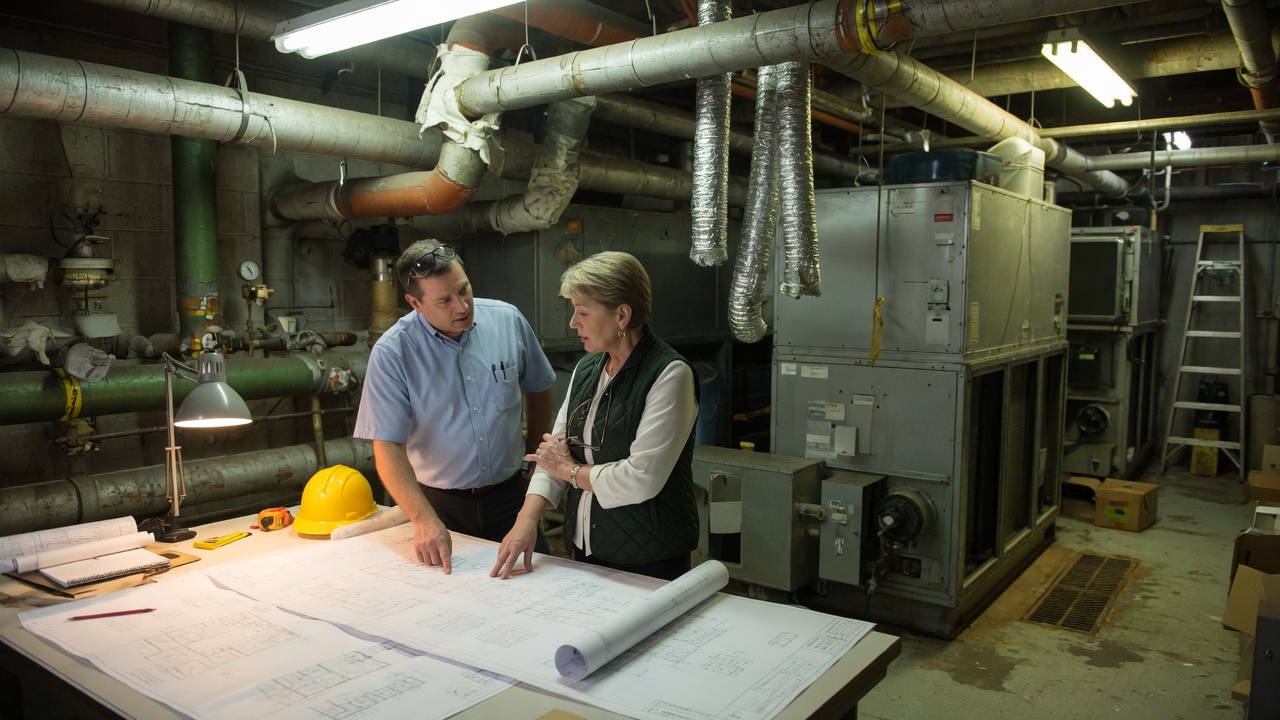
    Missing a cap is a management problem, not only a payment problem. DOB and counterparties look for credible, documented effort: accurate data, timely filing, professional involvement, and a path that could work.

    Priority stack when over cap

    1. File or extend correctly. Non-filing can dwarf overage. Use the non-filing estimator and the 2026 deadline guide.
    2. Fix data. Wrong factors and bad meters create fake overages and fake comfort. LL84-style ESPM hygiene is the spine.
    3. Model 2030. Read 2030 cap-tightening scenarios so you don’t buy a one-year story.
    4. Evaluate lawful tools with RDP and counsel — RECs, HPD-qualifying offsets (capped), 320.7 adjustments, pathway elections. NYC Accelerator publishes 320.7 adjustment guides for 320 and 321 buildings.
    5. CapEx that moves intensity — not vanity retrofits.
    6. Minute board decisions — see the co-op / condo playbook.

    Documentation kit (audit-ready folder)

    • ESPM exports and utility reconciliations
    • RDP engagement letters and work product
    • Board resolutions and budget approvals
    • Vendor scopes tied to intensity outcomes
    • Timeline of actions taken when overage was known
    • Disaster / outage records if energy systems were affected

    What “good faith” is not

    • Silence until an OATH letter
    • Spreadsheet folklore without an RDP
    • Buying offsets without understanding limits (including the 10% cap on the HPD-qualifying offset in current rulemaking)
    • A website claim of net-zero

    Related: $268 calculator · NYC Accelerator LL97 · DOB penalty mitigation guide (Article 320).

    Related reading: 2030 cap tightening scenarios, non-filing penalty estimator, and Article 320 vs 321. Sister hubs: Restoration Intel, Healthcare Facility Hub, Continuity Hub, Risk Coverage Hub, and Tygart Media.
  • Local Law 97: 2030 Cap Tightening Scenarios by Property Type

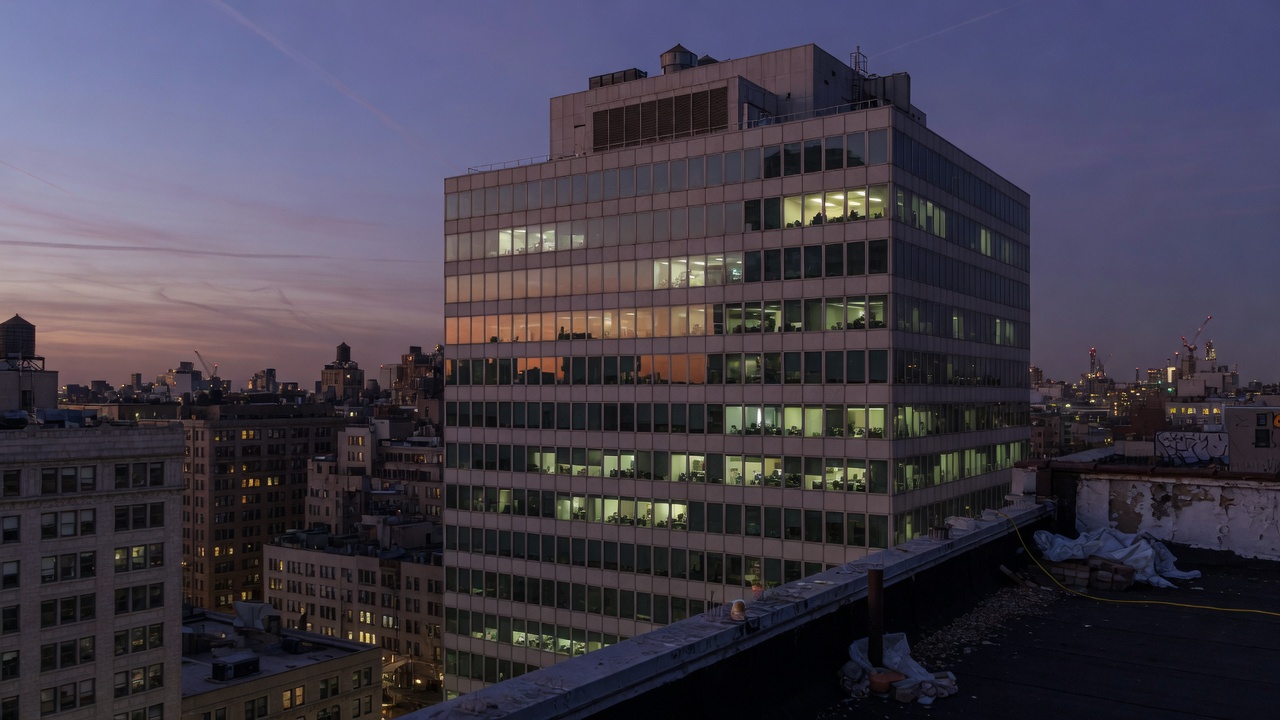
    Local Law 97: 2030 Cap Tightening Scenarios by Property Type

    Last verified: August 22, 2026. By Will Tygart. Read with the LL97 penalty calculator. Not legal advice. Confirm factors against 1 RCNY 103-14 and your RDP before any CapEx memo.

    Local Law 97 already has real reporting and penalty mechanics. The strategic shock for many portfolios is January 1, 2030, when emissions limits tighten sharply by property type. A building that looks “fine” under 2024–2029 factors can face a large annual overage in 2030 at the same energy use.

    NYC Accelerator’s public read of 2024 benchmarking: less than 10% of properties exceeded the first-period cap; about 57% are projected to exceed 2030–2034 limits. That is the planning problem.

    How limits work (refresher)

    Annual building emissions are compared to a limit derived from gross floor area × an emissions factor for the building’s ENERGY STAR Portfolio Manager property type (with mixed-use weighting). Overage metric tons × $268 is the statutory penalty-rate context used on this site. Factors and elections can be nuanced. Always confirm against 1 RCNY 103-14.

    Why 2030 is a different planning problem

    Period Planning posture
    2024–2029 limits Data quality, file on time, quick efficiency wins, document good faith
    2030+ limits CapEx sequencing, electrification pathways, tenant energy strategy, capital reserves, possible pathway elections

    Illustrative relative tightening — order-of-magnitude language for prioritization, not legal limits. Re-verify exact factors from the rule text:

    • Office — very large drop in allowed intensity (often cited in the ~65% class in explanatory materials)
    • Retail — among the steepest intensity cuts
    • Warehouse — steep cuts
    • Multifamily — material, often cited as less steep than office/retail (~50% class)
    • Data centers — material; still portfolio-specific

    The calculator and 1 RCNY tables are the math source of truth. Do not put the percentages above into a board resolution as if they were the Code.

    Scenario A — compliant now, exposed later

    Profile: office or retail with solid 2025–2026 reporting, modest overage or none under current factors.

    Risk: same EUI in 2030 → large annual penalty.

    1. Run dual-period calculator outputs for the asset
    2. Build a 2027–2029 CapEx path (envelope, HVAC, controls, electrification readiness)
    3. Align board reserve studies or CapEx committees to 2030, not only the next audit
    4. Tie vendor RFPs to measurable intensity outcomes

    Scenario B — filing is the emergency; 2030 is the strategy

    Profile: behind on 2026 reporting, RDP not booked, ESPM messy.

    1. Deadline / extension playbook
    2. Non-filing estimator
    3. Parallel track: data hygiene now, retrofit roadmap after the first clean filing year

    Scenario C — portfolio mix

    Rank assets by 2030 gap × square footage × hold period. One capital plan applied to office + multifamily + industrial wastes money. Sell / hold / renovate decisions include the LL97 path, not only NOI.

    Scenario D — board-governed housing

    Co-op / condo split incentives. Use the board resolution checklist (scheduled) and the live co-op playbook. Multi-year assessment funding — not a single annual surprise.

    Worked thinking (illustrative only)

    Take a 100,000 sq ft office with stable operations. Compute limit and emissions under current-period factors. Recompute with 2030 factors for the same property type. Delta tons × $268 = order-of-magnitude annual exposure if nothing changes. Compare that annuity to retrofit debt service. If the 2030 annuity exceeds credible efficiency financing, the conversation is asset strategy, not a compliance project.

    This quarter

    1. Dual-period estimate for every covered asset
    2. Flag the top quartile of 2030 exposure
    3. Book RDP / energy capacity before bottleneck seasons
    4. Put 2030 on the compliance calendar alongside 2026 filing chores

    Related: the NYC stack as one calendar.

    Related reading: good-faith strategies when you miss the cap, retrofit priority stack, and LL84 benchmarking. Sister hubs: Restoration Intel, Healthcare Facility Hub, Continuity Hub, Risk Coverage Hub, and Tygart Media.

BC ESG

ESG Strategy, Sustainability Intelligence, and Business Continuity for Forward-Thinking Organizations

© 2026 BC ESG — Business Continuity, ESG & Sustainability Intelligence