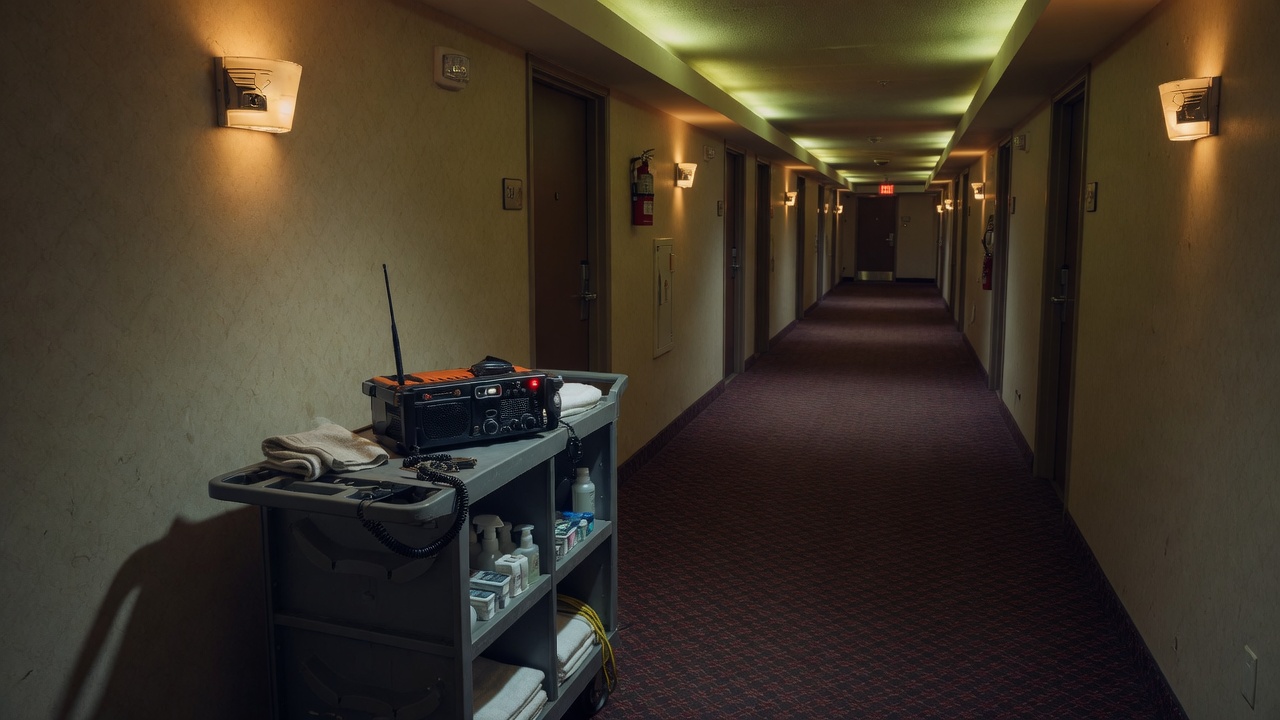
Business continuity in the hotel industry is the discipline of keeping a property safe, operational, and revenue-generating through disruptions such as hurricanes, cyberattacks, power loss, pandemics, and staffing crises. The internationally recognized framework is ISO 22301, the standard for business continuity management systems (BCMS), which runs on a Plan-Do-Check-Act lifecycle built around a Business Impact Analysis (BIA), defined Recovery Time and Recovery Point Objectives (RTO/RPO), tested recovery strategies, and rehearsed crisis communications. For hotels, the stakes are unusually high because the asset, the workforce, the guests, and the data systems all sit under one roof, and a single outage can simultaneously threaten life safety, brand reputation, and asset value.
What is business continuity in the hotel industry?
Business continuity (BC) is the capability of a hotel to continue delivering products and services at acceptable, predefined levels following a disruptive incident. It is broader than disaster recovery, which focuses narrowly on restoring IT systems and data. Business continuity covers the whole operation: front desk and reservations, housekeeping, food and beverage, the property management system (PMS), payment processing, life-safety systems, guest communications, and the supply chain that feeds linens, food, and energy into the building.
Hotels are a uniquely concentrated risk environment. Unlike an office that empties at night, a hotel is occupied 24 hours a day by guests who depend on the property for shelter, safety, and information during an emergency. A continuity failure is therefore not only a financial event but potentially a life-safety event. This is why mature hotel BC programs integrate emergency response and life safety directly into the continuity plan rather than treating them as separate documents.
What are the biggest threats to hotel business continuity?
The hospitality risk landscape in 2024-2026 is defined by the convergence of physical, digital, and human threats. Extreme weather is intensifying, ransomware has become an industry-wide epidemic, and labor shortages have made it harder to staff a coordinated response. The table below summarizes the leading threats, their operational impact, and core mitigations.
| Threat | Operational impact | Core mitigation |
|---|---|---|
| Natural disasters & extreme weather (hurricanes, floods, wildfire, extreme heat) | Property damage, forced closure, evacuation, lost occupancy; insurers raising premiums 20-50% or withdrawing from high-risk areas | Resilient construction to current flood/wind codes, flood barriers, backup power, pre-arranged evacuation and sheltering protocols, parametric insurance |
| Cyberattacks & guest-data breaches (ransomware, social engineering) | PMS and payment outages, theft of guest PII and card data, regulatory investigations; average hospitality breach cost ~$4.03M in 2025 | Multi-factor authentication, help-desk verification procedures, network segmentation, immutable offline backups, PCI DSS compliance, incident response plan |
| Power & utility failure | Loss of HVAC, lighting, electronic locks, PMS, refrigeration; immediate guest-safety and comfort impact | Generators with tested fuel supply, uninterruptible power supply (UPS) for critical systems, manual override procedures for door locks and check-in |
| Pandemics & public-health events | Demand collapse, occupancy crashes, workforce illness, sustained operating-model changes | Flexible staffing models, hygiene and isolation protocols, scenario-based demand planning, cross-training, liquidity reserves |
| Supply-chain disruption | Shortages of food, linens, amenities, and critical spare parts; price volatility | Diversified and local suppliers, safety stock of critical items, vendor continuity clauses, alternate-sourcing playbooks |
| Staffing & labor shortages | Inability to clean rooms, staff the response, or maintain service; recovery delays | Cross-training, retention incentives, automation of low-value tasks, on-call and agency rosters, documented emergency duty assignments |
How serious is the cyber threat to hotels specifically?
Cyber risk has moved to the front of the hotel continuity agenda. The 2023 attack on MGM Resorts International cost the company more than $100 million and was executed by the Scattered Spider group through a single social-engineering (vishing) call to the IT help desk, where an attacker impersonated an employee and obtained super-administrator access. On March 29, 2024, Omni Hotels & Resorts suffered an attack that forced systems offline and disrupted reservations, payment processing, and digital room-key access across many properties. In 2024, a breach at hotel-technology vendor Otelier exposed data tied to brands including Marriott, Hilton, and Hyatt, adding roughly half a million accounts to breach-notification databases. According to the 2025 Verizon Data Breach Investigations Report, ransomware features in 44% of breaches, and the average cost of a hospitality data breach reached approximately $4.03 million in 2025. The lesson for continuity planners is that the weakest link is often a process (help-desk verification) rather than a firewall.
How does extreme weather threaten hotel continuity and value?
2024 was the warmest year in the observational record, accompanied by an extraordinary run of extreme events. The financial tail is long: arrivals to the Hawaiian island of Maui were still down 24% a year after the 2023 wildfires, representing an estimated US$2.6 billion impact. During the 2024 Atlantic hurricane season, Hurricane Milton damaged or closed roughly a quarter of hotels in directly impacted Florida markets, according to JLL Hotels & Hospitality Group, while properties built to current standards for flooding, storm surge, and high winds suffered minimal damage. Annual climate-related economic losses exceeded US$230 billion per year during 2015-2024. For hotel real estate, this translates into rising insurance costs, restricted coverage in coastal zones, and growing investor scrutiny of physical climate exposure.
What is the business continuity planning lifecycle for a hotel?
ISO 22301 organizes continuity around a continuous Plan-Do-Check-Act (PDCA) lifecycle rather than a one-time document. The core phases below apply directly to a hotel.
| Phase | What it produces | Hotel-specific focus |
|---|---|---|
| 1. Business Impact Analysis (BIA) & risk assessment | Inventory of critical functions, maximum tolerable downtime, dependencies | Reservations/PMS, payment processing, electronic locks, life safety, housekeeping, F&B, guest communications |
| 2. Set RTO and RPO targets | Recovery deadlines and acceptable data-loss windows per function | Payment and PMS typically demand the shortest RTO/RPO; back-office can tolerate longer |
| 3. Recovery strategies | Backup systems, manual workarounds, alternate sites, redundancy | Manual check-in procedures, offline lock overrides, cloud PMS failover, generator power |
| 4. Plan development & emergency response | Written BC plan, incident response, evacuation and life-safety procedures | Integrated with NFPA 101 life-safety and fire procedures; clear duty assignments |
| 5. Crisis communications | Pre-drafted messaging, contact trees, spokesperson roles | Guests, staff, suppliers, owners/brand, media, and authorities |
| 6. Testing & exercises | Validated, rehearsed plan; identified gaps | Tabletop and full-scale drills; learning captured from real events |
| 7. Review & continual improvement | Updated plan reflecting changes and lessons learned | Refresh after staff turnover, renovations, system changes, and incidents |
What is a Business Impact Analysis for a hotel?
The Business Impact Analysis (BIA) is the foundation of the entire program. It identifies the hotel’s critical functions, quantifies how long each can be offline before unacceptable harm occurs, and maps the dependencies between them. For a hotel, the BIA typically prioritizes guest services, reservations, the PMS, payment processing, electronic door locks, life-safety systems, housekeeping, and food and beverage operations. The output of the BIA drives every downstream decision, because it tells planners where to concentrate scarce time, capital, and redundancy.
What do RTO and RPO mean for hotel systems?
Recovery Time Objective (RTO) is the maximum acceptable time a function can be down after a disruption. Recovery Point Objective (RPO) is the maximum acceptable amount of data loss, measured in time. In a hotel, payment processing and the PMS usually carry the most aggressive targets: an RTO measured in minutes to a few hours, and an RPO low enough that no completed reservation or folio charge is lost. A guest-loyalty analytics dashboard, by contrast, can tolerate an RTO of days. Setting these targets explicitly, per function, is what turns a vague aspiration (“get back up fast”) into an engineerable backup and failover design.
How do hotels protect guest safety and life safety?
Because guests sleep on the premises, life safety is the non-negotiable core of hotel continuity. In the United States, the governing framework is the NFPA 101 Life Safety Code, supported by NFPA 13 (sprinkler installation), NFPA 72 (fire alarm and signaling), NFPA 25 (inspection and maintenance of water-based suppression), and NFPA 96 (commercial cooking fire protection). Modern mid-rise and high-rise hotels generally require full sprinkler coverage, interconnected audible and visual fire alarms in all guest rooms and common areas, battery-backed emergency lighting, illuminated exit signage, and, in larger properties, an emergency voice/alarm communication system (EVACS) to direct occupants during an event. Sprinkler systems must be inspected and tested annually under NFPA 25, alarm notification devices require regular testing under NFPA 72, and staff must be trained to recognize alarms, locate the source, and execute response steps. A continuity plan that ignores these life-safety obligations is incomplete; conversely, a strong life-safety program is the first layer of resilience.
How do hotels build cyber and IT resilience?
IT resilience for hotels centers on three system families: the property management system (PMS), payment and point-of-sale systems, and the growing layer of IoT and smart-room devices (electronic locks, thermostats, voice assistants, building-management systems). Each is a continuity dependency and an attack surface.
Practical measures include multi-factor authentication on all administrative and remote access; strict identity-verification procedures at the IT help desk to defeat the social-engineering tactics that breached MGM; network segmentation so that a compromised guest Wi-Fi or smart-room controller cannot reach the PMS or payment environment; immutable, offline backups tested against ransomware; and PCI DSS compliance for cardholder data. Cloud-based PMS platforms can improve resilience by enabling failover and off-site data, but they also create vendor dependencies; the Otelier breach showed that a third-party hotel-tech provider can become the single point of failure for multiple brands. A robust IT continuity plan therefore includes manual fallback procedures, such as paper check-in and offline lock overrides, so the front desk can keep operating even when systems are dark.
What is ISO 22301 and why does it matter for hotels?
ISO 22301 is the international standard for business continuity management systems. The current published edition is ISO 22301:2019, which streamlined the original 2012 version. In February 2024, ISO published Amendment 1 (ISO 22301:2019/Amd 1:2024), adding climate-action requirements that oblige organizations to consider how climate change may affect their operations and stakeholders, a direct concern for weather-exposed hotel assets. A further revision is under development through ISO/TC 292 and is anticipated to follow. ISO 22301 matters for hotels because it provides a recognized, auditable structure, certification can support insurance negotiations, and brand and owner agreements increasingly expect documented continuity capability. Insurers reward proactive risk management: hotels with thorough continuity plans are viewed as less likely to file large claims, which can translate into more favorable premiums and coverage terms.
How does business continuity connect to ESG and resilience reporting?
For institutionally owned hotel real estate, business continuity has become part of the environmental, social, and governance (ESG) story, specifically the resilience dimension. The GRESB Real Estate Assessment, widely used by institutional real estate investors, asks entities in its 2025 framework to describe how they incorporate resilience into their climate strategy, including whether scenario analysis is used to evaluate that strategy. Physical climate risks, flooding, heatwaves, and wildfires, are increasingly seen as material to asset value; nearly two in five respondents in a GRESB and MIPIM survey said physical climate impacts will have the biggest effect on asset values in 2026. The practical implication is that a hotel’s BIA, climate scenario analysis, recovery strategies, and tested response are no longer purely operational artifacts. They are inputs to investor reporting, capital access, and valuation. ISO 22301’s 2024 climate amendment and the resilience indicators in GRESB are converging: a well-run continuity program is now also an ESG asset.
How should a hotel test and maintain its continuity plan?
A plan that is never exercised is a liability, because gaps surface only during a real crisis. ISO 22301 requires that continuity procedures be exercised and tested regularly, appropriate to the organization’s activities and risk profile. The most accessible method is the tabletop exercise: a guided, scenario-based discussion that brings decision-makers together to walk through a crisis, such as a ransomware lockout during peak occupancy or an evacuation during a hurricane. Tabletops reveal policy and communication gaps and clarify each leader’s authority limits and decision rights without real-world pressure. More advanced programs add part-scale or full-scale exercises, such as a live failover of the PMS or a timed evacuation drill, and they treat real incidents as learning opportunities. Plans should be refreshed after major staff turnover, renovations, system migrations, and every actual incident, closing the Plan-Do-Check-Act loop.
Frequently asked questions
What is the difference between business continuity and disaster recovery in a hotel?
Disaster recovery is a subset of business continuity focused on restoring IT systems and data after an outage. Business continuity is broader: it keeps the whole hotel operation running, including front desk, housekeeping, life safety, supply chain, and guest communications, not just the technology.
Which standard governs hotel business continuity?
ISO 22301 is the international standard for business continuity management systems. The current edition is ISO 22301:2019, with a 2024 amendment adding climate-action requirements. In the United States, life-safety elements are governed separately by NFPA codes such as NFPA 101.
What are RTO and RPO and which hotel systems need the tightest targets?
RTO (Recovery Time Objective) is how fast a function must be restored; RPO (Recovery Point Objective) is how much data loss is acceptable. Payment processing and the property management system typically need the tightest targets, often an RTO of minutes to hours and a near-zero RPO so no reservation or charge is lost.
What was the lesson of the MGM Resorts cyberattack for hotels?
The 2023 MGM attack, which cost over $100 million, began with a single social-engineering phone call to the IT help desk that yielded administrator access. The lesson is that strong identity-verification procedures at the help desk and multi-factor authentication are as important to continuity as technical defenses.
How often should a hotel test its business continuity plan?
ISO 22301 calls for regular exercises appropriate to the organization’s risk profile. In practice, hotels should run at least an annual tabletop exercise, conduct life-safety and evacuation drills on the schedule their jurisdiction and NFPA codes require, and refresh the plan after any major change or real incident.
Does business continuity affect a hotel’s insurance and asset value?
Yes. Insurers view hotels with thorough continuity plans as lower-risk and may offer more favorable premiums and coverage terms. For institutionally owned properties, resilience and climate scenario analysis feed ESG frameworks such as GRESB, where physical climate risk is increasingly treated as material to asset value.
How does a pandemic factor into hotel continuity planning?
Pandemics create demand collapse and workforce illness simultaneously. Continuity plans address them through flexible staffing models, cross-training, hygiene and isolation protocols, scenario-based demand planning, and liquidity reserves. Many operators permanently streamlined staffing models after the COVID-19 period, blending labor reductions with technology-driven efficiency.
Sources & further reading
- ISO 22301:2019 – Business continuity management systems (ISO)
- ISO 22301:2019/Amd 1:2024 – Climate action changes (ISO)
- Cyberattacks are draining millions from the hospitality industry (Help Net Security, 2025)
- Hotel Guest Data Exposed After Otelier Breach (Infosecurity Magazine)
- NFPA 101 Life Safety Code: 2024 Requirements Guide
- 2025 GRESB Real Estate Reference Guide (GRESB)
- 65% of surveyed hotels report staffing shortages (AHLA)
- Climate-related risks in real estate (OECD)
More in Climate Risk and About BC ESG.
Related reading: property-management BCP, disaster recovery for CRE portfolios, and the Restoration Carbon Protocol. Sister hubs: Restoration Intel, Healthcare Facility Hub, Continuity Hub, Risk Coverage Hub, and Tygart Media.