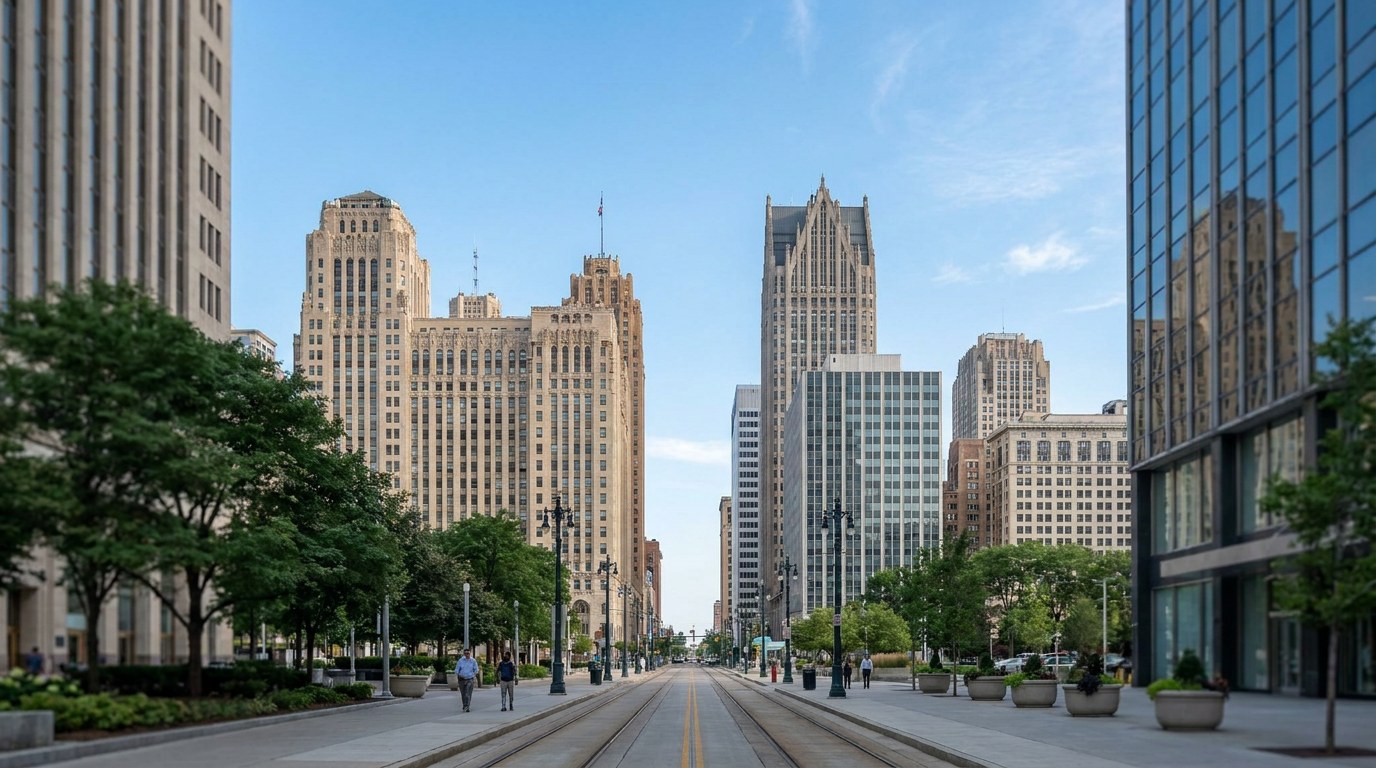
Short answer: Across Southeast Michigan, commercial, industrial, and multifamily landlords operate inside two closely aligned June 1 municipal transparency mandates: Detroit’s Energy and Water Benchmarking Ordinance (phased down to >=25,000 sq ft across 2024–2026) and Ann Arbor Code Chapter 104 / A2ZERO (fully phased down to >=20,000 sq ft).
Because Michigan has no statewide building benchmarking law, every statutory obligation rests locally inside Wayne and Washtenaw County municipal lines. Critically, unlike cities that carve out manufacturing and warehouse sheds, both Detroit and Ann Arbor explicitly pull industrial properties into annual June 1 electricity, gas, and water submissions — using shared DTE Energy automated data feeds.
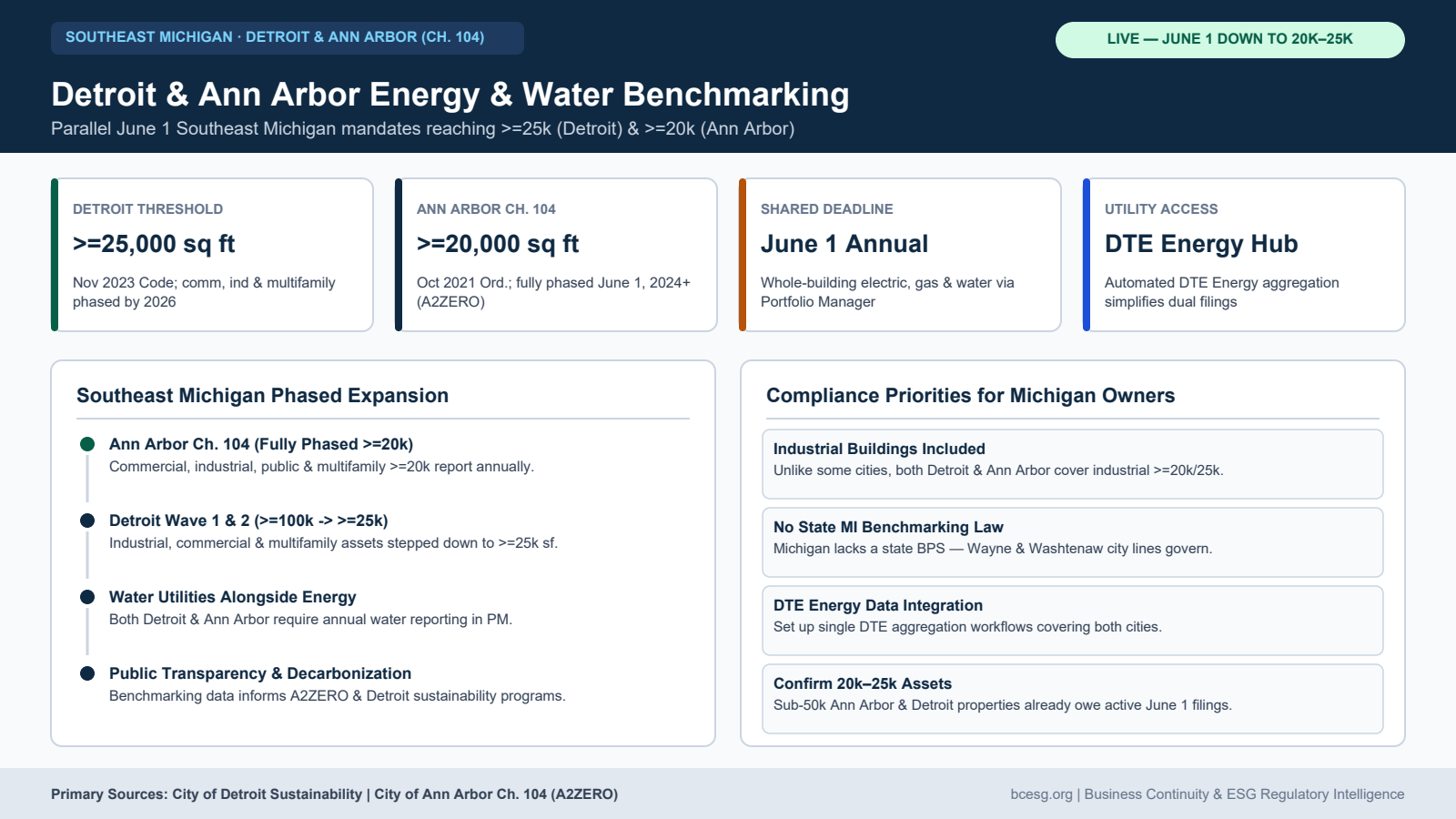
- Detroit (>=25,000 sq ft): Enacted Nov 2023; stepped down from >=100k to >=25k commercial, industrial, and multifamily buildings due annually June 1.
- Ann Arbor Ch. 104 (>=20,000 sq ft): Fully phased June 1, 2024 across commercial, industrial, public, and multifamily properties >=20,000 sq ft.
- Energy + Municipal Water: Both ordinances pair electricity and gas benchmarking with municipal water consumption in Portfolio Manager.
- Disclosure Only (No Numeric Caps): Neither Michigan city currently attaches GHG dollar caps or mandatory retro-commissioning cycles.
Download the Detroit & Ann Arbor Benchmarking Checklist
Handling DTE Energy Aggregation & Industrial / Multi-Building Parcels
Regional logistics centers, R&D labs, and multifamily towers spanning Midtown Detroit, Corktown, and Ann Arbor share DTE Energy’s electric (and in many Ann Arbor parcels, DTE Gas) aggregated benchmarking service. Request whole-building tenant-aggregated CSV/web-service feeds in April so single-building industrial warehouses with triple-net tenant utility meters meet June 1 deadlines without chasing individual tenant invoices.
- Verify Triple-Net Industrial Leases: Warehouse owners often lack direct tenant gas/electric accounts — use DTE Energy’s landlord whole-building aggregation portal.
- Track Water Sub-Accounts: Pull Detroit Water & Sewerage Dept. (DWSD) and City of Ann Arbor municipal water logs alongside DTE meters.
| City & Citation | Threshold & Coverage | Annual Due Date | Utilities Covered |
|---|---|---|---|
| Detroit (Nov 2023 Code) | Comm, ind & multifamily >=25,000 sf | Annual June 1 | Electricity, gas & municipal water (PM) |
| Ann Arbor (Ch. 104 / A2ZERO) | Comm, ind, public & multi >=20,000 sf | Annual June 1 | Electricity, gas & municipal water (PM) |
Compliance Execution Checklist
| Step | Owner / Team | Auditable Deliverable |
|---|---|---|
| 1. Industrial & MF Sweep | Asset Management | Include >=25k Detroit & >=20k Ann Arbor industrial/warehouse/multi assets. |
| 2. April DTE & Water Pull | Property Ops | Request DTE Energy aggregated data + DWSD / Ann Arbor water bills. |
| 3. June 1 PM Submission | Compliance Lead | Share municipal Portfolio Manager links cleanly before June 1. |
Keep This Detroit & Ann Arbor, MI Compliance Checklist Handy
Frequently Asked Questions
Are industrial warehouses covered under Detroit and Ann Arbor benchmarking ordinances?
Yes. Both Detroit (>=25,000 sq ft) and Ann Arbor Ch. 104 (>=20,000 sq ft) cover commercial, industrial, and multifamily buildings annually by June 1.
What size threshold currently triggers Detroit's benchmarking rule?
Passed in November 2023 on a 2024–2026 phase-down from >=100,000 sq ft, Detroit's ordinance covers buildings starting at >=25,000 sq ft.
Primary Authorities & Official Resources
- City of Detroit — Energy & Water Benchmarking Ordinance
- City of Ann Arbor — Ch. 104 Benchmarking (A2ZERO Update PDF)
Informational notice: This guide summarizes enacted statutes, regulations, or pending legislative records from the primary authorities linked above as of November 14, 2026. It is not legal, accounting, or licensed engineering advice.