BC ESG · Washington Space Cluster Segments (November 16, 2026)
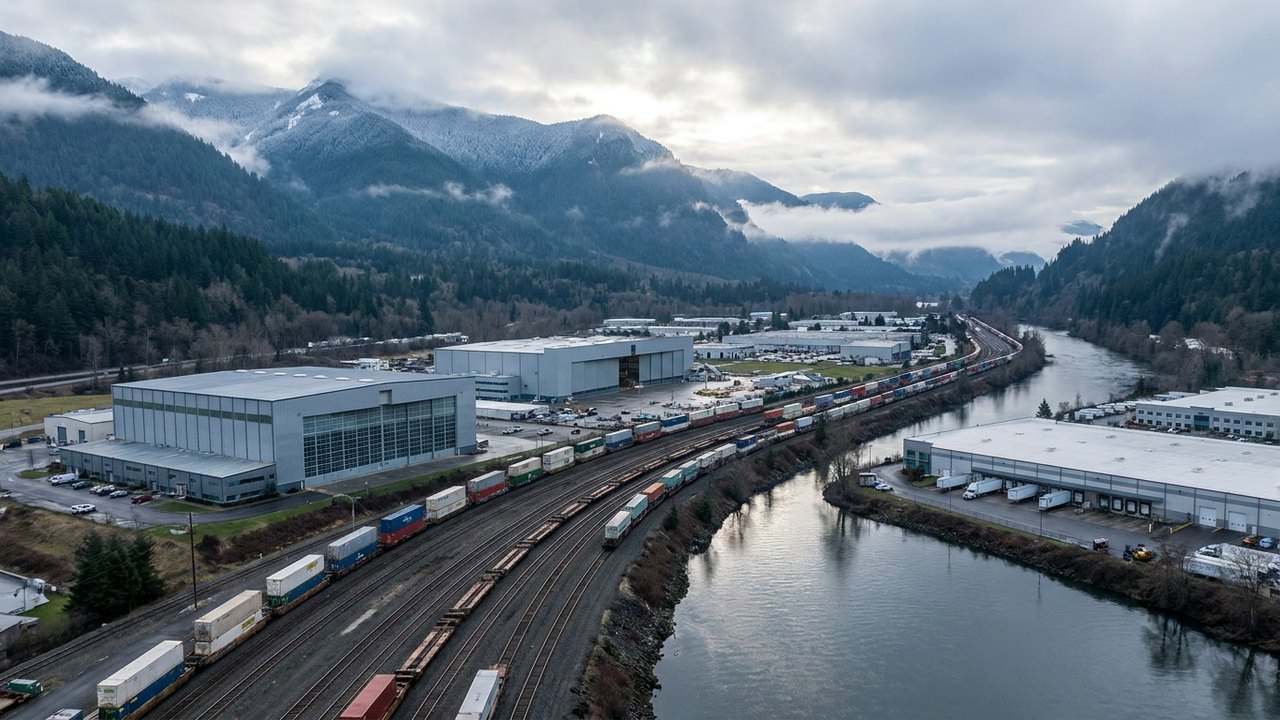
Sourced Baseline: Cowboy Space (~290k sq ft Kent) sits in the Green River corridor; Starcloud sits in Redmond/Woodinville; all 3 depend on external launch cadence and radiation-tolerant supply.
Ground Assembly Geography Meets Orbital Launch Dependency
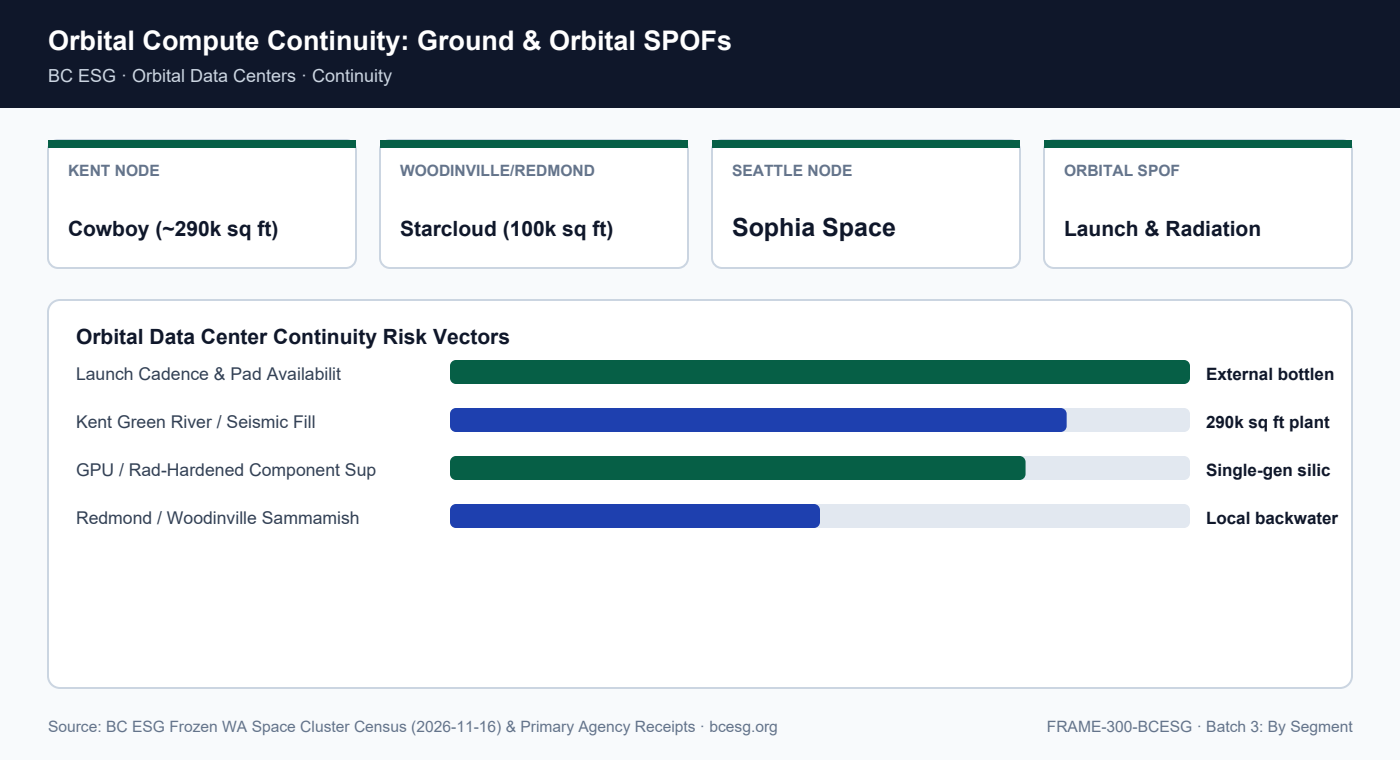
Even though orbital compute aims to bypass terrestrial grid queues, its assembly lines remain exposed to Puget Sound corridors: Cowboy Space (~290,000 sq ft in Kent) sits in the Lower Green River valley, while Starcloud splits between Redmond and Woodinville in the Sammamish basin.
Beyond facility geography, the segment's defining single point of failure is launch cadence and radiation-tolerant GPU/radiator supply: hardware cannot be serviced easily on orbit, making launch delays or single-event-upset (SEU) failures irreversible without replacement launches.
| Node / Vector | Operator(s) | Continuity Risk | Impact |
|---|---|---|---|
| Kent Valley (~290k sq ft) | Cowboy Space | Green River floodplain & liquefaction | Rocket & compute assembly pause |
| Redmond / Woodinville | Starcloud | Sammamish corridor / I-405 | Starcloud-3/4 integration delay |
| Launch & Silicon Supply | All 3 operators | Out-of-state launch slots & GPU lead times | Constellation deployment slip |