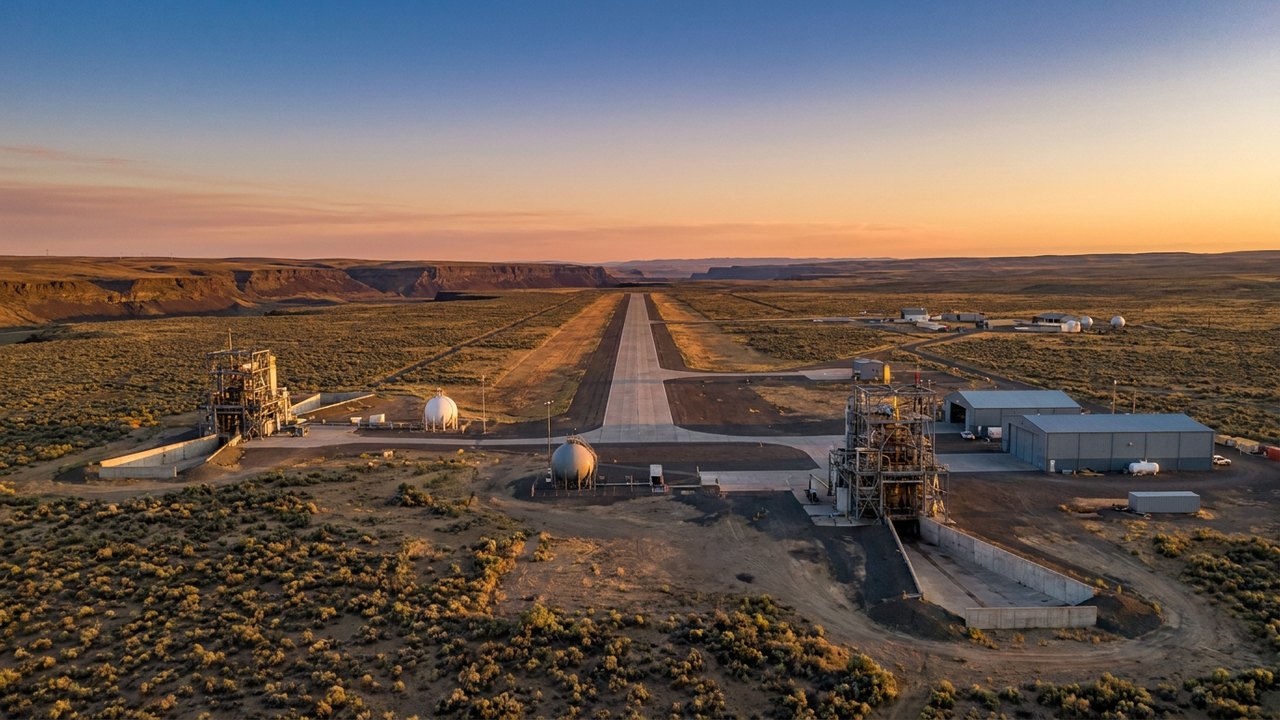
Operational playbook grounded in shared-trackage and 2014 rail-loss precedents.
FREIGHT, RAIL & VALLEY · CLOSURE PLAYBOOK · OPERATIONAL PLAYBOOK
Rail Disruption & Auburn Yard Playbook
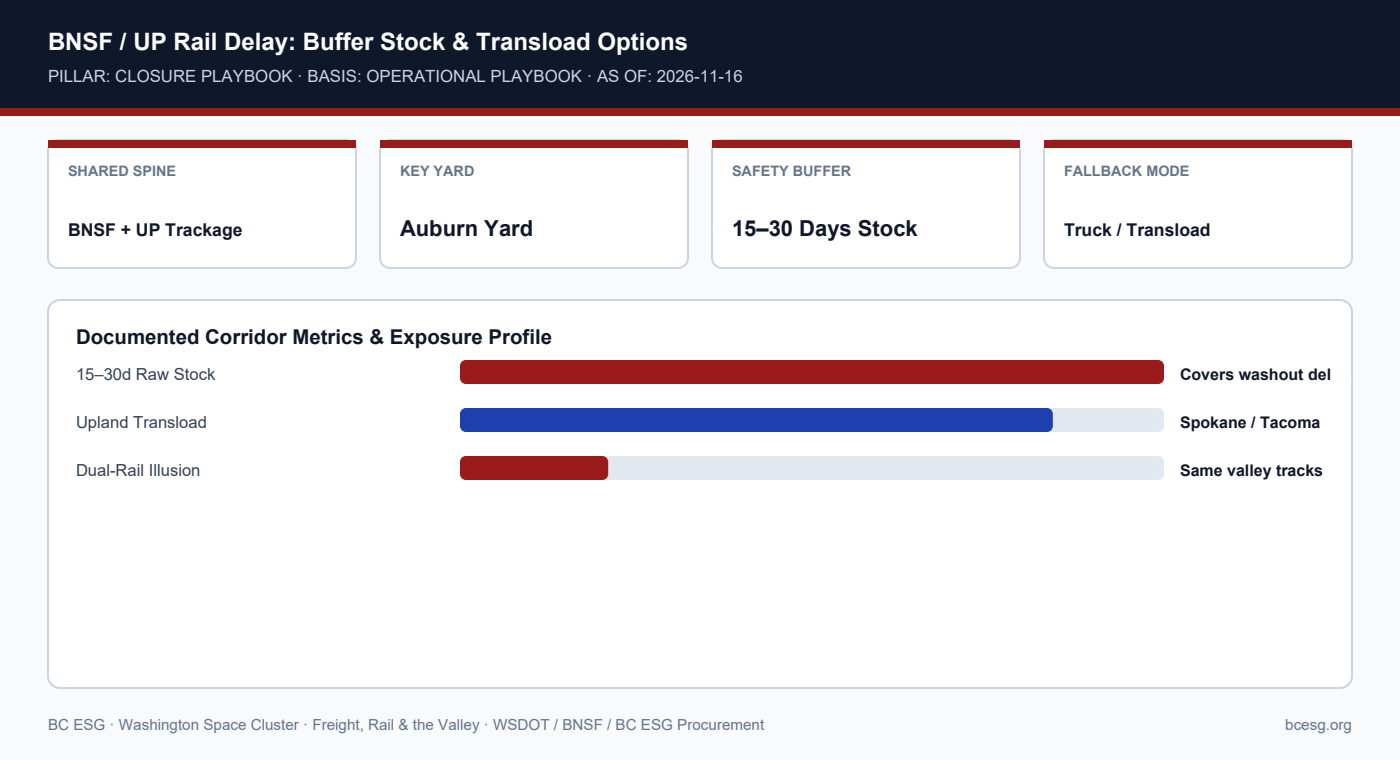
Because BNSF and Union Pacific share the same Green River Valley tracks and Auburn Yard sits on the floodplain, procurement leads need safety-stock buffers and upland transload options for rail-dependent metals and tooling.
Primary Agency / Source: WSDOT / BNSF / BC ESG Procurement | As-Of / Horizon: 2026-11-16
Documented Corridor Facts & Continuity Record
- Verify which tier-1 aluminum/titanium plate, forging, or chemical suppliers rely on BNSF or Union Pacific carload deliveries through Auburn Yard.
- Maintain 15–30 days of critical-alloy safety stock on site (above flood elevation) to absorb 1–2 week rail washouts or derailment delays.
- Pre-qualify an upland rail-to-truck transload terminal (e.g., Spokane or Tacoma upland) for emergency flatbed conversion.
Rail Continuity Controls for Space Procurement
| Vulnerability | Why Dual-Carrier Fails | Mitigation |
|---|---|---|
| Valley Mainline Washout | UP runs on BNSF tracks | 15–30d on-site alloy safety stock |
| Trans-Cascade Derailment | 2014 Clark Fork precedent | Full-replacement transit insurance + spare |
Operational Exposure & Facility Playbook
- Require suppliers to flag any raw-material shipments routed by rail rather than dedicated truck.
- Audit DFARS 252.225-7009 specialty-metals traceability before buying emergency spot-market replacements.
- Review rail-siding flood history if your facility uses direct spur delivery.
Connected Valley Cities, Segments & Role Briefs
- WA Space Cluster Hub (#1382)
- Auburn WA Space Cluster Profile
- Supply-Chain & Procurement Desk Brief
- Components & Materials Continuity Exposure