Tag: Local Law 97

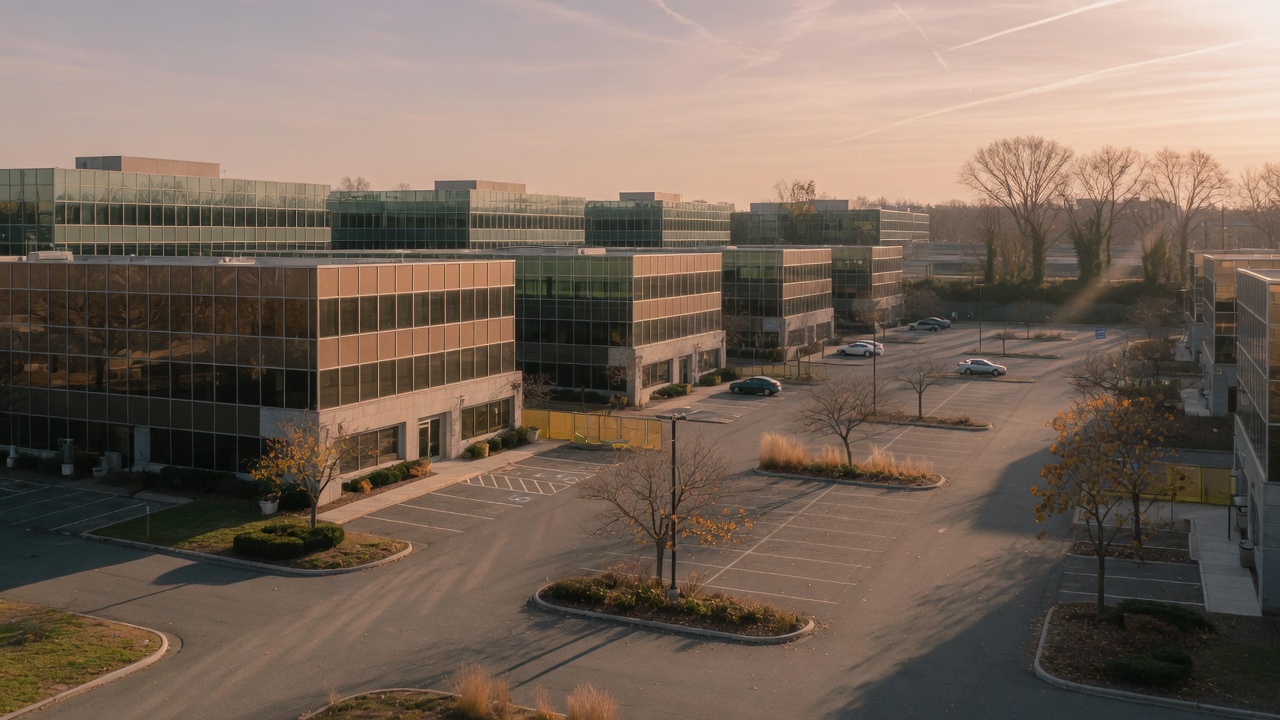
  • Is Local Law 97 Only for NYC? What Long Island Commercial Buildings Actually Face in 2026

    Is Local Law 97 Only for NYC? What Long Island Commercial Buildings Actually Face in 2026

    Last updated: June 9, 2026. By Will Tygart. Written for Long Island commercial property and facility managers — including the verified negatives no one else publishes.

    Yes — Local Law 97 applies only inside New York City’s five boroughs. A commercial building in Nassau or Suffolk County has no LL97 obligation, no emissions cap, and no benchmarking filing due — and as of June 2026, neither county nor any Long Island town has adopted an equivalent. One disambiguation that trips up even the search engines: Long Island City is in Queens, which means LL97 fully applies there — and since Brooklyn and Queens sit on the geographic island of Long Island, a “Long Island portfolio” can absolutely contain covered buildings. The clean rule: coverage follows NYC Department of Finance tax lots, not geography.

    That is the myth busted. Here is what a Long Island commercial building actually faces in 2026 — which is not nothing.

    The applicability table (what applies on Long Island, really)

    Mandate Applies in Nassau/Suffolk? Status as of June 2026
    NYC Local Law 97 (emissions caps) No Five boroughs only — but it reaches your NYC buildings and your NYC-exposed tenants
    NYC LL84 benchmarking No No Nassau, Suffolk, Hempstead, or Islip benchmarking ordinance exists
    2025 NYS Energy Code (ECCCNYS) Yes In force statewide for permit applications filed on/after Dec 31, 2025 — no grace period; notably stricter air-leakage and air-barrier testing for commercial buildings
    All-Electric Buildings Act (new construction) Pending Enforcement suspended per the Nov 12, 2025 stipulation until ~4 months after the Second Circuit rules; towns may keep permitting fossil-fuel systems meanwhile
    Town of Babylon green building law Babylon only New commercial buildings ≥4,000 sqft must demonstrate LEED certification; $0.03/sqft fee (capped $15,000), refunded on certification — the one true local green mandate on the island
    NYS Part 253 mandatory GHG reporting Large facilities only 10,000+ tCO2e/yr facilities (large hospitals, campuses, industrial) track CY2026 now; first reports due June 1, 2027. Typical offices fall far below the threshold — but fuel suppliers report regardless
    NY cap-and-invest (carbon price) Indirectly, later Delayed to late 2026–2027; when live, allowance costs flow into LI heating fuel and gas prices

    Also worth knowing: New York State’s own climate law was just amended — the May 26, 2026 budget bill dropped the CLCPA’s 2030 milestone in favor of a softer 2040 target. Our full breakdown covers it; the short version for LI operators is that the state-level pressure eased while the city-level pressure (LL97) did not move an inch.

    So why do LI property managers keep getting carbon questions?

    Three channels reach Long Island operators without a single LI ordinance:

    1. Portfolio spillover. An LI-based management firm with even one NYC building over 25,000 sqft carries full LL97 exposure on it: the $268/tCO2e penalties, the May 1 reporting cycle (CY2025 grace ends June 30, 2026), and the 2030 caps that roughly 57% of covered buildings currently exceed. The firm’s compliance muscle has to exist anyway — the only question is whether it stops at the city line.
    2. Tenant and investor demand. GRESB-reporting owners and corporate tenants under California SB 253 and the EU’s CSRD need emissions data from their Long Island spaces and vendors regardless of New York law — the lease, not the legislature, is the enforcement mechanism. This is exactly the gap the Commercial Restoration Carbon Protocol covers on the vendor side.
    3. The coming fuel-price channel. Part 253 reporting puts LI fuel suppliers into the state’s carbon accounting now; when cap-and-invest launches, allowance costs arrive as operating expense, not as a filing.

    The carrot side: what an LI building can collect in 2026

    No mandates does not mean no money. The island’s two energy programs are unusually generous right now:

    • PSEG Long Island — Business First (announced March 2026): grants up to $125,000 for business customers, free commercial energy assessments, heat-pump HVAC and water-heater rebates (up to $1,200 for ENERGY STAR HPWHs), multifamily heating/cooling rebates of $4,000 per apartment ($5,000 in designated Disadvantaged Communities), EV make-ready up to $45,000 per charging plug, and a concierge “Business FIRST Advocate” service (PSEG LI). One LI-specific quirk: PSEG LI/LIPA runs its own programs outside the state’s Clean Heat utility pool — cite PSEG LI program pages, not Con Edison’s.
    • National Grid (LI gas): commercial rebates on high-efficiency boilers, water heaters, controls, and heat recovery — plus a gas demand-response program paying up to 15% of a building’s annual gas bill, rising to 20% when the incentive funds an efficiency project (National Grid).

    For an LI facility manager, the rational 2026 posture is: harvest the incentives while they are rich, build the data habit voluntarily, and let your NYC-exposed peers’ compliance pain be your preview.

    The watch-list (what would change this answer)

    • The Second Circuit ruling on the All-Electric Buildings Act — enforcement resumes roughly four months after a decision upholding it, hitting most new LI buildings under 7 stories and commercial under 100,000 sqft.
    • Statewide private-building benchmarking — bills like S838 (annual energy/water benchmarking for private buildings >50,000 sqft statewide) have been proposed but not enacted; passage would create LI’s first filing obligation.
    • Cap-and-invest litigation — courts have ordered DEC to move faster on economy-wide rules; the state’s appeal continues through 2026.

    This page is maintained against those three triggers — the “as of” date at the top is the tell.

    What this means for each seat at the table

    If you are the… On Long Island in 2026, your move is…
    Owner No LL97 line item — but if any NYC building is in the portfolio, its compliance calendar is yours, and lender/investor ESG questionnaires do not check county lines. Harvest PSEG/National Grid money on equipment you were replacing anyway.
    Facility / property manager Your binding documents are the 2025 NYS Energy Code on every permit and (in Babylon) the LEED ordinance on new commercial work. Build the vendor and energy data habit voluntarily now — the requests are coming from tenants before they come from Albany.
    Tenant (corporate occupier) Your SB 253 / CSRD / GHG Protocol obligations follow you onto Long Island even though LL97 does not — the restoration job in your Melville office is still your Scope 3 Category 1 line item.

    Frequently asked questions

    Is Local Law 97 only for NYC?

    Yes. LL97 covers buildings on New York City tax lots in the five boroughs. Nassau and Suffolk County buildings have no LL97 obligation — though Brooklyn and Queens, which sit on the geographic island, are fully covered, and Long Island City (in Queens) is covered despite the name.

    Does Long Island have its own building emissions or benchmarking law?

    No. As of June 2026, neither Nassau nor Suffolk County, nor towns including Hempstead and Islip, has adopted an energy benchmarking or emissions-cap ordinance. The one true local green-building mandate is the Town of Babylon’s LEED certification requirement for new commercial buildings of 4,000 square feet or more.

    What energy rules DO apply to a Long Island commercial building?

    The 2025 NYS Energy Code (ECCCNYS), in force statewide for permits filed on or after December 31, 2025 with no grace period; the suspended-but-pending All-Electric Buildings Act for new construction; and, for facilities emitting 10,000+ tCO2e a year, the Part 253 mandatory GHG reporting rule (first reports June 1, 2027).

    Will New York’s cap-and-invest program affect Long Island buildings?

    Indirectly, yes — when it launches (now expected late 2026 or 2027), fuel suppliers will pass allowance costs into heating fuel and natural gas prices. It arrives as an operating cost, not a compliance filing.

    My firm manages buildings in both NYC and Long Island — what should we do?

    Run one compliance program with two zones: full LL97/LL84 machinery for the NYC assets (the CY2025 grace deadline is June 30, 2026), and on the LI side, incentive harvesting (PSEG Business First, National Grid demand response) plus voluntary energy and vendor-carbon data collection so tenant and investor requests never catch you flat.

    Primary sources

    More in Local Law 97 and About BC ESG.

    Related reading: how to file Local Law 97, LL84 benchmarking as the LL97 prerequisite, and the Restoration Carbon Protocol. Sister hubs: Restoration Intel, Healthcare Facility Hub, Continuity Hub, Risk Coverage Hub, and Tygart Media.
  • How to File a Local Law 97 Report: The DOB NOW, ESPM, and BEAM Walkthrough Nobody Gives You

    How to File a Local Law 97 Report: The DOB NOW, ESPM, and BEAM Walkthrough Nobody Gives You

    Updated October 6, 2026.

    As of October 6, 2026, CY2025 LL97 filing deadlines have passed; use this DOB NOW → ESPM → BEAM walkthrough for the next filing cycle and verify current deadlines in city systems — not invented outcomes here.

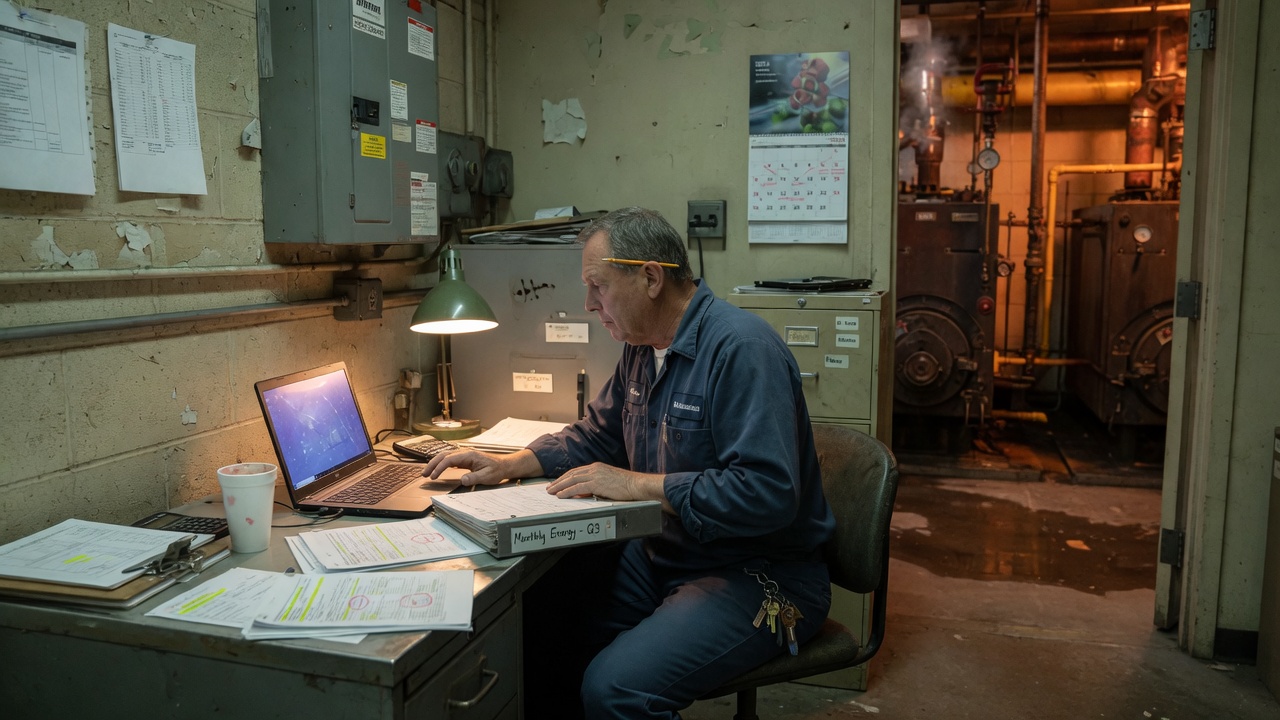
    Filing a Local Law 97 report takes three separate city systems used in a fixed order — pay the fee in DOB NOW: Safety, stage your energy data in ENERGY STAR Portfolio Manager, then file in BEAM — and because the systems sync overnight, the whole sequence physically cannot be completed in one day. That is not an exaggeration; it is the Department of Buildings’ own guidance. As DOB’s assistant commissioner for sustainability put it: “You cannot complete a report in one day and you need to plan for that” (Habitat, March 2025). Here is the full walkthrough — who does what, in what order, with which fees — written for the person actually coordinating it.

    Before you touch a portal: the five things to line up

    1. Confirm your building is on the Covered Buildings List. The current-year CBL is published on DOB’s LL97 page; coverage follows Department of Finance records (>25,000 gsf single building; 50,000 gsf tax-lot or condo-board aggregates). Disputes are filed as a ticket in BEAM — not by email, not by phone.
    2. Book your Registered Design Professional now. Only a NY-licensed PE or RA can certify and submit an Article 320 report. RDP calendars compress brutally in May and June; the engineer, not the portal, is the real bottleneck.
    3. Gather your identifiers: BBL (borough-block-lot) and BIN numbers, plus the ESPM property ID. Reports and fees are keyed to these.
    4. Align the email addresses. The owner, the property manager, and the energy consultant must use consistent email addresses across all three systems — mismatched emails are the most common reason a filing stalls with no error message.
    5. Check your ESPM property type. “Other” and “Mixed Use” property types are prohibited for LL97 reporting. If your building is typed that way in Portfolio Manager, fix it before anything else — the report cannot file against it.

    October 2026 status: The June 30, 2026 statutory deadline and the August 29, 2026 extended deadline (for buildings that secured a $60 extension by June 30) are both in the past. Use DOB BEAM and DOB NOW records to verify whether your building filed; this article does not state filing outcomes for any property.

    Step 1 — DOB NOW: Safety: pay first, or nothing unlocks

    All LL97 fees are paid in DOB NOW: Safety, and BEAM will not accept your report until the payment clears — which happens in the overnight sync, not instantly. The fee schedule (1 RCNY 101-03):
    Filing Fee
    Simple annual emissions report $210
    Complex annual emissions report $615
    Extension request $60
    Good-faith-efforts report $950
    Article 321 mediated resolution report $800
    Practical translation (filing year when the statutory deadline was June 30): coordinators paid in DOB NOW by June 29 because systems sync overnight, and many treated June 26 as the last safe start date. In October 2026, confirm the active deadline in BEAM for your next report rather than assuming CY2025 timing still applies.

    Step 2 — ENERGY STAR Portfolio Manager: where the numbers live

    Your building’s energy consumption — electricity, gas, steam, fuel oil — flows from ESPM, the same system used for LL84 benchmarking (due the same May 1). Three coordinator notes:
    • Find your ESPM Data Administrator early. Buildings change managers and consultants; the person who holds administrative rights over the ESPM record is frequently someone who left two years ago. Recovering access takes days you may not have.
    • Whole-building data means tenant data. If tenants are separately metered, their consumption still counts against the building’s number — the annual tenant-data chase should start in January, not May.
    • LL84 and LL97 feed from the same trough. Upload once, comply twice: current LL84 benchmarking is also a legal prerequisite for LL97 good-faith-efforts penalty mitigation.

    Step 3 — BEAM: where the report actually files

    The BEAM portal (launched March 3, 2025) is where the RDP certifies and submits the report — and where everything else LL97 happens too, as numbered tickets: extension requests, Covered Buildings List disputes, penalty-mitigation claims, and deductions. Two things to know:
    • BEAM unlocks only after your DOB NOW payment has cleared overnight. Pay Monday, file Tuesday at the earliest.
    • The RDP submits; you prepare. A smooth filing is one where the engineer logs in to a record with clean ESPM data, matching emails, and a cleared fee — and spends their billable hour certifying instead of troubleshooting.

    The complete sequence, as a checklist

    When Action System Who
    January Start tenant energy data collection; verify ESPM access and property type ESPM PM / consultant
    February Book the RDP; confirm CBL status; align emails across systems — PM
    March–April Complete ESPM data for the calendar year; run LL84 benchmarking ESPM Consultant
    April Pay the LL97 filing fee DOB NOW: Safety PM
    By May 1 RDP certifies and submits the report BEAM RDP
    CY2025 late deadline: June 30, 2026 (passed) File within grace, or pay $60 and apply for extension to Aug 29 BEAM + DOB NOW PM

    If something goes wrong

    • Building should not be on the CBL (sold, demolished, under threshold)? File the CBL dispute ticket in BEAM with DOF documentation — do not simply skip filing; the $0.50/sqft/month non-filing penalty attaches to the listed property until the list changes.
    • Over the cap? File anyway — filing and penalty exposure are separate questions — then pursue good-faith-efforts mitigation (1 RCNY 103-14(i)(2)) or, after a documented disaster, the penalty-zero provision (103-14(i)(1)).
    • Missed the June 30, 2026 deadline with no extension? Penalties may still accrue; file as soon as possible and verify status in BEAM: penalties accrue monthly and retroactively to May 1, so every month of delay on a 60,000 sq ft building is another $30,000.

    What this means for each seat at the table

    If you are the… Your part of the filing is…
    Owner Authorize fees early and sign off on the RDP engagement in Q1, not Q2. The cheapest LL97 program is the one that never touches the penalty schedule.
    Facility / property manager You are the integration layer: CBL status, identifiers, email consistency, ESPM access, tenant data, fee payment, and the RDP’s calendar. The portals don’t talk to each other — you are the API.
    Tenant Your meter data is part of the building’s filing. Answering the energy-data request in February instead of April is the single most helpful thing you can do — and increasingly, leases require it.

    Frequently asked questions

    How do I file a Local Law 97 report?

    In three systems, in order: pay the filing fee in DOB NOW: Safety ($210 simple / $615 complex), stage the building’s energy data in ENERGY STAR Portfolio Manager, then have a Registered Design Professional certify and submit the report in the BEAM portal. The systems sync overnight, so the sequence takes a minimum of two days.

    What is the BEAM portal?

    BEAM (nyc.beam-portal.org) is DOB’s LL97 filing system, launched March 3, 2025. Reports, extension requests, Covered Buildings List disputes, and penalty-mitigation claims are all submitted there as numbered tickets.

    Why won’t BEAM accept my report?

    The two most common causes: the DOB NOW fee payment has not cleared the overnight sync yet, or the email addresses on the BEAM, DOB NOW, and ESPM records do not match. A prohibited ESPM property type (“Other” or “Mixed Use”) will also block the filing.

    Can I file the LL97 report myself?

    No. An Article 320 report must be certified and submitted by a Registered Design Professional — a NY-licensed Professional Engineer or Registered Architect. The property manager prepares and coordinates; the RDP files.

    How much does it cost to file?

    $210 for a simple annual report, $615 for a complex one, $60 for an extension application, $950 for a good-faith-efforts report — all paid in DOB NOW: Safety, all per 1 RCNY 101-03. The RDP’s professional fee is separate and market-rate.

    Do LL84 and LL97 use the same data?

    Largely yes — both draw on the building’s ENERGY STAR Portfolio Manager record, and both are due May 1. Keeping LL84 benchmarking current is also a legal prerequisite for LL97 good-faith-efforts penalty mitigation.

    Primary sources

    More in Local Law 97 and About BC ESG.

    Related reading: whether Local Law 97 is only for NYC and Long Island, LL84 benchmarking as the LL97 prerequisite, and the Restoration Carbon Protocol. Sister hubs: Restoration Intel, Healthcare Facility Hub, Continuity Hub, Risk Coverage Hub, and Tygart Media.

BC ESG

ESG Strategy, Sustainability Intelligence, and Business Continuity for Forward-Thinking Organizations

© 2026 BC ESG — Business Continuity, ESG & Sustainability Intelligence