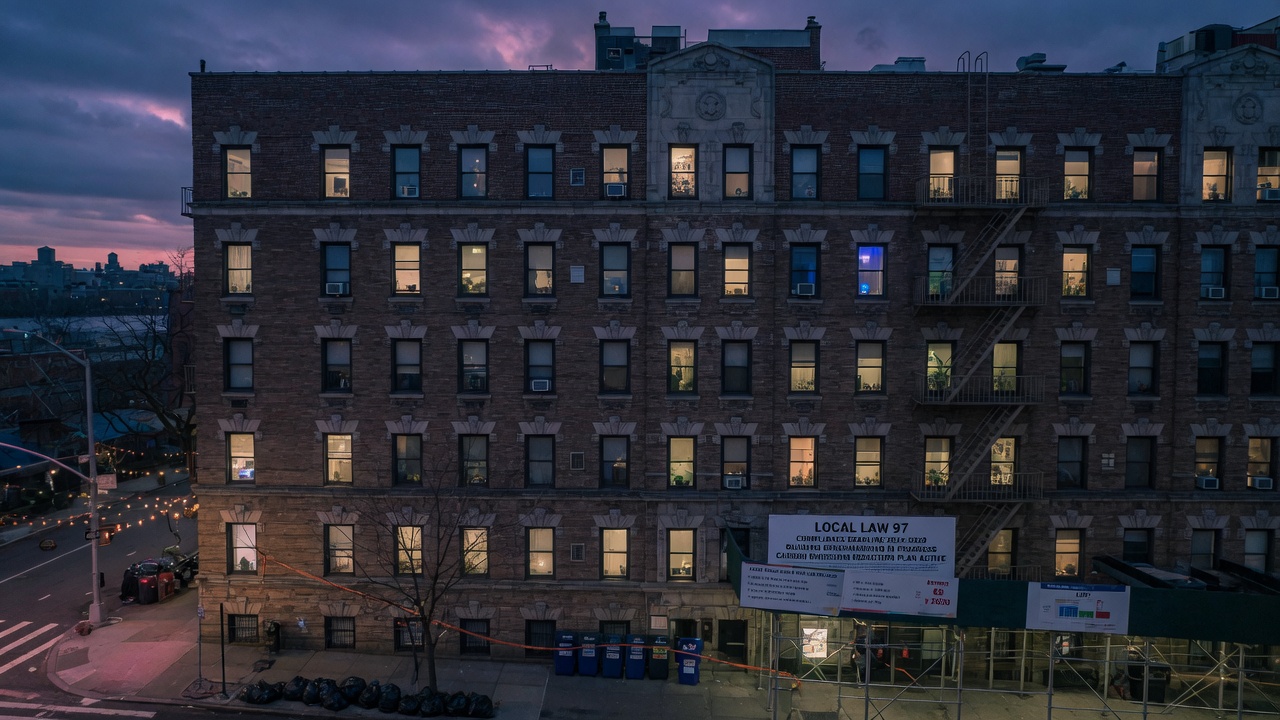
Category: Local Law 97

LL97 compliance for NYC commercial real estate

  • How to File a Local Law 97 Report: The DOB NOW, ESPM, and BEAM Walkthrough Nobody Gives You

    How to File a Local Law 97 Report: The DOB NOW, ESPM, and BEAM Walkthrough Nobody Gives You

    Last updated: June 9, 2026. By Will Tygart. Written for the property managers and facility managers who coordinate LL97 filings — every fee, portal, and gotcha below links to a primary source.

    Filing a Local Law 97 report takes three separate city systems used in a fixed order — pay the fee in DOB NOW: Safety, stage your energy data in ENERGY STAR Portfolio Manager, then file in BEAM — and because the systems sync overnight, the whole sequence physically cannot be completed in one day. That is not an exaggeration; it is the Department of Buildings’ own guidance. As DOB’s assistant commissioner for sustainability put it: “You cannot complete a report in one day and you need to plan for that” (Habitat, March 2025).

    Here is the full walkthrough — who does what, in what order, with which fees — written for the person actually coordinating it.

    Before you touch a portal: the five things to line up

    1. Confirm your building is on the Covered Buildings List. The current-year CBL is published on DOB’s LL97 page; coverage follows Department of Finance records (>25,000 gsf single building; 50,000 gsf tax-lot or condo-board aggregates). Disputes are filed as a ticket in BEAM — not by email, not by phone.
    2. Book your Registered Design Professional now. Only a NY-licensed PE or RA can certify and submit an Article 320 report. RDP calendars compress brutally in May and June; the engineer, not the portal, is the real bottleneck.
    3. Gather your identifiers: BBL (borough-block-lot) and BIN numbers, plus the ESPM property ID. Reports and fees are keyed to these.
    4. Align the email addresses. The owner, the property manager, and the energy consultant must use consistent email addresses across all three systems — mismatched emails are the most common reason a filing stalls with no error message.
    5. Check your ESPM property type. “Other” and “Mixed Use” property types are prohibited for LL97 reporting. If your building is typed that way in Portfolio Manager, fix it before anything else — the report cannot file against it.

    Step 1 — DOB NOW: Safety: pay first, or nothing unlocks

    All LL97 fees are paid in DOB NOW: Safety, and BEAM will not accept your report until the payment clears — which happens in the overnight sync, not instantly. The fee schedule (1 RCNY 101-03):

    Filing Fee
    Simple annual emissions report $210
    Complex annual emissions report $615
    Extension request $60
    Good-faith-efforts report $950
    Article 321 mediated resolution report $800

    Practical translation: if your deadline is June 30, the last safe day to pay is June 29 — and treating June 26 as the real deadline is what a coordinator who has done this before actually does.

    Step 2 — ENERGY STAR Portfolio Manager: where the numbers live

    Your building’s energy consumption — electricity, gas, steam, fuel oil — flows from ESPM, the same system used for LL84 benchmarking (due the same May 1). Three coordinator notes:

    • Find your ESPM Data Administrator early. Buildings change managers and consultants; the person who holds administrative rights over the ESPM record is frequently someone who left two years ago. Recovering access takes days you may not have.
    • Whole-building data means tenant data. If tenants are separately metered, their consumption still counts against the building’s number — the annual tenant-data chase should start in January, not May.
    • LL84 and LL97 feed from the same trough. Upload once, comply twice: current LL84 benchmarking is also a legal prerequisite for LL97 good-faith-efforts penalty mitigation.

    Step 3 — BEAM: where the report actually files

    The BEAM portal (launched March 3, 2025) is where the RDP certifies and submits the report — and where everything else LL97 happens too, as numbered tickets: extension requests, Covered Buildings List disputes, penalty-mitigation claims, and deductions. Two things to know:

    • BEAM unlocks only after your DOB NOW payment has cleared overnight. Pay Monday, file Tuesday at the earliest.
    • The RDP submits; you prepare. A smooth filing is one where the engineer logs in to a record with clean ESPM data, matching emails, and a cleared fee — and spends their billable hour certifying instead of troubleshooting.

    The complete sequence, as a checklist

    When Action System Who
    January Start tenant energy data collection; verify ESPM access and property type ESPM PM / consultant
    February Book the RDP; confirm CBL status; align emails across systems PM
    March–April Complete ESPM data for the calendar year; run LL84 benchmarking ESPM Consultant
    April Pay the LL97 filing fee DOB NOW: Safety PM
    By May 1 RDP certifies and submits the report BEAM RDP
    If late: by June 30 File within grace, or pay $60 and apply for extension to Aug 29 BEAM + DOB NOW PM

    If something goes wrong

    • Building should not be on the CBL (sold, demolished, under threshold)? File the CBL dispute ticket in BEAM with DOF documentation — do not simply skip filing; the $0.50/sqft/month non-filing penalty attaches to the listed property until the list changes.
    • Over the cap? File anyway — filing and penalty exposure are separate questions — then pursue good-faith-efforts mitigation (1 RCNY 103-14(i)(2)) or, after a documented disaster, the penalty-zero provision (103-14(i)(1)).
    • Missed June 30 with no extension? File as fast as possible: penalties accrue monthly and retroactively to May 1, so every month of delay on a 60,000 sq ft building is another $30,000.

    What this means for each seat at the table

    If you are the… Your part of the filing is…
    Owner Authorize fees early and sign off on the RDP engagement in Q1, not Q2. The cheapest LL97 program is the one that never touches the penalty schedule.
    Facility / property manager You are the integration layer: CBL status, identifiers, email consistency, ESPM access, tenant data, fee payment, and the RDP’s calendar. The portals don’t talk to each other — you are the API.
    Tenant Your meter data is part of the building’s filing. Answering the energy-data request in February instead of April is the single most helpful thing you can do — and increasingly, leases require it.

    Frequently asked questions

    How do I file a Local Law 97 report?

    In three systems, in order: pay the filing fee in DOB NOW: Safety ($210 simple / $615 complex), stage the building’s energy data in ENERGY STAR Portfolio Manager, then have a Registered Design Professional certify and submit the report in the BEAM portal. The systems sync overnight, so the sequence takes a minimum of two days.

    What is the BEAM portal?

    BEAM (nyc.beam-portal.org) is DOB’s LL97 filing system, launched March 3, 2025. Reports, extension requests, Covered Buildings List disputes, and penalty-mitigation claims are all submitted there as numbered tickets.

    Why won’t BEAM accept my report?

    The two most common causes: the DOB NOW fee payment has not cleared the overnight sync yet, or the email addresses on the BEAM, DOB NOW, and ESPM records do not match. A prohibited ESPM property type (“Other” or “Mixed Use”) will also block the filing.

    Can I file the LL97 report myself?

    No. An Article 320 report must be certified and submitted by a Registered Design Professional — a NY-licensed Professional Engineer or Registered Architect. The property manager prepares and coordinates; the RDP files.

    How much does it cost to file?

    $210 for a simple annual report, $615 for a complex one, $60 for an extension application, $950 for a good-faith-efforts report — all paid in DOB NOW: Safety, all per 1 RCNY 101-03. The RDP’s professional fee is separate and market-rate.

    Do LL84 and LL97 use the same data?

    Largely yes — both draw on the building’s ENERGY STAR Portfolio Manager record, and both are due May 1. Keeping LL84 benchmarking current is also a legal prerequisite for LL97 good-faith-efforts penalty mitigation.

    Primary sources

    More in Local Law 97 and About BC ESG.

    Related reading: whether Local Law 97 is only for NYC and Long Island, LL84 benchmarking as the LL97 prerequisite, and the Restoration Carbon Protocol. Sister hubs: Restoration Intel, Healthcare Facility Hub, Continuity Hub, Risk Coverage Hub, and Tygart Media.
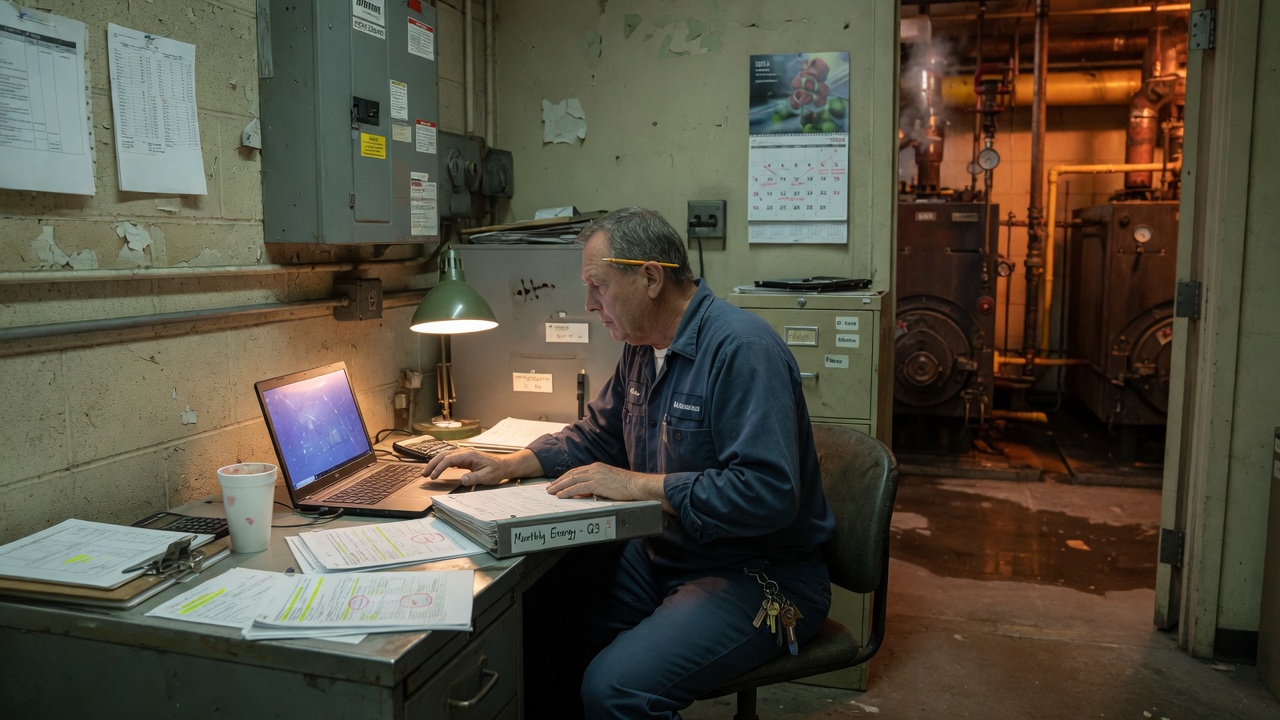
  • Local Law 97 Deadline June 30, 2026: File Your Report or Buy the $60 Extension

    Local Law 97 Deadline June 30, 2026: File Your Report or Buy the $60 Extension

    Last updated: June 9, 2026. By Will Tygart, author of the Commercial Restoration Carbon Protocol (CRCP) and a filed public commenter in CARB’s SB 253 Scope 3 rulemaking. Every regulatory claim in this article links to its primary source.

    If a covered NYC building has not yet filed its Local Law 97 emissions report for calendar year 2025, there are exactly two moves left, and both expire on June 30, 2026: file the report in the BEAM portal by June 30, or apply by June 30 for a $60 extension that moves the filing deadline to August 29, 2026. The Department of Buildings has stated in writing that the blanket extensions it granted in 2025 do not apply to filing year 2026. There is no December reprieve coming this time.

    This guide is written for the person who actually coordinates the filing: the property manager. It covers what is due, what missing the deadline costs (in real dollars per month), how the three-portal filing process works, and what to do if your building is over its cap.

    The 2026 LL97 deadline, in one table

    Date What happens Source
    May 1, 2026 LL97 report on calendar-year-2025 emissions was due (Admin Code §28-320.6.2) DOB service notice, Feb 27, 2026
    June 30, 2026 Hard end of the 60-day grace period — AND the last day to apply for an extension Same notice; 1 RCNY 103-14(g)(2)
    August 29, 2026 Extended filing deadline, only for buildings that applied by June 30 ($60 fee) Same notice

    The extension is applied for as a ticket inside the BEAM portal; the $60 fee is paid separately in DOB NOW: Safety. No professional attestation is required to request it. Sixty dollars is the cheapest insurance in NYC real estate this month.

    What missing the deadline actually costs

    Local Law 97 has two separate penalties, and the one for not filing is usually worse than the one for emitting too much.

    • Failure to file: gross floor area × $0.50 per month, assessed for each month the report is not submitted within the 12 months following May 1 — and if you file after the grace period, penalties accrue retroactively to May 1 (DOB violations page).
    • Exceeding the cap: (actual emissions − emissions limit) × $268 per metric ton of CO2e, assessed annually.
    • False filing: a misdemeanor, with fines up to $500,000.

    Worked example: a 60,000 sq ft Midtown office building

    The 2024–2029 emissions cap for office space is 0.00758 tCO2e per square foot (1 RCNY 103-14). So the building’s annual limit is 60,000 × 0.00758 = 454.8 tCO2e.

    • If the building actually emitted 550 tCO2e in 2025, the overage penalty is (550 − 454.8) × $268 = $25,514 for the year.
    • If the same building simply fails to file, the penalty is 60,000 × $0.50 = $30,000 per month.

    Read that again: one month of not filing costs more than a full year of being 21% over the cap. Whatever your building’s emissions situation is, filing is always the cheaper move — and for the roughly 91% of buildings currently under their 2024–2029 caps, the report costs only the filing fee ($210 for a simple report) and the engineer’s time.

    Enforcement is no longer theoretical

    On April 22, 2026, DOB published its first-year results (press release): approximately 93% of covered privately-owned properties filed their CY2024 reports, the DOB Sustainability Bureau is now auditing filings from roughly 28,000 buildings, and about 1,400 properties that never filed are receiving Notices of Deficiency with a 60-day cure window before DOB attorneys take the cases to OATH.

    Filing rates by borough: Manhattan 95%, Brooklyn 93%, Bronx 92%, Queens 91%, Staten Island 83%. By building type, offices and hotels led at 95%; houses of worship (81%) and garages (80%) trailed. If your portfolio includes the laggard categories, your buildings are statistically the ones DOB’s enforcement queue is built from.

    How the filing actually works (the three-portal reality)

    The single most common operational complaint about LL97 is that compliance lives in three systems that sync overnight. As DOB’s own assistant commissioner for sustainability put it: “You cannot complete a report in one day and you need to plan for that.” (Habitat, March 2025)

    1. DOB NOW: Safety — pay the filing fee first ($210 simple report / $615 complex / $60 extension / $950 good-faith-efforts report, per 1 RCNY 101-03). BEAM does not unlock until the payment clears, which happens overnight.
    2. ENERGY STAR Portfolio Manager (ESPM) — your building’s energy data flows from here. Note: “Other” and “Mixed Use” property types are prohibited for LL97 reporting; the building must be typed correctly.
    3. BEAM (nyc.beam-portal.org) — where the report itself is filed, and where extensions, Covered Buildings List disputes, and penalty-mitigation requests are submitted as numbered tickets.

    Two coordination traps: the email addresses for the owner, property manager, and energy provider must be consistent across all three systems, and only a Registered Design Professional (a licensed PE or RA) can certify and submit the Article 320 report. The property manager does not file — the property manager coordinates: portal access, BBL/BIN numbers, fee payment, utility data, and the RDP’s calendar. If you have not booked your RDP yet, that is today’s call, not June 29’s.

    Over your cap? File anyway — then mitigate

    Filing and penalty exposure are separate questions. If your building exceeded its 2025 cap:

    • Good-faith efforts mitigation (1 RCNY 103-14(i)(2)) can reduce penalties — but it legally requires the annual report to be filed, LL84 benchmarking to be current, and an LL88 lighting/sub-metering attestation, plus one qualifying path (a decarbonization plan, an approved DOB application for compliance work, electric-readiness upgrades, a prior under-cap year, critical-facility status, or a pending adjustment).
    • RECs can offset emissions attributable to electricity only, must be NYC-deliverable, and are currently uncapped for the 2024–2029 period — except that buildings using the decarbonization-plan path are barred from them (DOB REC policy).
    • Offsets are capped at 10% of your emissions limit and the only eligible program is the city’s Affordable Housing Reinvestment Fund, priced at $268/ton — deliberately equal to the penalty rate.
    • Disaster damage is a named mitigating factor: under 1 RCNY 103-14(i)(1), an owner who documents that a hurricane, severe flooding, or fire precluded compliance in a calendar year — with photographs and a narrative — “may result in a penalty of zero dollars” for that year. If your building had a major loss event in 2025, your restoration contractor’s job file is now LL97 evidence. Ask for it.

    What this deadline means for each seat at the table

    If you are the… June 30 means…
    Owner You bear the penalty: $0.50/sqft/month for silence, $268/ton for overage. The $60 extension protects you for $60. Authorize it today.
    Facility / property manager You own the pipeline: three portals, matching emails, the RDP booking, the utility data, and the ticket trail. The overnight-sync delays mean June 30 work must start this week.
    Tenant Your energy use counts against the building’s whole-building number, and the A–F energy grade posted at your entrance every October comes from the same data. Expect your landlord to get more interested in your submeter.

    The rest of the 2026 compliance calendar

    Deadline Obligation
    June 30, 2026 LL97 CY2025 report grace ends; last day for $60 extension application
    Aug 29, 2026 Extended LL97 filing deadline (extension-approved buildings only)
    Oct 1–31, 2026 LL33/LL95 energy grade labels (A–F) must be posted near every public entrance
    Dec 31, 2026 LL87 Energy Efficiency Reports due for buildings in the 2026 cycle
    May 1, 2028 Good-faith decarbonization-plan filers must show a DOB-approved application for their 2030-cap work
    Jan 1, 2030 The cliff: caps tighten sharply — roughly 57% of covered properties currently emit more than their 2030 limit (Urban Green Council)

    That last row is the real story of 2026. Only about 9% of properties exceed today’s caps; about 57% exceed the 2030 caps. The buildings that use this filing cycle to understand their numbers — including the carbon that enters and leaves through their vendors and capital projects — are the ones that will plan their way under the 2030 line instead of writing checks over it.

    Frequently asked questions

    When is the Local Law 97 report due in 2026?

    The report on calendar-year-2025 emissions was due May 1, 2026, with a statutory grace period through June 30, 2026. Buildings that apply by June 30 for a $60 extension have until August 29, 2026.

    What happens if my building misses the June 30, 2026 deadline?

    Without an approved extension, the failure-to-file penalty is gross floor area × $0.50 per month, assessed retroactively to May 1 — $30,000 per month on a 60,000 sq ft building. Filing late stops the clock; it does not refund it.

    How much does an LL97 extension cost and how do I get one?

    $60. Apply as a ticket in the BEAM portal by June 30, 2026 and pay the fee in DOB NOW: Safety; the deadline moves to August 29, 2026. No professional attestation is required to apply.

    Who can actually file the LL97 report?

    Only a Registered Design Professional — a New York licensed Professional Engineer or Registered Architect — can certify and submit an Article 320 emissions report. The property manager coordinates the data, portals, and payment, but cannot self-file.

    Will DOB extend the deadline again like it did in 2025?

    No. DOB’s February 27, 2026 service notice states that “deadline extensions issued by service notice in 2025 do not apply to filing year 2026.” Plan on June 30, not on a repeat of last year’s December reprieve.

    How are Local Law 97 fines calculated?

    Overage: (actual emissions − your building’s limit) × $268 per metric ton CO2e, per year. Non-filing: floor area × $0.50 per month. A false filing is a misdemeanor with fines up to $500,000.

    Does my restoration contractor’s carbon count toward LL97?

    No. LL97 counts only emissions from operating the building — on-site fuel combustion plus purchased electricity and steam. Contractor operations, hauling, disposal, and materials are outside the cap. But that vendor carbon is exactly what GRESB, California SB 253, and corporate tenant reporting increasingly demand — see the Commercial Restoration Carbon Protocol (CRCP) for how property managers are starting to collect it.

    Primary sources

    More in Local Law 97 and About BC ESG.

    Related reading: how to file LL97, board resolution checklist, and Article 320 vs 321. Sister hubs: Restoration Intel, Healthcare Facility Hub, Continuity Hub, Risk Coverage Hub, and Tygart Media.

BC ESG

ESG Strategy, Sustainability Intelligence, and Business Continuity for Forward-Thinking Organizations

© 2026 BC ESG — Business Continuity, ESG & Sustainability Intelligence