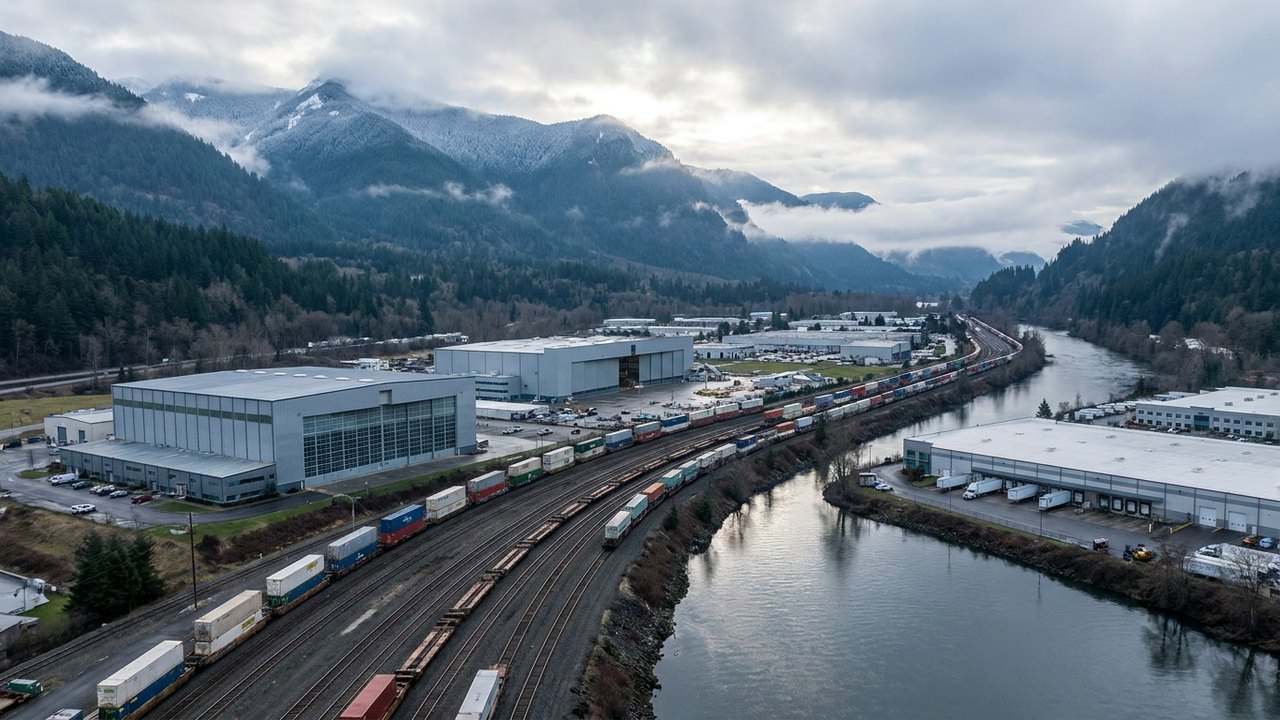
Engineering transit controls aligned with AS9100D/NASA-STD-8739 quality gates in Batch 4/6; no specific company incident claimed.
FREIGHT, RAIL & VALLEY · SPACE HARDWARE · ENGINEERING / PROGRAM PRACTICE
Shock, Vibration & Cleanroom Transit
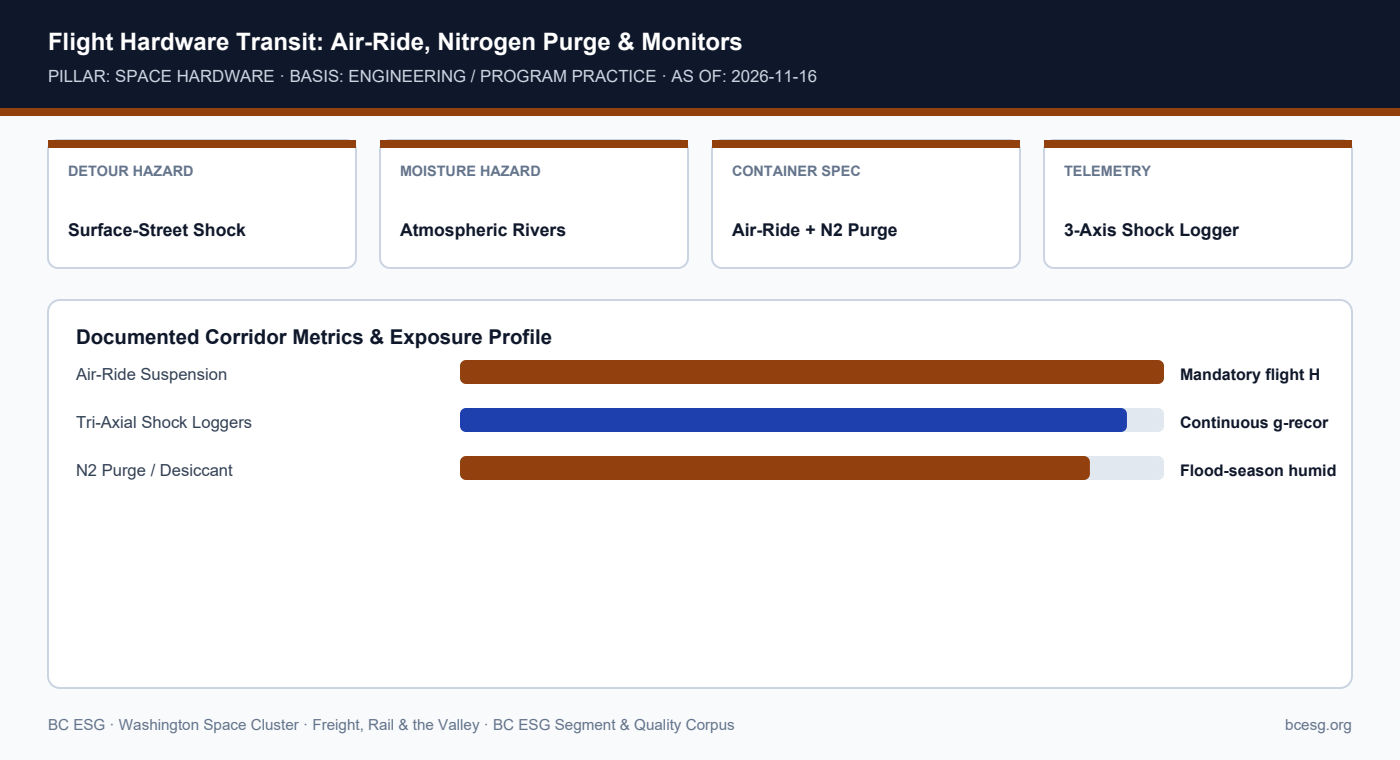
Diverting delicate satellite buses, optics, or solar arrays off smooth freeways onto rutted valley surface-street detours during SR 167 closures increases shock/vibration and moisture-intrusion risks.
Primary Agency / Source: BC ESG Segment & Quality Corpus | As-Of / Horizon: 2026-11-16
Documented Corridor Facts & Continuity Record
- Satellite manufacturers in Redmond, Kent, Tukwila, and Bellevue ship precision optics, star trackers, and reaction wheels sensitive to road-shock and humidity.
- When SR 167 or I-5 closes, emergency detours push trucks onto uneven industrial surface streets with railroad grade crossings.
- Atmospheric-river flood events also spike ambient relative humidity, stressing unpurged shipping containers.
Flight-Hardware Transit Protection Matrix
| Risk | Trigger | Container / Carrier Control |
|---|---|---|
| Vertical Shock / Grade Crossings | Surface-street flood detours | Air-ride trailer + damped shipping skid |
| Humidity / Condensation | Atmospheric-river delays | Dry N2 purge + sealed barrier bag + RH logger |
| Undetected Impact | Rough handling / pothole | Calibrated 3-axis shock & tilt indicators |
Operational Exposure & Facility Playbook
- Require continuous GPS-stamped tri-axial shock logging on all flight-hardware moves between Kent, Tukwila, Redmond, and SEA/BFI.
- Inspect shock indicators at receiving before breaking cleanroom double-bag seals.
- Avoid shipping unsealed optical assemblies during active flood-watch periods.
Connected Valley Cities, Segments & Role Briefs
- WA Space Cluster Hub (#1382)
- Satellite Mfg Continuity Exposure
- In-Space Servicing Continuity Exposure
- Power Systems Continuity Exposure
- Program Manager Desk Brief