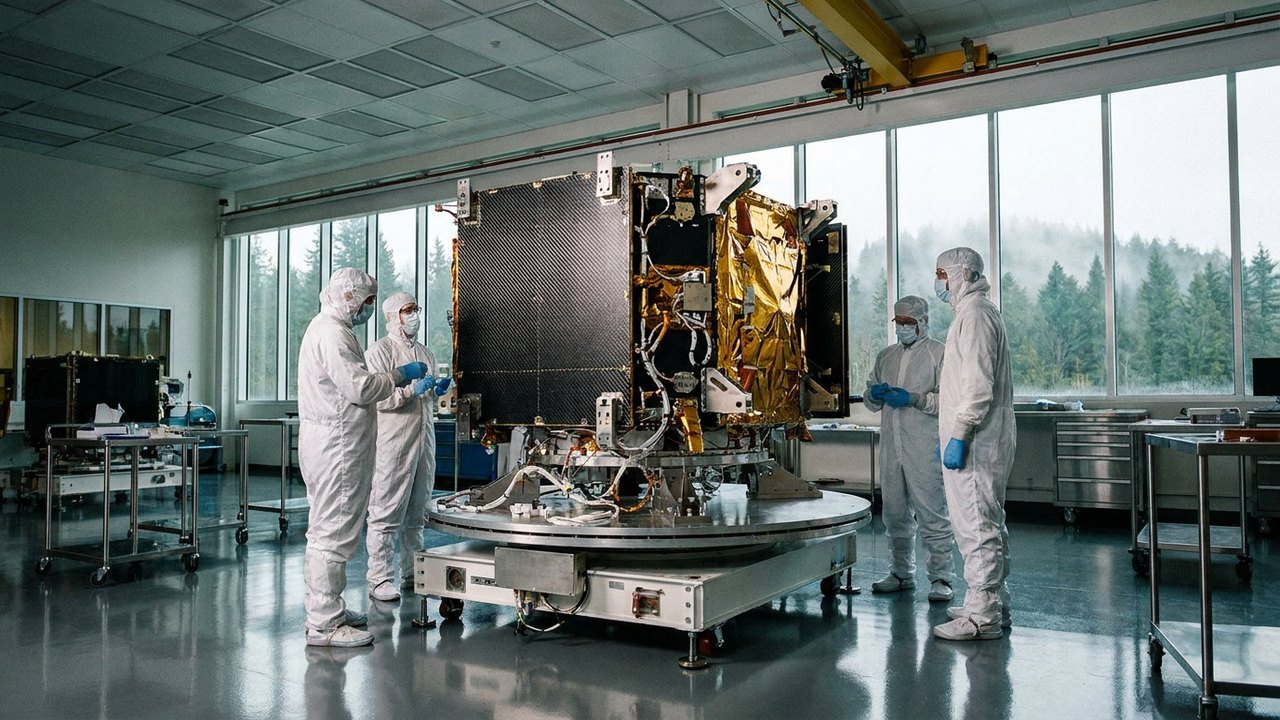
Breakbulk terminal capabilities per NWSA public terminal documentation.
FREIGHT, RAIL & VALLEY · THE CORRIDORS · AGENCY RECORD
Tacoma Breakbulk & Heavy-Lift
Tacoma Harbor's East Blair 1 and Terminal 7 handle non-containerized, over-dimensional breakbulk and Ro-Ro project cargo—serving as Puget Sound's primary ocean gateway for oversized industrial and aerospace hardware.
Primary Agency / Source: Northwest Seaport Alliance (NWSA) | As-Of / Horizon: 2026-11-16
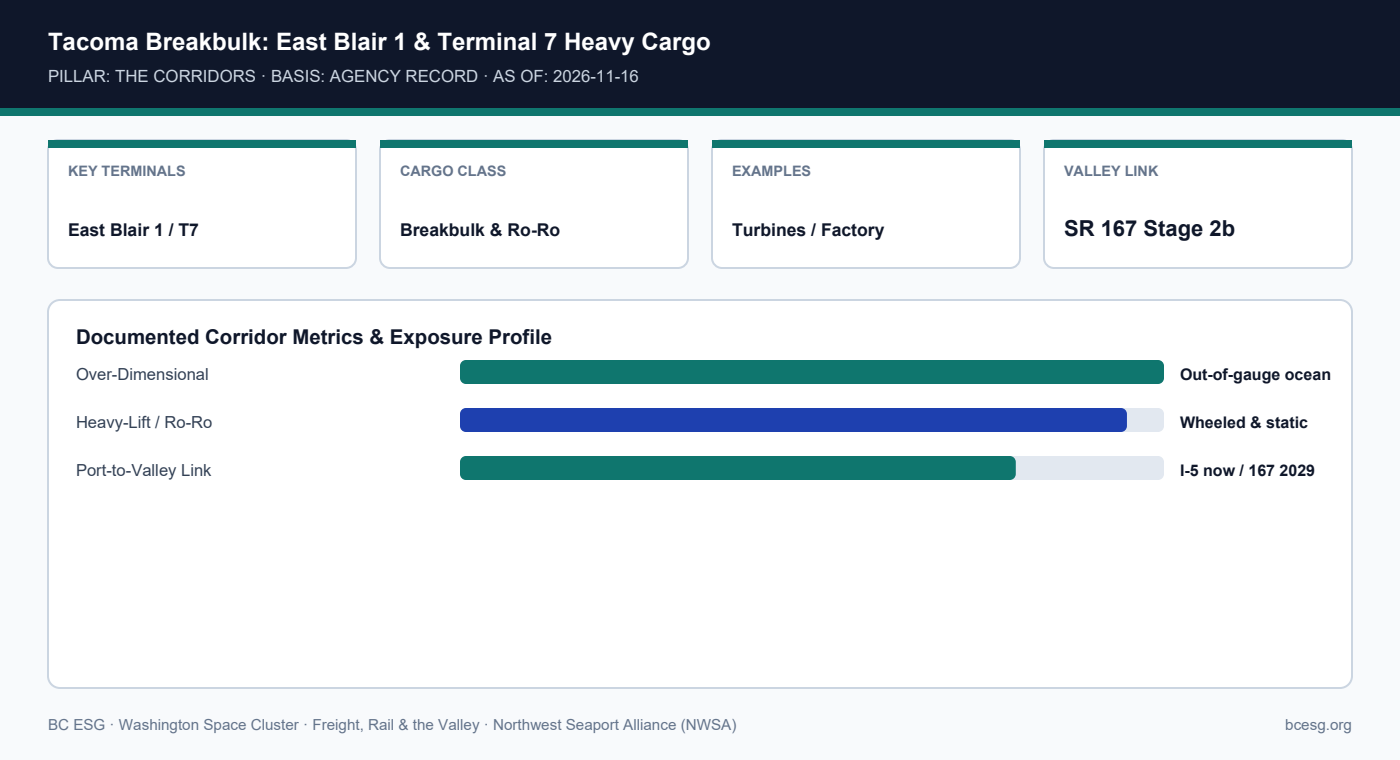
Documented Corridor Facts & Continuity Record
- NWSA's Tacoma Harbor operates dedicated breakbulk and roll-on/roll-off (Ro-Ro) facilities at East Blair 1 and Terminal 7.
- These berths handle non-containerized, over-dimensional project cargo including factory components, large transformers, wind-turbine sections, and specialized aerospace/aviation equipment.
- Moving out-of-gauge cargo from Tacoma berths to Kent or Auburn requires WSDOT OSOW permits and, until SR 167 Stage 2b opens in 2029, navigation through I-5/Fife interchanges.
Tacoma Breakbulk vs. Containerized Freight
| Mode | NWSA Facility | Cargo Profile | Inland Permit Need |
|---|---|---|---|
| Breakbulk / Ro-Ro | East Blair 1, Terminal 7 (Tacoma) | Out-of-gauge, heavy-lift, static | WSDOT OSOW + escorts |
| Containerized (TEU) | Seattle & Tacoma terminals | Standard 20’/40′ ISO boxes | Standard weight-legal drayage |
Operational Exposure & Facility Playbook
- Large autoclaves, vacuum chambers, and ground-station pedestals imported by sea typically land via Tacoma breakbulk rather than container berths.
- Book WSDOT superload engineering reviews weeks ahead of vessel arrival when gross weights exceed 200,000 lbs.
- Verify overhead utility and bridge clearances between Terminal 7, I-5, and Kent/Auburn plant gates.
Connected Valley Cities, Segments & Role Briefs
- WA Space Cluster Hub (#1382)
- Kent WA Space Cluster Profile
- Auburn WA Space Cluster Profile
- Supply-Chain & Procurement Desk Brief
- Launch Segment Continuity Exposure