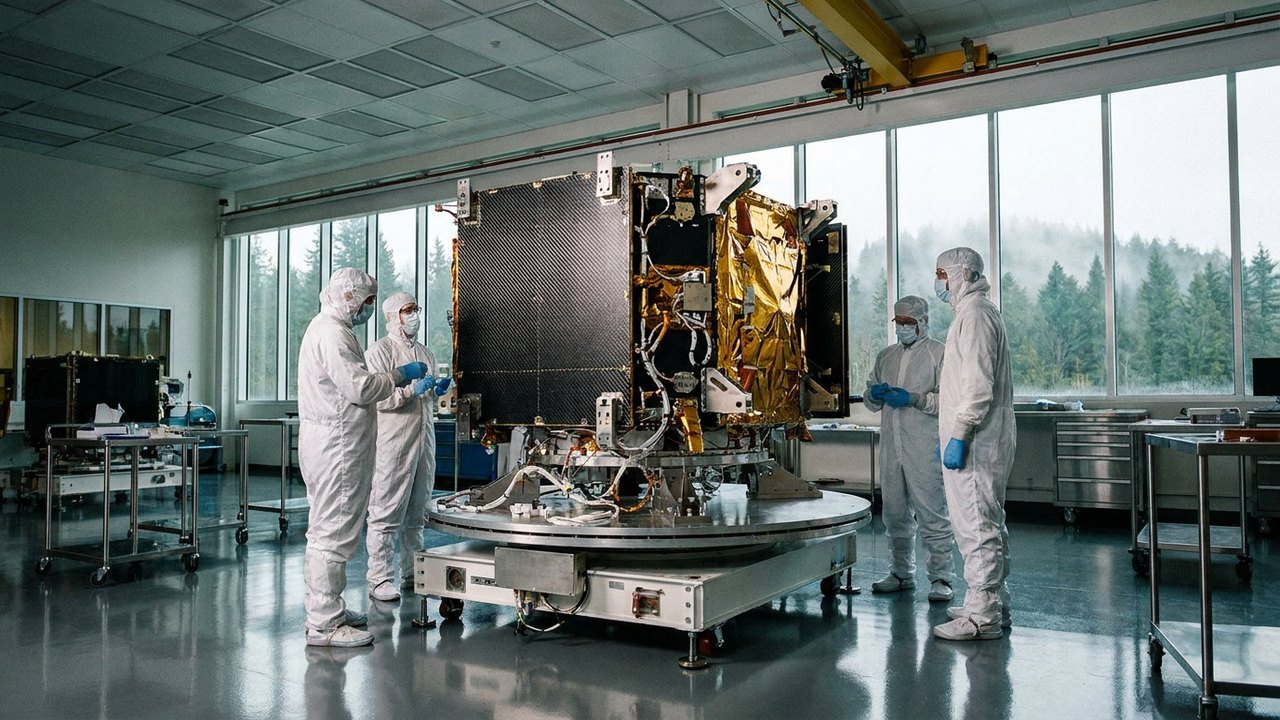
BC ESG · Washington Space Cluster Segments (November 16, 2026)
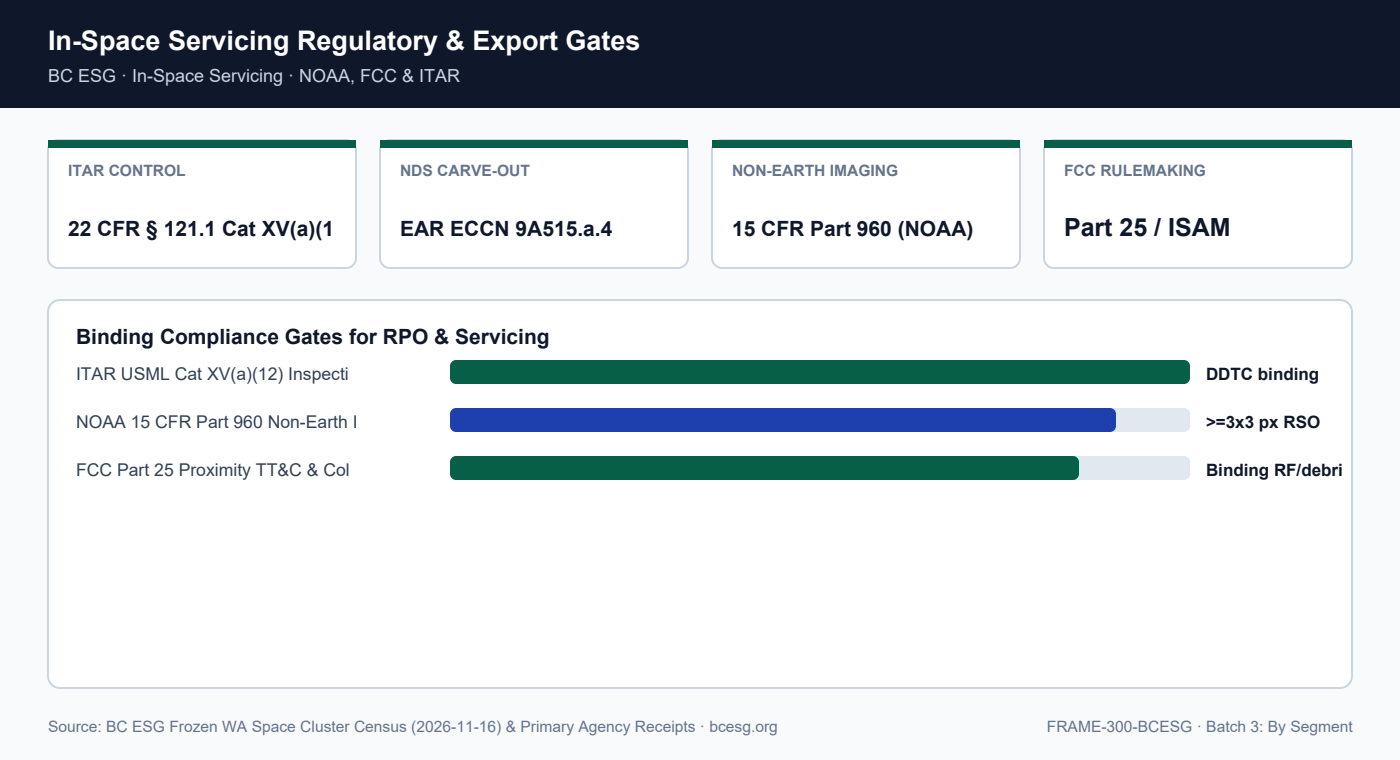
Sourced Baseline: Binding RPO gates: ITAR 22 CFR § 121.1 Cat XV(a)(12) (with NASA Docking System EAR 9A515.a.4 carve-out), NOAA 15 CFR Part 960 NEI consent, and FCC Part 25 proximity TT&C.
Why Servicing Carries Stricter Export & Imaging Rules Than Standard Satellites
Spacecraft designed to inspect, grapple, or dock with another spacecraft trigger ITAR USML Category XV(a)(12) (22 CFR § 121.1) under State Department DDTC jurisdiction—unless they dock exclusively via the standard NASA Docking System (NDS), which shifts jurisdiction to Commerce EAR ECCN 9A515.a.4.
Furthermore, optical or radar sensors used during rendezvous and proximity operations (RPO) that can resolve artificial Resident Space Objects (>= 3×3 pixels) trigger NOAA 15 CFR Part 960 Commercial Remote Sensing licensing, requiring third-party owner consent and interagency notification before Non-Earth Imaging (NEI).
| Framework | Citation | Trigger | Operational Rule |
|---|---|---|---|
| ITAR USML Cat XV(a)(12) | 22 CFR § 121.1 | Spacecraft inspection, grappling, docking | DDTC defense-article control (unless NDS -> 9A515.a.4) |
| NOAA Remote Sensing | 15 CFR Part 960 | Optical/radar RPO & Non-Earth Imaging | CRSRA license & target-owner consent |
| FCC Part 25 ISAM | 47 CFR Part 25 | Proximity TT&C & active debris removal | Inter-satellite links & collision-risk filing |
Related BC ESG Guides & Verified Primary Sources
- Washington Space Cluster Census Hub
- Starfish Space Profile
- Gravitics Profile
- Interlune Profile
- In-Space Servicing Core Group (Orbital Robotics, AstroSweep, gravityLab, LiftPort, SpaceRig)
- Satellite Disclosure & 5-Year Deorbit