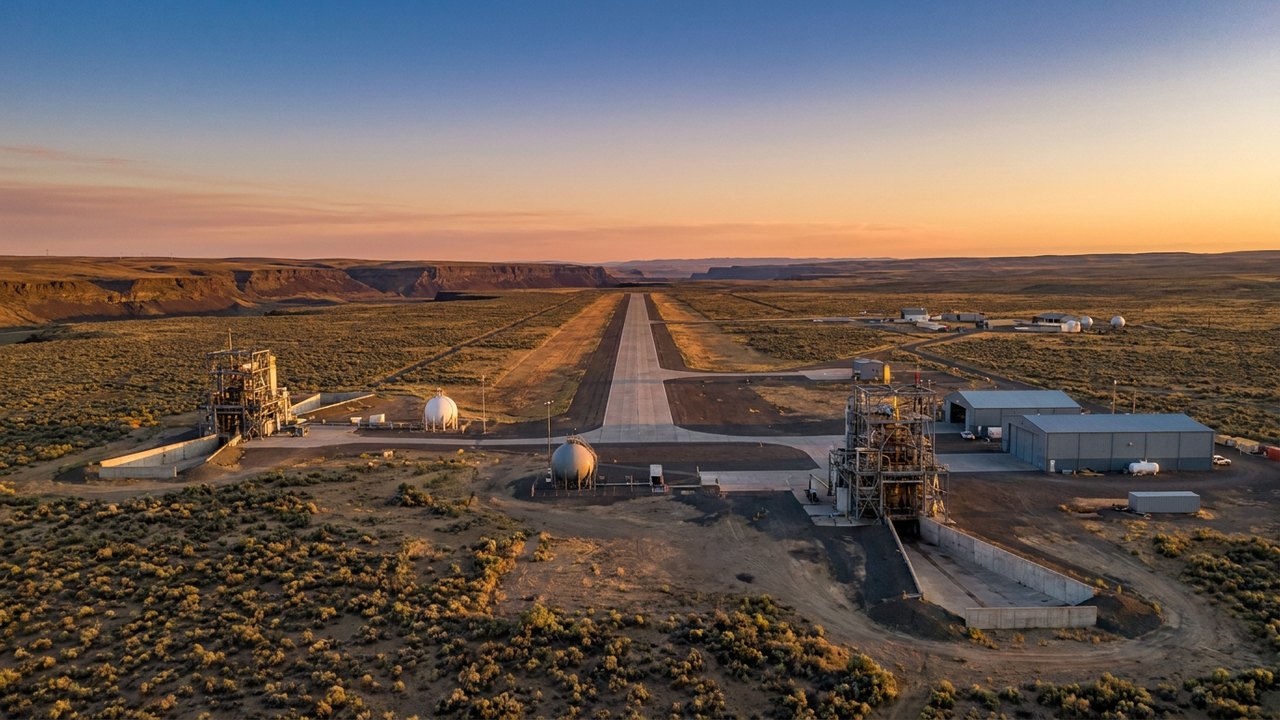
BC ESG · Washington Space Cluster Segments (November 16, 2026)
Sourced Baseline: Aerojet Rocketdyne Redmond produces MR-series hydrazine thrusters, S-405 catalyst, and electric thrusters; 5 startups are early-stage R&D with thin public records.
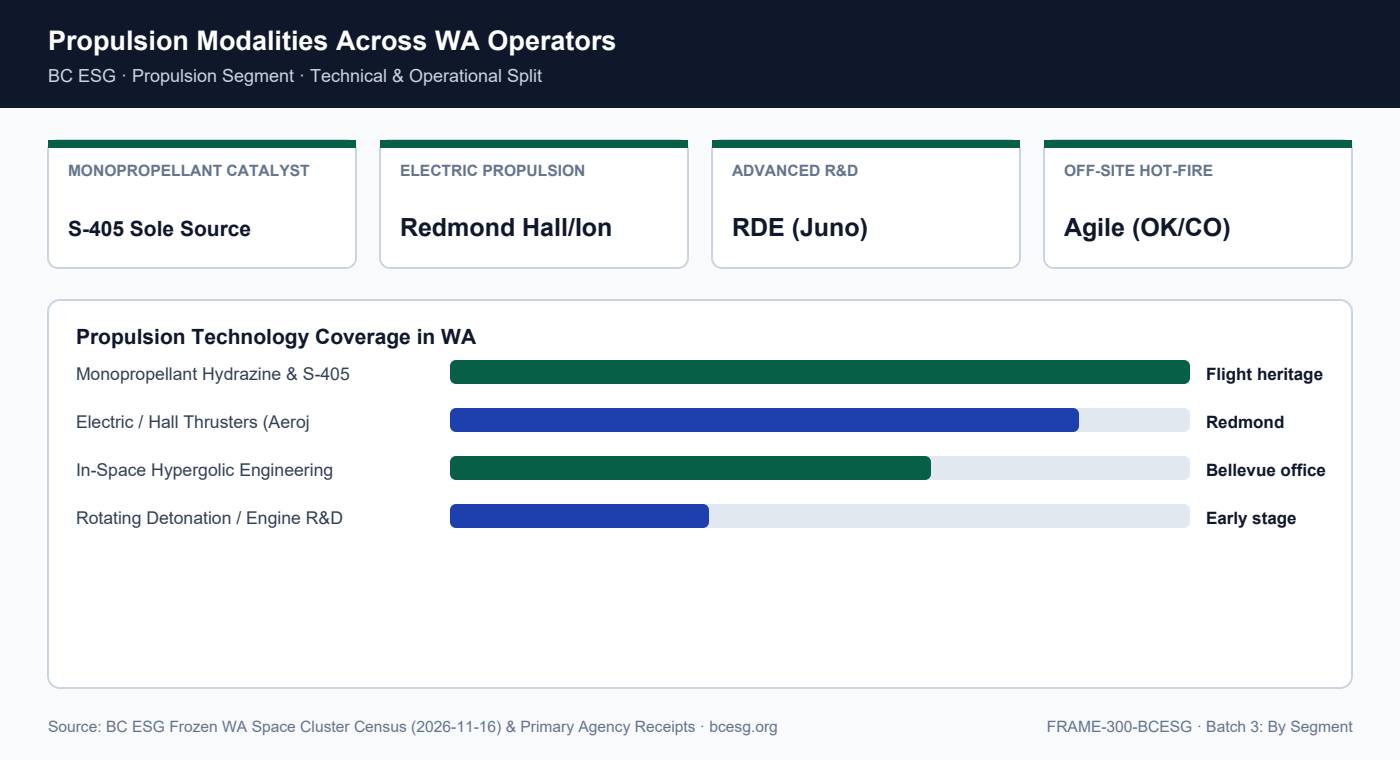
Flight-Heritage Production vs. Early-Stage Engine R&D
Washington's propulsion capability spans two distinct tiers. At the heritage tier, Aerojet Rocketdyne in Redmond has manufactured thousands of monopropellant hydrazine thrusters (MR-106, MR-107, MR-111) and electric thrusters for NASA, DoD, and commercial constellations, alongside sole-source S-405 catalyst manufacturing.
At the emerging tier, Agile Space Industries designs in-space chemical thrusters from Bellevue while keeping 3D additive printing in Pennsylvania and hot-fire stands in Tulsa, OK and Durango, CO. Meanwhile, Juno Propulsion (rotating detonation engines) and four peers remain early-stage R&D ventures with limited public test data.
| Modality | WA Operator(s) | Where Hot-Fire Occurs | Maturity |
|---|---|---|---|
| Monopropellant Hydrazine & S-405 | Aerojet Rocketdyne (L3Harris) | Redmond, WA / customer sites | Flight-proven production |
| Electric / Hall Propulsion | Aerojet Rocketdyne (L3Harris) | Redmond vacuum chambers | Flight-proven production |
| In-Space Hypergolic Thrusters | Agile Space Industries | Tulsa, OK & Durango, CO | Commercial development |
| RDE & Rocket Engine R&D | Juno, GHKN, New Frontier, Reach, RPS | Undisclosed / off-site | Early-stage R&D (thin record) |