Who Is Actually in Auburn, WA (Frozen Census Roster)
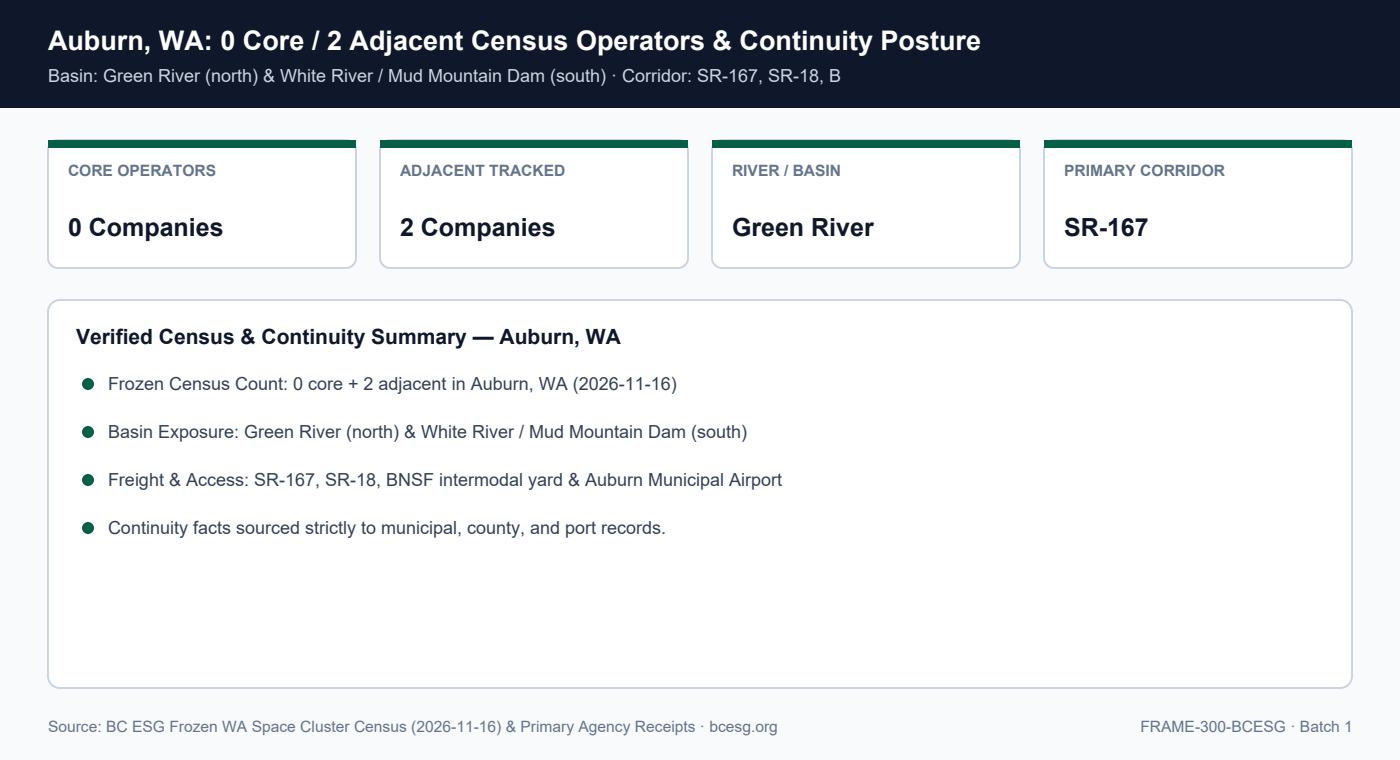
In BC ESG's frozen census, Auburn holds 0 core space companies and 2 adjacent aerospace plants: Tessera (50,000 sq ft precision titanium/Inconel machining) and Orion Industries (100,000 sq ft at 1590 A St NE) (CLM-01, CLM-27). Both are excluded from the 67-company core count because public records identify them as general aerospace suppliers without a dedicated space-specific unit.
| ID | Company | Segment | Tier | Verified Facility |
|---|---|---|---|---|
| WA-SPC-069 | Tessera | Adjacent (Fusion / General Aerospace) | adjacent | Auburn, WA (50,000 sq ft facility) |
| WA-SPC-070 | Orion Industries | Adjacent (Fusion / General Aerospace) | adjacent | Auburn, WA (1590 A St NE, 100k sq ft) / Mukilteo, WA |
Continuity, Flood & Freight Corridor Exposure in Auburn
Auburn spans two distinct river systems: the Green River on the north (regulated by Howard A. Hanson Dam) and the White River on the south (regulated by Mud Mountain Dam near Buckley) (CLM-07, CLM-08). On the White River, glacial sediment and gravel bedload accumulation from Mount Rainier raises riverbed elevation and drives chronic channel migration and bank erosion.
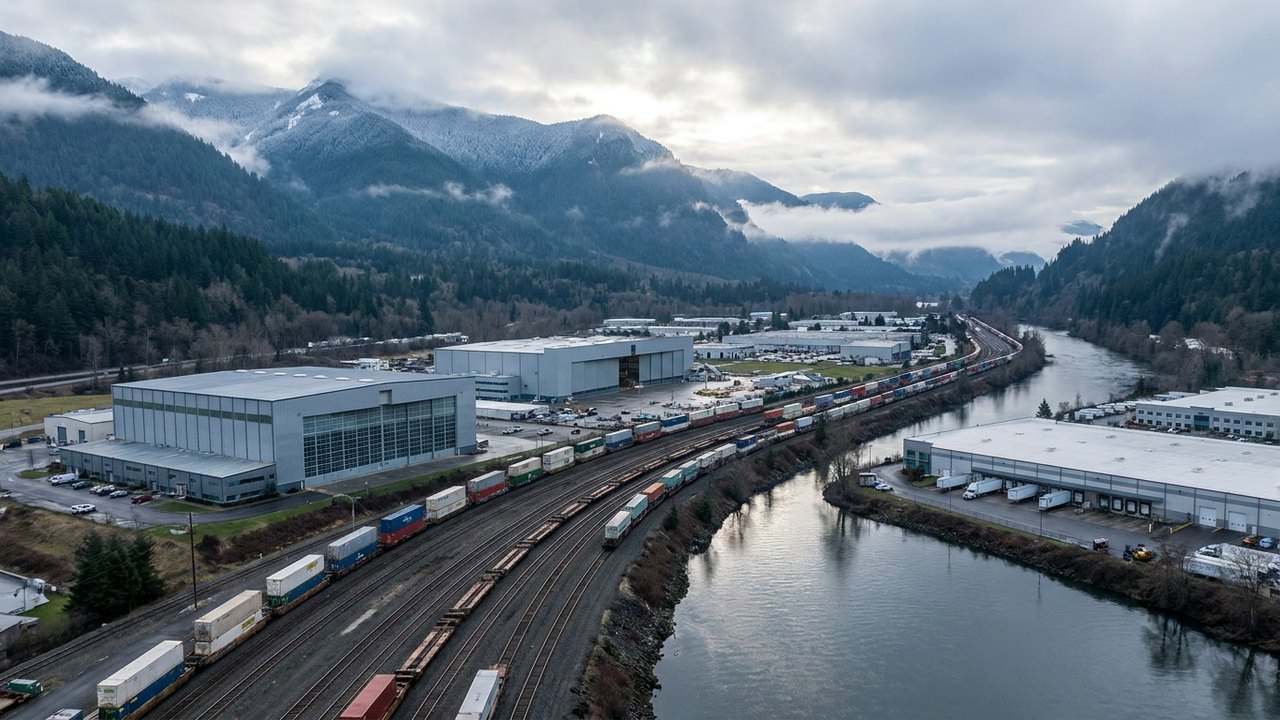
Auburn is a major freight-rail interchange, hosting a BNSF Railway intermodal classification yard connecting Puget Sound to eastern Washington via Stampede Pass alongside Union Pacific trackage and the SR-167 / SR-18 junction (CLM-08, CLM-14).
What This Means for Suppliers & Facility Compliance
Suppliers and facility managers operating in Auburn face two parallel compliance tracks: physical continuity planning aligned to local basin and corridor hazards, and emerging building/supply-chain reporting under Washington's Clean Buildings Performance Standard (CBPS) and downstream OEM Scope 3 supplier questionnaires (CLM-28).