Tag: Transition Risk

  • How Do Lenders Finance Homes That Aren’t Financeable Yet?

    How Do Lenders Finance Homes That Aren’t Financeable Yet?

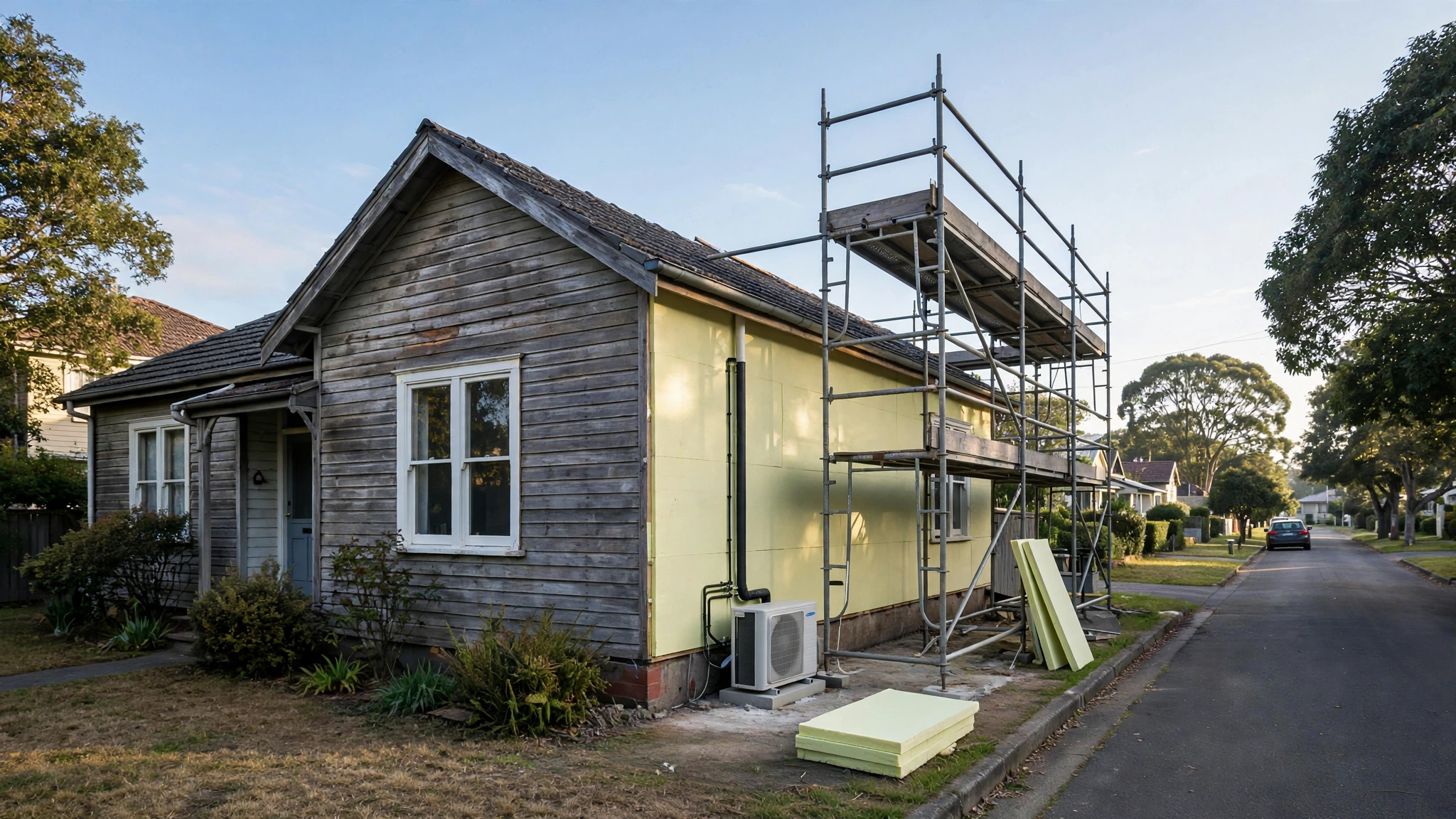
    A lender looking at an inefficient home faces a simple fork: lend against the building as it stands, or lend against the building it could become. A new cross-industry white paper, The Trillion-Dollar Housing Transition, published by the Sustainable Real Estate Forum (SREF) in October 2026, argues the second option is where the market now has to learn to work — and that the shortage holding it back is not money. It is the ability to originate, underwrite and execute credible transition pathways at scale.

    The paper was written with contributions from GlobalABC, RICS, the European Mortgage Federation (EMF-ECBC), PATRIZIA, Optiml, pbb Deutsche Pfandbriefbank and INREV, and SREF will distribute it in the Blue Zone at COP31 in Antalya, Türkiye. Its lending chapter, from pbb, reduces the lender’s job to a three-part test: finance the cure, price the residual risk, and withdraw only when neither is credible.

    What is SREF actually claiming?

    The claim is that affordable housing and climate action have to be delivered together, and that capital is not the binding constraint on doing it. “A home that is cheap to build but costly to cool, unsafe in floods or heatwaves, or dependent on high-carbon materials is not affordable over its lifetime,” the paper states. The bottleneck, in SREF’s account, sits one step earlier than the money: in whether the market can produce enough well-evidenced, underwritable retrofit and building pathways for the capital to attach to.

    The scale behind that claim is large by any measure. UN-Habitat estimates that by 2030 three billion people will need access to adequate housing — around 96,000 new affordable and accessible homes every day. Buildings’ operational emissions reached 9.9 GtCO₂ in 2024 and, according to UNEP, would need to fall by 56% by 2030 to align with a net-zero pathway. Roughly 80% of growth in building floor area through 2030 is expected in emerging and developing economies, where underwriting capacity is thinnest.

    Where does the “trillion-dollar” figure come from?

    “Trillion-dollar” is the paper’s framing of the overall scale, not a single line item. SREF’s founder and CEO, Peter Panayi, puts it this way: “The housing transition is a trillion-dollar challenge, but it is also a trillion-dollar opportunity.” The hardest number underneath the framing comes from UNEP: cumulative investment in building energy efficiency needs to reach around USD 5.9 trillion by 2030, compared with roughly USD 2.3 trillion invested between 2015 and 2024.

    The investor side of the ledger supports the “capital is available” half of the argument. €117 billion was raised for non-listed real estate in 2025, and 87% of surveyed managers expect the amount raised to increase over the next two years. INREV estimates Europe needs more than two million new homes a year — around 650,000 more than it builds today — requiring about €153 billion of additional investment each year. The question the paper presses is not whether that money exists. It is whether lenders can tell, home by home, which transition plans deserve it.

    What does “finance the cure” mean in practice?

    It means the lender’s first question about a poor-performing home changes. Instead of asking whether the asset is financeable today, the lender asks whether it can become financeable through a pathway that is credible, funded and capable of being monitored. As Lara Knapwost, Head of ESG at pbb Deutsche Pfandbriefbank, writes in the paper: “Real estate transition is not primarily about buildings that are already efficient and financeable today. The task for lenders is to identify the assets that can become financeable through a credible, funded and monitorable pathway, and to actively support them.”

    Each of those three adjectives does work. Credible means the retrofit or improvement plan is technically real for that building, not a generic pledge. Funded means the money for the works is actually assembled, including any subsidy or affordability support the household needs. Monitorable means the lender can check, over the life of the loan, whether the pathway is being delivered. A plan that fails one of the three is not a cure — it is a hope, and the test says not to price it as one.

    This is where the desk work already familiar to BC ESG readers connects. Deciding which measures come first in an existing building is the problem the Retrofit Priority Stack for Existing Buildings works through; the SREF test adds the lender’s side of the same table — which of those stacked measures, properly sequenced and funded, turns an unfinanceable asset into a lendable one.

    How should lenders price the residual risk that remains?

    Even a well-funded cure leaves risk behind: the works may underperform, energy prices and policy may move, and some homes will still sit below standard at the end of their pathway. The paper’s second instruction is to price that residue openly rather than pretend the cure erased it — or use it as a reason to refuse the loan outright.

    The valuation profession is where this pricing is supposed to become visible. RICS and EMF-ECBC argue that transition risk should become a material input to property valuation where it is supported by evidence. “Where transition risk is material and evidenced, valuers should be supported to reflect it,” says Sander Scheurwater, Head of Benelux at RICS. “The market’s ability to price both action and inaction will be central to the housing transition.” His colleague Gina Ding, RICS Head of Public Affairs Europe, describes the machinery: “Standards create the common language, data creates the evidence, and skilled valuers turn that evidence into professional judgement. When valuation is transparent, capital can tell apart the homes that need investment from those where investment protects value.”

    Pricing inaction matters as much as pricing action. A lender who prices only the risk of a retrofit pathway, and never the risk of holding a book of homes with no pathway at all, will systematically make the wrong call — the stranded-asset end of transition risk arrives through the loans that were never restructured, not just the ones that were. Jennifer Johnson, Deputy Secretary General of EMF-ECBC, ties the threads together: sustainability, valuation and mortgage finance have to align, with a robust understanding of how energy performance relates to property value and financial risk.

    Why can a credible plan still fail to deliver?

    Because a spreadsheet is not a building site. PATRIZIA and Optiml show that a portfolio can have a technically credible decarbonisation plan and still fail to deliver it — because contractors are unavailable, permits take too long, grid capacity is constrained, or households cannot absorb the cost. Nico Dehnert, co-founder of Optiml, is blunt about the substitutes: portfolios “will not be delivered through ESG reports, generic benchmarks or static plans,” but through “credible, investable pathways that connect building reality, financial goals, affordability and execution constraints.”

    So underwriting a pathway means underwriting its delivery chain, not just its engineering. Shreya Sheth of PATRIZIA calls the standard “decision readiness”: multiple investable pathways compared through a common financial and transition logic, so when one route blocks — a permit stalls, a contractor shortage bites — the financing can move to another route instead of dying.

    What do lenders need before they can do this at scale?

    The paper’s closing chapter, from INREV, answers with an Institutional Housing Compact: institutional capital can scale where three conditions hold. Policy must be stable, so a pathway underwritten today is not stranded by a rule change tomorrow. Affordability obligations must be explicitly funded, rather than silently loaded onto borrowers or lenders. And evidence must be common from asset to fund, so risks, returns and outcomes stay comparable as a home’s data travels up into a portfolio. “Capital follows the compact,” writes Jeff Rupp, INREV’s Director of Public Affairs: “stable rules, funded affordability and evidence that survives from asset to fund.”

    That evidence condition is the one lenders control most directly. The discipline of assembling climate and continuity evidence a lender can actually rely on is covered in BC ESG’s Lender and Investor Evidence Pack, and the wider lending and disclosure context sits in ESG in Banking and Investment: Risk, Lending, and Disclosure. GlobalABC’s opening chapter makes the matching point at country level: global commitments only convert into housing when they become country-owned delivery systems.

    And withdrawal? The test’s third clause is deliberately narrow: a lender withdraws only when neither side works — no credible cure can be financed and the residual risk cannot be honestly priced. It is the last resort of the test, not its default.

    Frequently asked questions

    What is The Trillion-Dollar Housing Transition?
    It is a white paper published by the Sustainable Real Estate Forum (SREF) in October 2026, with contributions from GlobalABC, RICS, EMF-ECBC, PATRIZIA, Optiml, pbb Deutsche Pfandbriefbank and INREV. It argues that affordable housing and climate action must be delivered together, and it will be distributed in the Blue Zone at COP31 in Antalya, Türkiye.

    Why does the paper say capital is not the constraint?
    Because the investment need — UNEP estimates cumulative building energy-efficiency investment of around USD 5.9 trillion is needed by 2030 — sits alongside demonstrated investor appetite, including €117 billion raised for non-listed real estate in 2025. The paper argues the binding limit is the market’s ability to originate, underwrite and execute credible transition pathways at the scale the capital requires.

    What is the lender’s three-part test in the paper?
    From pbb Deutsche Pfandbriefbank’s chapter: finance the cure, price the residual risk, and withdraw only when neither is credible. In practice: first ask whether a home can become financeable through a credible, funded and monitorable improvement pathway; then price whatever transition risk remains, transparently, through valuation; and treat withdrawal as a last resort.

    What does “residual risk” mean for a home that has a retrofit plan?
    It is the transition risk left over after the planned works: underperformance of the measures, energy-price and policy movement, and any gap between the home’s end state and the standard the market will expect. RICS argues valuers should reflect that risk in valuations where it is material and evidenced — alongside the risk of inaction, which often goes unpriced.

    Does this change anything for an individual borrower today?
    Not directly — nothing in the paper is a lending decision about any individual home. It signals direction: lenders are being urged by their own industry bodies to build underwriting that rewards credible improvement pathways and to put transition risk into valuations. Whether and when any specific lender adopts that is that lender’s decision.

    Sources

    • SREF / PR Newswire launch release for The Trillion-Dollar Housing Transition (28 October 2026), including quotes from Peter Panayi (SREF), Lara Knapwost (pbb Deutsche Pfandbriefbank), Sander Scheurwater and Gina Ding (RICS), Jennifer Johnson (EMF-ECBC), Shreya Sheth (PATRIZIA), Nico Dehnert (Optiml) and Jeff Rupp (INREV), and figures attributed there to UN-Habitat, UNEP and INREV.

    This article is general information about a published industry paper. It is not investment, lending or financial advice, and it is not a recommendation for or against any product, property or course of action.
  • Transition Risk and Stranded Assets: Carbon Pricing, Policy Shifts, and Portfolio Decarbonization

    Transition Risk and Stranded Assets: Carbon Pricing, Policy Shifts, and Portfolio Decarbonization


    Transition Risk and Stranded Assets: Carbon Pricing, Policy Shifts, and <a href="https://bcesg.org/green-bond-market-eu-standard-icma-principles-greenwashing-2026/">Portfolio Decarbonization</a>
    carbon pricing mechanisms, climate policy evolution, and decarbonization strategies for portfolio resilience.”>


    Transition Risk and Stranded Assets: Carbon Pricing, Policy Shifts, and Portfolio Decarbonization

    Published: March 18, 2026 | Updated October 6, 2026 | Publisher: BC ESG at bcesg.org | Category: Climate Risk
    Definition: Transition risk encompasses the financial and operational impacts arising from the global shift to a low-carbon economy. It includes market risks (declining demand for carbon-intensive products), policy risks (carbon pricing, fossil fuel restrictions, climate regulations), technology risks (disruption by renewable energy, electric vehicles, green materials), and reputation risks (investor divestment, customer boycotts, brand damage). Stranded assets—carbon-intensive infrastructure, fossil fuel reserves, and industrial facilities rendered economically unviable by the transition—represent the most acute manifestation of transition risk, affecting incumbent fossil fuel companies, utilities, automotive manufacturers, and diversified industrial corporations.

    Understanding Transition Risk Mechanisms

    Policy and Regulatory Risk

    Climate policy acceleration globally has created an unpredictable regulatory landscape. Carbon pricing mechanisms (EU ETS, proposed carbon tax expansion, emerging national schemes), phase-out mandates (UK and EU coal plant closures by 2030, combustion engine bans), and emissions standards (net-zero building codes, industrial emissions caps) impose escalating costs on carbon-intensive operations. The EU’s Carbon Border Adjustment Mechanism (CBAM), implemented 2026, extends carbon costs to imported goods, creating portfolio risk for global manufacturers reliant on high-carbon supply chains.

    Market and Demand Risk

    Consumer and investor preference shifts accelerate carbon-intensive asset obsolescence. Electric vehicle adoption now exceeds 50% of new vehicle sales in Western Europe; renewable energy is cheaper than coal across most geographies; institutional investors with $100+ trillion AUM have committed to net-zero portfolios. Companies in thermal coal, internal combustion engine production, and high-emission petrochemicals face structurally declining markets as customers, capital providers, and supply chains systematically de-prioritize high-carbon options.

    Technology Disruption Risk

    Renewable energy, battery storage, green hydrogen, and efficiency technologies are displacing incumbent fossil fuel and carbon-intensive industrial processes. Solar and wind now represent 30%+ of global generation; battery costs have declined 85% since 2010; electric vehicle technology is reaching cost parity with internal combustion engines. Organizations slow to invest in technological transition risk obsolescence, competitive disadvantage, and value destruction.

    Reputation and Financial Flow Risk

    Fossil fuel divestment campaigns have moved $40+ trillion in capital away from carbon-intensive companies and projects. Climate-focused funds, sovereign wealth funds, and pension plans systematically exclude or underweight high-carbon sectors. Activist investors demand rapid decarbonization or board turnover. Reputational pressure cascades through supply chains—major retail brands and automotive OEMs impose carbon reduction requirements on suppliers, creating downstream transition pressure.

    Stranded Assets: Definition, Quantification, and Risk Concentration

    What Constitutes a Stranded Asset?

    Stranded assets are capital investments (infrastructure, property, equipment, resource reserves) that become economically unviable before end-of-life due to transition risk impacts. Examples include:

    • Thermal coal plants, mines, and associated infrastructure (20-40 year remaining operational life, but policy phase-out timelines shortening to 10-15 years)
    • Internal combustion engine automotive capacity (plants, tooling, supply chain investments facing legacy status as EV adoption accelerates)
    • Stranded oil and gas reserves (economically uneconomic under carbon pricing, yet requiring exploration and capital write-downs)
    • High-carbon real estate (properties optimized for carbon-intensive operations, misaligned with decarbonized future energy and material flows)
    • Fossil fuel-dependent utility infrastructure (coal plants, distributed gas pipelines, infrastructure built on assumption of sustained fossil fuel demand)

    Quantifying Stranded Asset Risk

    The International Energy Agency’s Net Zero by 2050 scenario identifies $1+ trillion in required fossil fuel asset write-downs by 2050. However, earlier retirement timelines—coal by 2030, oil by 2050, gas by 2040—compress write-down schedules. Organizations must conduct:

    • Reserve Replacement Ratio Analysis: Compare undiscovered/unproved reserves to depletion rates and policy-induced early retirements to identify reserve obsolescence
    • Infrastructure Valuation Stress: Model asset cash flows under carbon pricing, demand destruction, and policy phase-out scenarios; compare to book values to identify write-down risk
    • Scenario-Based Depreciation: Calculate residual values at 2030, 2040, 2050 under Orderly, Delayed, and Disorderly NGFS scenarios
    • Capital Intensity Assessment: Measure ongoing CapEx required to sustain stranded assets vs. returns in declining/volatile markets

    Carbon Pricing and Transition Cost Escalation

    Mandatory Carbon Markets

    Emissions Trading Systems (ETS) now cover approximately 25% of global emissions. The EU ETS, the largest and most stringent, has driven carbon prices from €5/tonne (2017) to €85/tonne (2026), with further escalation expected. These costs flow directly to corporate P&Ls—a high-carbon manufacturer with 1 million tonnes annual emissions faces €85 million annual carbon costs, escalating 5-10% annually. Companies unable to reduce emissions or pass costs to customers face margin compression.

    Emerging Carbon Tax Schemes

    Jurisdictions implementing explicit carbon taxes (e.g., Canada, Nordic countries) impose €30-120/tonne rates. CBAM’s Article 1 mechanism will apply €50-100/tonne equivalent costs to imported emissions-intensive goods (steel, cement, chemicals, fertilizers, electricity) beginning 2026, affecting global supply chains. Organizations with high-carbon supply chains in non-ETS jurisdictions face rising import costs and competitive disadvantage.

    Financial Impact Modeling

    Organizations should model carbon cost escalation across scenarios: baseline carbon prices (current policy trajectory), accelerated pricing (policy tightening), and carbon tax implementation. For each major operational footprint, calculate emissions intensity and project carbon costs under 2030, 2040, 2050 policy scenarios. This quantifies transition cost risk and informs capital allocation toward emissions reduction vs. carbon cost absorption.

    Portfolio Decarbonization Strategies

    Scope 1 & 2 Emissions Reduction

    Direct emissions (Scope 1: on-site fossil fuel combustion) and purchased energy emissions (Scope 2) represent the largest transition risk exposure for most corporations. Decarbonization pathways include:

    • Energy efficiency (HVAC upgrades, lighting, process optimization reducing energy intensity 20-30%)
    • Renewable energy procurement (PPAs, on-site solar/wind, community solar reaching 50-100% renewable supply)
    • Electrification (replacing natural gas with heat pumps, replacing diesel forklifts with electric units)
    • Thermal optimization (process heat from industrial waste, solar thermal, green hydrogen in high-temperature processes)

    Supply Chain Decarbonization (Scope 3)

    Scope 3 emissions (purchased goods, upstream and downstream transportation, use of products) represent 50-95% of total emissions for most companies. Decarbonization requires:

    • Supplier engagement programs (targets, audits, technical support for emissions reduction)
    • Green procurement policies (preferential purchasing of low-carbon materials, services, logistics)
    • Raw material substitution (lower-carbon variants of steel, aluminum, cement, chemicals)
    • Logistics optimization (rail vs. truck, nearshoring vs. global supply chains, multi-modal consolidation)

    Portfolio Transition and Divestment

    Companies with high-carbon business lines face strategic choices: invest in rapid decarbonization (high CapEx, uncertain returns) or exit/divest (realizing stranded asset losses). Diversified corporations increasingly segment business portfolios into “legacy transition” (coal, oil, high-carbon chemicals) managed for cash generation and asset optimization, vs. “growth” (renewables, green materials, efficiency) receiving growth capital. This “portfolio sequencing” acknowledges some assets will be stranded while repositioning corporate capital toward viable futures.

    ISSB S2 Transition Risk Disclosure Requirements

    ISSB S2 mandates disclosure of:

    • Quantified transition risk exposure by business segment and geography
    • Carbon pricing impact under +1.5°C, +2°C, +3°C scenarios
    • Stranded asset identification and valuation impact
    • Decarbonization capital allocation and target feasibility
    • Governance mechanisms for transition strategy oversight

    Frequently Asked Questions

    Q: What is the difference between physical climate risk and transition risk?

    A: Physical climate risk arises from climate hazards themselves (floods, hurricanes, heat stress, water scarcity) that damage assets and disrupt operations. Transition risk comes from the market, policy, and technology shifts accompanying the shift to a low-carbon economy—carbon pricing, fossil fuel demand destruction, investor divestment, supply chain requirements, and technological disruption. Both are material, but transition risk is often more quantifiable and affects a broader range of businesses.

    Q: How are stranded assets identified and valued for financial reporting?

    A: Stranded asset identification requires scenario analysis comparing asset operational life and expected cash flows under business-as-usual assumptions vs. accelerated decarbonization scenarios. Assets whose discounted cash flows decline significantly under transition scenarios are considered at risk of stranding. Valuation impacts include goodwill write-downs (if acquisition prices assumed sustained carbon-intensive operations), accelerated depreciation, and reserve write-downs for fossil fuel companies. ISSB S2 and CSRD require explicit asset impairment testing under climate scenarios.

    Q: How do carbon pricing mechanisms affect corporate financial performance?

    A: Direct impacts include carbon compliance costs for emissions-intensive operations (€50-120/tonne depending on jurisdiction), capital requirements for emissions reduction (efficiency, renewable energy, electrification), and supply chain cost escalation through carbon pricing and CBAM. Indirect impacts include demand loss (customers choosing lower-carbon competitors), investor exclusion or higher cost of capital, and regulator/customer pressure for accelerated decarbonization. High-carbon companies face 10-30% EBITDA margin pressure by 2030 under aggressive policy scenarios.

    Q: What are the key components of an effective portfolio decarbonization strategy?

    A: Effective strategies integrate: (1) Baseline emissions quantification and scenario modeling; (2) Near-term actions (efficiency, renewable energy, electrification) delivering 30-50% reductions by 2030; (3) Mid-term investments (green hydrogen, advanced materials, process innovation) supporting 2035-2040 targets; (4) Long-term transformation (business model evolution, exit from stranded assets, portfolio repositioning) enabling 2050 net-zero; (5) Supply chain engagement extending requirements to Scope 3 emissions; (6) Capital reallocation favoring low-carbon growth vs. legacy businesses; (7) Transparent governance and stakeholder reporting.

    Q: How should investors and boards assess transition risk in portfolio companies?

    A: Investors should assess: (1) Carbon intensity vs. peers and transition timelines; (2) Stranded asset concentration and planned divestment/write-down timing; (3) Capital intensity of decarbonization vs. available resources and cost of capital; (4) Supply chain transition risk concentration; (5) Technology and competitive positioning in decarbonized markets; (6) Governance quality overseeing transition strategy; (7) ISSB S2 disclosure completeness and quantified impact estimates. Companies with credible, funded, and monitored transition plans face lower transition risk than those without clear pathways or capital constraints.

    Q: What is CBAM and why does it matter for global supply chains?

    A: The EU Carbon Border Adjustment Mechanism (CBAM), effective 2026, applies a carbon price to imports of emissions-intensive goods (steel, cement, chemicals, fertilizers, electricity) equivalent to EU ETS carbon costs. CBAM creates incentives for global suppliers to decarbonize or face higher export costs to the EU market. It also discourages carbon leakage (relocating production to lower-carbon-cost jurisdictions). For global manufacturers with EU supply chains, CBAM increases transition pressure on suppliers and requires supply chain carbon accounting and green procurement to mitigate.


BC ESG

ESG Strategy, Sustainability Intelligence, and Business Continuity for Forward-Thinking Organizations

© 2026 BC ESG — Business Continuity, ESG & Sustainability Intelligence