Tag: ESG disclosure

  • The Data Center Oversight Act: What Operators Would Have to Put in Public

    The Data Center Oversight Act: What Operators Would Have to Put in Public

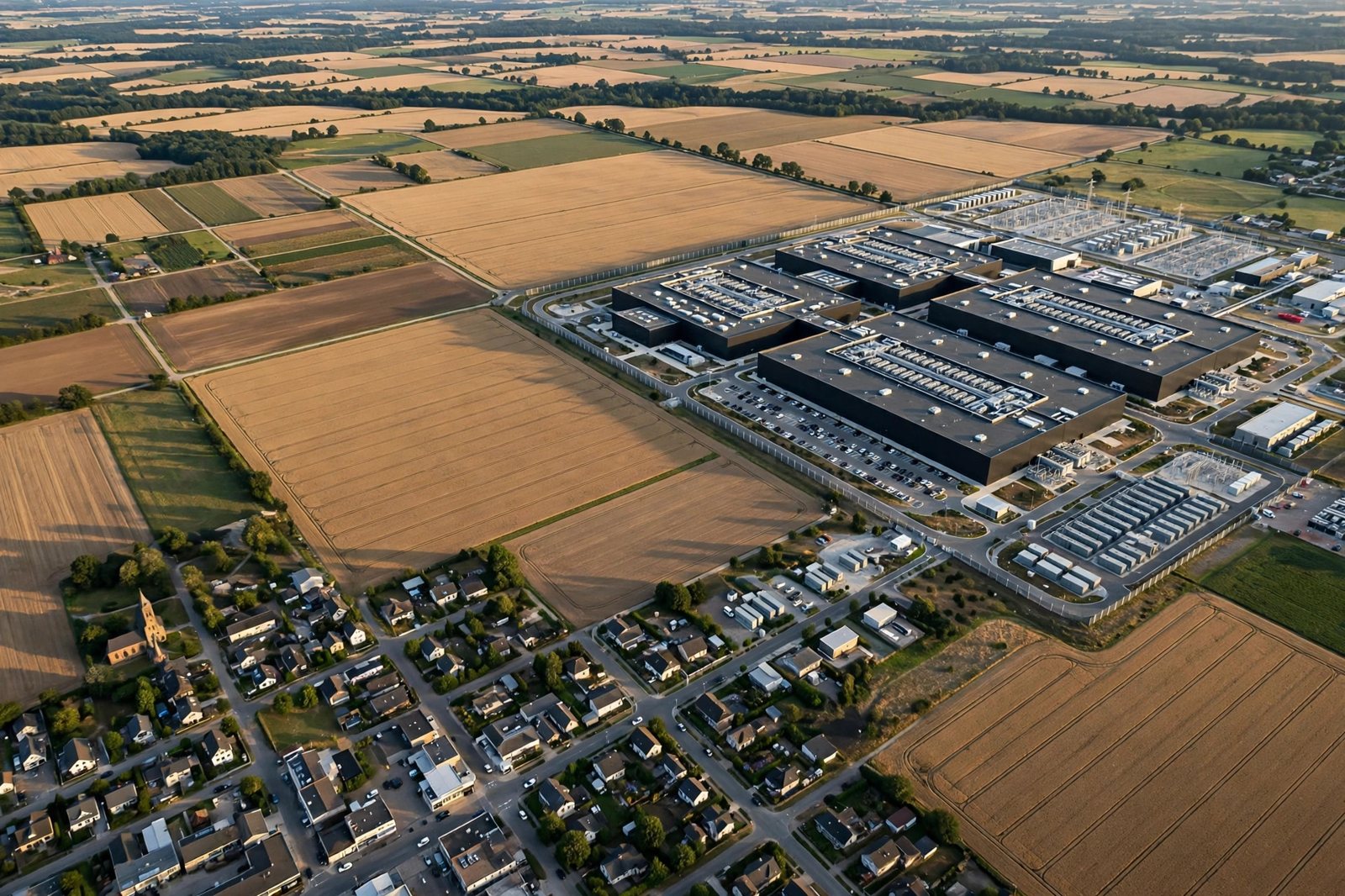
    A data center deal usually arrives in a community the same way: a codename, a closed session, and a nondisclosure agreement. A new federal bill proposes to reverse that order. The Data Center Oversight Act, introduced in the House on October 29, 2026 by Rep. Eugene Vindman of Virginia, would make the Energy Information Administration collect — and publicly report — a standard set of facts about every existing and proposed data center in the country. For developers and host communities alike, the practical question is simple: exactly what becomes public? Here is the checklist, as written.

    What is being proposed

    The Act would require the Energy Information Administration (EIA), within the Department of Energy, to collect and publicly report comprehensive information on both existing data centers and proposed developments. Operators submit the information; EIA publishes it.

    Status: this is an introduced bill, not law. It was introduced October 29, 2026, and has the long committee road in front of it. But disclosure bills like this one also move the market before they move Congress — the checklist below is already a fair preview of what host communities, journalists, and competitors will ask for in 2027 whether or not the bill passes.

    The disclosure checklist

    Under the Act, operators would have to report:

    • Ownership — who actually owns the facility.
    • Energy usage — expected or actual electricity consumption.
    • Water usage — expected or actual water consumption.
    • Ratepayer costs — the costs of serving the facility that may be passed on to utility ratepayers.
    • Nondisclosure agreements — whether the facility’s owners have signed NDAs with government officials.
    • Union labor — whether union labor was used in construction.
    • Sensitive proximity — whether the facility sits within 1,000 feet of a school, a national park, a hospital, or a home.

    Read the list as a community would. Energy and water are the resource questions every county hearing now runs on. The ratepayer-cost item goes at the subsidy argument directly: not what the facility pays, but what its presence costs everyone else on the grid. And the proximity item converts the most emotional local question — how close is this thing to where people live, learn, and recover — into a yes/no federal data point.

    The NDA item is the sharp edge

    Most of the checklist asks for numbers. The nondisclosure item asks for a fact about secrecy itself: not the contents of any agreement — the Act does not reach those — but whether one exists between the developer and government officials.

    That single yes/no changes local politics. Today, a resident who asks why a project was negotiated in private can be told nothing at all. Under the Act, the existence of the NDA is itself a disclosed, federally reported fact. Developers who treat confidentiality as the default opening move would be making that choice in public.

    What does getting it wrong cost?

    Entities that fail to report, submit incomplete information, or provide misleading information face penalties of up to $1 million per day.

    The structure matters as much as the number. The penalty covers three distinct failures — silence, incompleteness, and inaccuracy — and it runs per day, which means a disclosure problem is not a fine you budget for; it is a clock that runs until the filing is right. At that scale, disclosure stops being a communications task and becomes a compliance function with records, owners, and review — the same treatment environmental and financial reporting already get.

    This bill does not arrive alone

    The Oversight Act is Vindman’s third data-center measure of 2026. In October he introduced the Make Data Centers Pay Act, aimed at shielding households and small businesses from electricity costs driven by data-center demand. In August, the Smart Data Center Policy Act took up development near neighborhoods, schools, and parks. Read together, the three bills mark the shape of the federal argument: who pays, where it goes, and — with this Act — who has to say so, in public, in advance.

    The state and local layer is moving the same direction. Water and energy disclosure fights now attach to individual projects, and the physical-risk questions communities ask — water scarcity chief among them — have become standard diligence, not activism.

    What a developer or a host community should do now

    You do not need the bill to pass to use the checklist. For a developer, it is a pre-announcement inventory: for any live or proposed site, could you answer all seven items today, accurately, from records? Ownership structures, utility-service cost allocations, and construction-labor facts are easy to state early and hard to reconstruct under a per-day clock. For a host community, the checklist is the term sheet for your own questions — ask for these seven items in the first public session, while the answers are still cheap.

    The industry’s growth is not the controversy anymore. The controversy is whether the facts arrive before the concrete does. This bill’s answer is a form, filed with the EIA, where anyone can read it.

    Informational only — this article summarizes the Data Center Oversight Act as introduced on October 29, 2026, per the sponsor’s published summary and contemporary reporting; it is not legal advice, and a bill’s text and prospects can change. Sources: Office of Rep. Eugene Vindman (Oct 29, 2026); Nextgov/FCW, “Tech bills of the week” (Oct 30, 2026).

  • AI Governance as an ESG Imperative in 2026: What Organizations Must Disclose About Algorithmic Risk

    AI Governance as an ESG Imperative in 2026: What Organizations Must Disclose About Algorithmic Risk

    Updated October 6, 2026.

    If investors or regulators ask how you manage algorithmic risk in ESG data and decisions, this 2026 guide covers governance, documentation, and disclosure patterns.

    AI systems have graduated from “nice to have” technology to material ESG risk. The landscape shifted decisively in 2026, and organizations that haven’t built AI governance frameworks are now facing disclosure obligations they didn’t anticipate.

    The convergence of three regulatory forces—the EU AI Act’s high-risk tier implementation, the CSRD (Corporate Sustainability Reporting Directive) inclusion of AI as an ESG material risk, and a wave of US state-level AI transparency laws—has created a new reality: AI governance is now a boardroom issue, not just an IT issue.

    The Regulatory Landscape Shift in 2026

    The EU AI Act entered full implementation for high-risk systems in 2026. High-risk designation now covers AI used in critical infrastructure, employment decisions, credit decisions, and any system that can create legal or similarly significant effects. Organizations deploying these systems must maintain technical documentation, implement human oversight mechanisms, and maintain detailed audit logs—or face fines up to 6% of global revenue.

    The California AI Transparency Act took effect January 1, 2026, requiring disclosure of AI-generated content and detailed training data provenance. This isn’t optional disclosure to regulators; it’s disclosure to users and consumers. A California-based company deploying AI in customer-facing roles must now disclose that fact and describe where the training data came from.

    Texas passed the Responsible AI Governance Act and Colorado enacted the AI Act, both focused on algorithmic discrimination prevention. These states are now requiring algorithmic impact assessments for any AI system used in hiring, lending, housing, or insurance decisions. Texas explicitly requires evidence that algorithms don’t discriminate by protected class; Colorado mandates algorithmic transparency and opt-out mechanisms.

    CSRD, now in full effect for many EU organizations, has formalized AI governance as a material ESG risk category alongside climate, labor, and supply chain. If your organization uses AI to make consequential decisions or creates algorithmic bias risk, CSRD requires disclosure in your sustainability report—just as you’d disclose Scope 2 emissions.

    The Disclosure Obligation Framework

    Here’s what ESG teams and compliance officers need to understand: AI governance disclosure falls into three overlapping buckets.

    Algorithmic Accountability Disclosure: What AI systems does your organization deploy? What decisions do they influence? What safeguards are in place to prevent discrimination or harm? This is the California AI Transparency Act requirement. It’s also what CSRD reviewers will ask about. The disclosure should include: system purpose, training data sources, human oversight mechanisms, and documented testing for bias and accuracy.

    Explainability and Human Oversight: Can you explain how the algorithm makes decisions? Who reviews those decisions? This is the core of EU AI Act compliance for high-risk systems. The requirement isn’t perfect explainability—it’s documented human oversight and a mechanism to challenge algorithmic decisions. Insurance underwriting AI? That means having a human underwriter review or spot-check claims. Employment AI? That means someone can explain to a candidate why they weren’t hired.

    Governance Process Disclosure: How does your organization govern AI systems? Who approves new deployments? How do you monitor for drift, bias, or performance degradation? CSRD reviewers want evidence of governance structure: a chief AI officer or designated AI governance committee, documented policies, regular audit procedures, and clear escalation paths when issues arise.

    The Cross-Sector Implementation Challenge

    AI governance requirements look different depending on your industry, but the core disclosure obligation is universal. Here’s how this plays out in four critical sectors:

    Property Restoration & Insurance Claims: Organizations using AI-powered damage assessment tools (drone imagery analysis, computer vision systems) must disclose the accuracy rates of those systems, the human review process when AI assessments seem incorrect, and the liability framework when AI assessments are wrong. Read the restoration sector analysis here. The restoration industry adopted AI assessment tools faster than governance frameworks kept pace—2026 is the year that gap gets exposed.

    Insurance Underwriting & Risk: State insurance commissioners are conducting detailed examinations of algorithmic underwriting and pricing models. Carriers must now disclose which variables their algorithms use, prove those variables don’t correlate with protected classes, and maintain an appeal process when an applicant challenges an algorithmic decision. The insurance sector governance framework is detailed here. Carriers using AI in claims handling face parallel requirements: transparency about which claims are routed to automated decision-making, what percentage of claims are adjudicated purely by algorithm, and human appeal mechanisms.

    Business Continuity & Operational Resilience: The newer risk—and the one most organizations haven’t addressed—is AI dependency as a single point of failure. When GenAI tools, workflow automation, or AI-powered decision support systems go down, how long before operations halt? Business continuity governance for AI is explored in detail here. BC teams need to map AI systems into their Business Impact Analysis and develop resilience strategies for when vendor tools or internal AI systems fail.

    Healthcare Facility Operations: The FDA’s Quality Management System Regulation, effective in 2026, now treats AI and machine learning medical devices under expanded oversight. CMS is flagging AI systems in clinical decision-making. Healthcare facility governance requirements are outlined here. The complexity: clinical AI (diagnostic support, treatment planning) and operational AI (predictive maintenance, scheduling) follow different regulatory tracks, but both need governance.

    Building the Governance Framework

    Organizations that move fast in 2026 will establish an AI governance framework with these components:

    AI System Inventory: Document every AI system in use: internal tools, SaaS platforms, embedded vendor algorithms. For each, record: purpose, decision authority (does it decide or recommend?), training data source, accuracy metrics, human review process, and last audit date.

    Risk Assessment Protocol: Assess each system’s ESG risk: Does it affect protected classes? Does it influence consequential decisions? Could failure cause operational harm? High-risk systems get more rigorous oversight.

    Governance Accountability: Assign clear accountability: Who approves new AI deployments? Who monitors for bias and drift? Who handles escalations when AI systems fail or produce unexpected outcomes? This should ladder up to the board or an audit committee.

    Documented Human Oversight: For high-risk systems, document the human oversight mechanism. This doesn’t mean humans should override every algorithmic decision; it means someone can explain the decision and has the authority to escalate or appeal it.

    Regular Audit and Testing: Establish a cadence for testing AI systems—at minimum annually—for accuracy, bias, drift, and compliance with documented performance standards. Document the results.

    Disclosure Readiness: Prepare your ESG disclosure now. Be ready to answer: What AI systems do you use? How do you govern them? What safeguards are in place? What testing have you done? CSRD reviewers, state regulators, and proxy advisory firms are going to ask these questions. Organizations with documented frameworks will move through audits far more quickly.

    The Convergence Risk

    The real challenge isn’t any single regulation. It’s the convergence: CSRD disclosure requirements + EU AI Act penalties + California transparency obligations + state-level algorithmic discrimination rules = a comprehensive governance obligation that most organizations haven’t integrated.

    The organizations building advantage in 2026 are the ones treating AI governance not as a compliance checkbox but as a core ESG and operational risk framework. They’re integrating it into capital allocation, vendor evaluation, and board reporting. They’re making algorithmic accountability a competitive advantage, not a liability.

    Your ESG team, compliance team, IT team, and board need to align on AI governance right now. The regulatory window for moving fast and building legitimate frameworks is open in Q2 and Q3 2026. By Q4, regulators will have sharper guidance on enforcement, and the organizations without documented frameworks will be scrambling.

    Related Reading:

BC ESG

ESG Strategy, Sustainability Intelligence, and Business Continuity for Forward-Thinking Organizations

© 2026 BC ESG — Business Continuity, ESG & Sustainability Intelligence